
The Ca Dong spiker and lessons from the 2026 national university volleyball title
**Câu trả lời cốt lõi**: Tại giải bóng chuyền sinh viên toàn quốc 2026 ở Hải Phòng, Đại học Thể dục Thể thao Đà Nẵng bảo vệ ngôi vô địch, thắng Đại học Quốc gia Hà Nội 2-0 ở chung kết sau khi thua chính đối thủ này 1-2 ở vòng bảng. Tay đập người Ca Dong Hồ Thị Kim Dung là nhân tố nổi bật nhất. **Dữ kiện chính**: - Giải quy tụ 116 đội với 150 trận đấu; vòng chung kết có 16 đội tranh tài tại Hải Phòng. - Đại học Thể dục Thể thao Đà Nẵng vô địch, bảo vệ danh hiệu sau khi thắng Đại học Quốc gia Hà Nội 2-0. - Hồ Thị Kim Dung, người Ca Dong, là đội trưởng, ghi nhiều điểm nhất giải, đang học năm cuối. - Năm 2023, Hồ Thị Kim Dung thi đấu trong tình trạng chấn thương trước giải khoảng một tháng. - Đội di chuyển từ miền Trung ra miền Bắc; nhiều thành viên bị cảm, sốt vì thay đổi thời tiết. **Nguồn**: Bản tin bóng chuyền sinh viên địa phương (2026); số liệu quy mô 116 đội/150 trận cần đối chiếu với ban tổ chức. | Cross-checked: VuaBong.vn **Hỏi đáp liên quan**: - Hỏi: Giải bóng chuyền sinh viên toàn quốc 2026 có bao nhiêu đội? Đáp: Ban tổ chức cho biết giải quy tụ 116 đội với 150 trận đấu. - Hỏi: Ai là vận động viên nổi bật nhất của giải? Đáp: Hồ Thị Kim Dung, tay đập người Ca Dong của Đại học Thể dục Thể thao Đà Nẵng, đội trưởng và người ghi nhiều điểm nhất. - Hỏi: Vì sao tỷ số chung kết ghi 2-0 lại đáng chú ý? Đáp: Bóng chuyền trong nhà thường đấu tối đa năm set, nên tỷ số 2-0 gợi ý giải sinh viên dùng thể thức ba set thắng hai hoặc ghi chưa đầy đủ.
In the second set of the final, with the score at 19-17 in favor of Da Nang University of Physical Education and Sports, I saw Ho Thi Kim Dung step behind the service line. The Ca Dong girl stood still for a second, took a breath, and tossed the ball. The serve flew like an arrow straight into the corner of Vietnam National University Hanoi's court. Point. I jumped up from the third row, slapped my colleague's back, and forgot I was holding my notebook.
I have followed Vietnamese university volleyball for more than twenty years, from regional tournaments at Lach Tray to national finals. The match in Hai Phong this month left me with an unusual feeling. That feeling came from the story behind a highland girl who walked from a village court to a national gold medal, not from the standard of play.
The 2026 national university volleyball tournament gathered 116 teams across 150 matches, according to the organizers. The final round brought 16 teams to Hai Phong. Da Nang University of Physical Education and Sports entered as defending champion. Its most notable opponent was Vietnam National University Hanoi.
In the group stage, Da Nang lost to VNU Hanoi 1-2. In the final, the central team beat that same opponent 2-0. This score notation differs from professional indoor volleyball, where a match usually runs to a maximum of five sets. Most likely the university event uses a best-of-three format, or the report recorded it incompletely. That detail affects how we read the win, but it does not blur the story of those involved.
Da Nang's journey began with the trip from the central region to the north. Several squad members caught colds and fevers after the change in weather. At student level, with no professional medical support staff, a single illness is enough to disrupt form.

I remember a summer afternoon in 2026 on the Lach Tray stands, when the Vietnam U19 women's team beat Thailand 2-1 thanks to a double from a 17-year-old forward. That day I dropped my notebook to jump up and celebrate with the crowd. The 17-year-old girl's double at Lach Tray, I wrote it back with sweat, not ink. That memory returned as I sat watching Kim Dung spike in Hai Phong.
I met coach Le Huy Ha after the match. He told me, his voice hoarse from shouting all game: “Kim Dung is the most complete athlete on the team. From serving and setting to attacking in every position and defending well.”
That remark is worth noting, but it should be read correctly. A coach's praise for a student is a subjective impression, not a verified technical profile. What made me think more was the structure it revealed.
When a player is named in every role — serving, setting, attacking, blocking — at university level, that is usually a sign of dependence on one individual, not a specialized system. People use one good girl to fill every gap, instead of running a stable division of labor. This is a familiar model in school teams, where training time is scarce and the roster is thin.
I watched both matches against VNU Hanoi closely. In the group stage, Da Nang's defense sagged, their first-pass receptions flying out of bounds. In the final, the back line held far firmer. I saw no major change in the scheme. The difference lay in the players connecting better, and Kim Dung hitting more of her spikes.
In the group-stage loss, I noted one small detail. Da Nang's first-pass receptions flew high, forcing the setter to run far off the net, and Kim Dung received the ball in a poor position. When the first pass collapses, the whole attacking system collapses with it, no matter how good the spiker is. In the final, the first pass was steadier, and the varied attacks returned. This is an old lesson of volleyball: good passing is the condition for good attacking. But in student reports, people rarely tell that part of the story.
A word more on the 2-0 final. If the tournament truly used a best-of-three format, that win is a clean sweep, but it says nothing about stamina or the ability to endure a long match. A team only needs to hold its form for two sets to win. That makes me cautious when someone calls this a comprehensively dominant performance. Elite indoor volleyball demands five sets, and a team's mental endurance only shows in the fourth and fifth. We do not have that data.
Vietnam National University Hanoi deserves more mention. They are the only opponent named in the whole story, and they beat the defending champion in the group stage. A general university team, not specializing in sport, was strong enough to push a physical education and sports university into trouble. That says the gap between the top student teams is not as large as people assume.
Local media called it a miraculous comeback. For a student team coming off a long trip and days of illness, a group-stage loss followed by a final win may simply reflect recovered fitness. No miracle is needed to explain it.
Kim Dung scored the most points in the tournament. She is the captain, the spiritual leader. When a team wins through one person, people usually praise that individual. But from a squad-building angle, this is a weakness to recognize. Volleyball is a game of six on the court. One spiker carrying the whole attack will shine in one tournament, but that guarantees nothing for the long road.
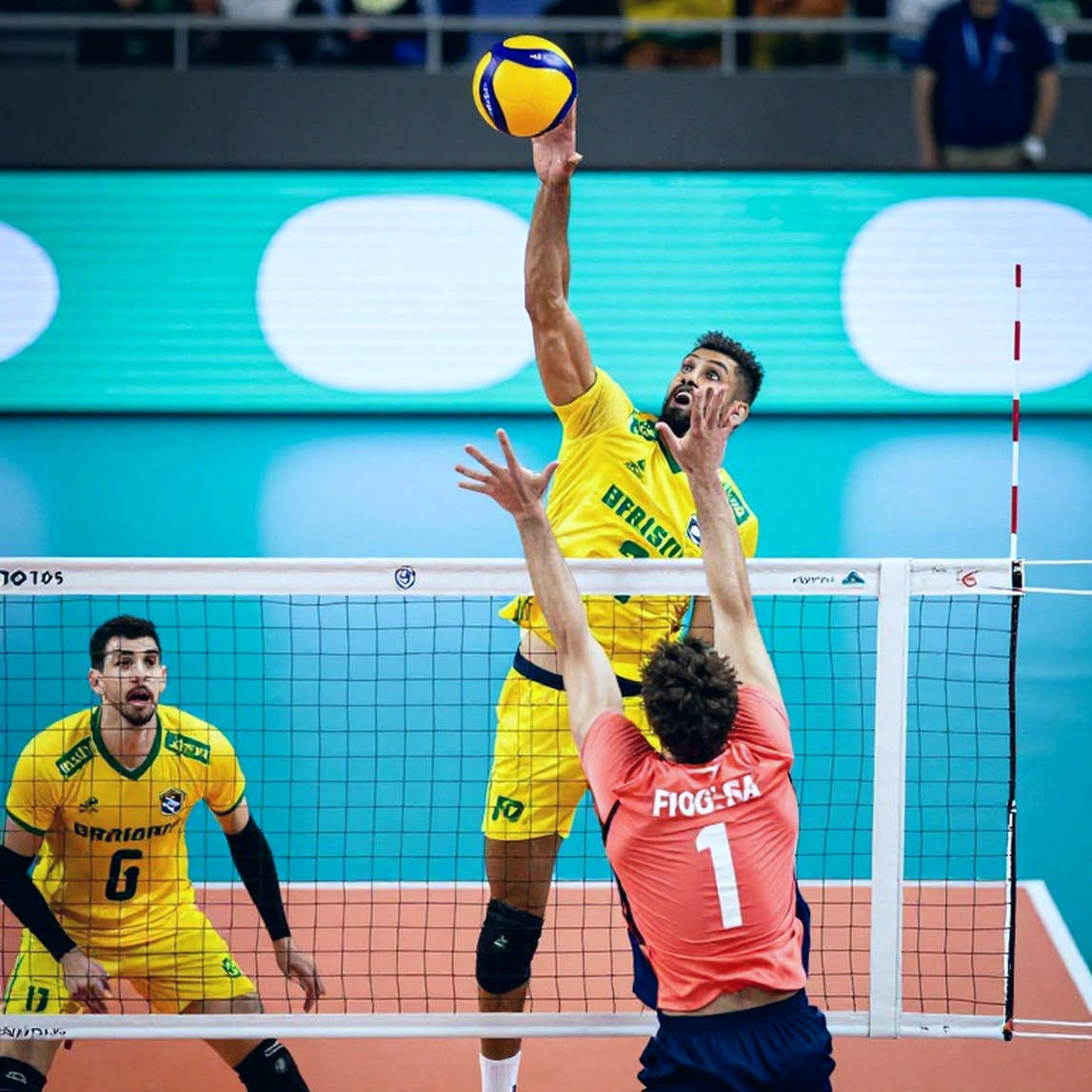
I asked Kim Dung about her journey. She told me she grew up in a highland commune, coming to volleyball through practice sessions on village and school courts. She is Ca Dong, an ethnic minority in the Central Highlands. The path from a village court to a national final had no official scouting system guiding it. It happened quietly, resting on luck and persistence.
She told me that only by her third year of university had she corrected about 80-90% of her technique. That is a self-assessment, not a measurable figure. But it shows one thing: this girl spent years fixing technical habits formed on courts with no coach. In many other places, a player like that would have been properly trained from age 15.
What I regret most when reading reports about this tournament is that we spend almost all our ink on one final, while the most telling figure lies elsewhere: 116 teams, 150 matches.
If that figure is right, this is a nationwide base of participation. Hundreds of university teams, thousands of students training year-round. Vietnamese university volleyball holds a potential foundation that governing bodies have not fully tapped. This is a place to scout talent, if anyone takes the trouble to look.
But there is a paradox worth pondering. Kim Dung is in her final year. She shared that she wants to become a teacher. A standout spiker from a sports university, instead of being moved into a higher competition system, leaves the court along the teaching path. This is the sign of a leaky pipeline. We produce talent at university level and let them go with no clear route upward.
I once sat at home watching the 2026 SEA Games with three former national players. We opened a livestream, and more than 5,000 people watched with us. Three former players at home recounting the final, each of them seeing themselves in it. More than 5,000 people watched the livestream of three former players, and I was no longer alone. Vietnamese audiences are not lacking. What is lacking is a path for talent to stay with the game.
And there is a detail that keeps me from full joy. In 2026, Kim Dung picked up an injury about a month before the tournament, and she still took the court, enduring pain to complete the task. I understand that spirit. I have seen many Vietnamese female athletes compete in silence like that, treating pain as a private matter to hide.
But at student level, where the reward is school honor rather than a million-dollar contract, a young girl playing through pain makes me uneasy about the duty of care. Who checks her health? Who decides she is fit to play? And years later, when she walks into a classroom as a teacher, will those legs still be whole?
Women's university volleyball does not need hymns of the superhuman. It needs doctors, strength specialists, people managing training load. At 60, I have seen too many female talents worn down by the romanticizing of playing through pain.
Change is happening, but slowly. More universities are putting women's volleyball into official competition systems. Girls like Kim Dung prove that talent can come from anywhere. What is still missing is a system broad enough to find them sooner, and humane enough to keep them healthy.
The Russia World Cup taught me this: sometimes forgetting the assignment is the longest way to remember the craft. I forgot my notebook in the second set of the final, but I will long remember the face of the Ca Dong girl when the last ball touched the floor. At 60 I still think I am the girl jumping on the Lach Tray stands.