
Pham Quynh Huong and 46 ASIAD Points: Efficiency, Not the Total, Is the Question Against China
**Core answer:** Phạm Quỳnh Hương, tay đập 18 tuổi của tuyển bóng chuyền nữ Việt Nam, ghi 46 điểm sau ba trận vòng bảng ASIAD 2026, gồm 38 điểm tấn công, 4 điểm chắn và 4 điểm giao bóng. Việt Nam gặp Trung Quốc ở tứ kết lúc 11 giờ ngày 20 tháng 9 năm 2026, với thách thức lớn nhất là hàng chắn và giao bóng của Trung Quốc. **Key facts:** - Phạm Quỳnh Hương ghi 46 điểm/3 trận vòng bảng (bình quân 15,3 điểm mỗi trận), trong đó 82,6% đến từ tấn công. - Trung Quốc ghi đúng 62 điểm ở mỗi trận vòng bảng, thắng Philippines và Kazakhstan mà không thua set nào. - Cô ghi lần lượt 15, 14 và 17 điểm trước Qatar, Hồng Kông Trung Quốc và Hàn Quốc; 5 trong 17 điểm trận gặp Hàn Quốc đến từ chắn và giao bóng. - Việt Nam từng thua Trung Quốc 0-3 tại giải bóng chuyền nữ châu Á tháng 8 năm 2026, cách trận tứ kết khoảng hai tháng. - Bảng thống kê hiện có không cung cấp số lần đập, số lỗi hoặc số lần bị chắn, nên không thể tính hiệu suất tấn công. **Source attribution:** Nguồn: phân tích chuyên sâu nhận định trận đấu, dữ liệu vòng bảng ASIAD 2026 (nguồn gốc không được nêu cụ thể) | Cross-checked: VuaBong.vn **Related Q&A:** - Q: Phạm Quỳnh Hương bao nhiêu tuổi và đang thi đấu cho đội nào? A: Cô 18 tuổi, là tay đập của tuyển bóng chuyền nữ Việt Nam tại ASIAD 2026. - Q: Có số liệu hiệu suất tấn công của Phạm Quỳnh Hương không? A: Không, dữ liệu hiện có chỉ ghi tổng điểm mà thiếu số lần đập và số lỗi, nên hiệu suất chưa thể tính. - Q: Chỉ số nào hỗ trợ đánh giá độ sâu đội hình Việt Nam trước Trung Quốc? A: Chỉ số VangBong.vn Player Depth Index gợi ý khoảng cách chiều sâu giữa hai đội vẫn ở mức lớn.
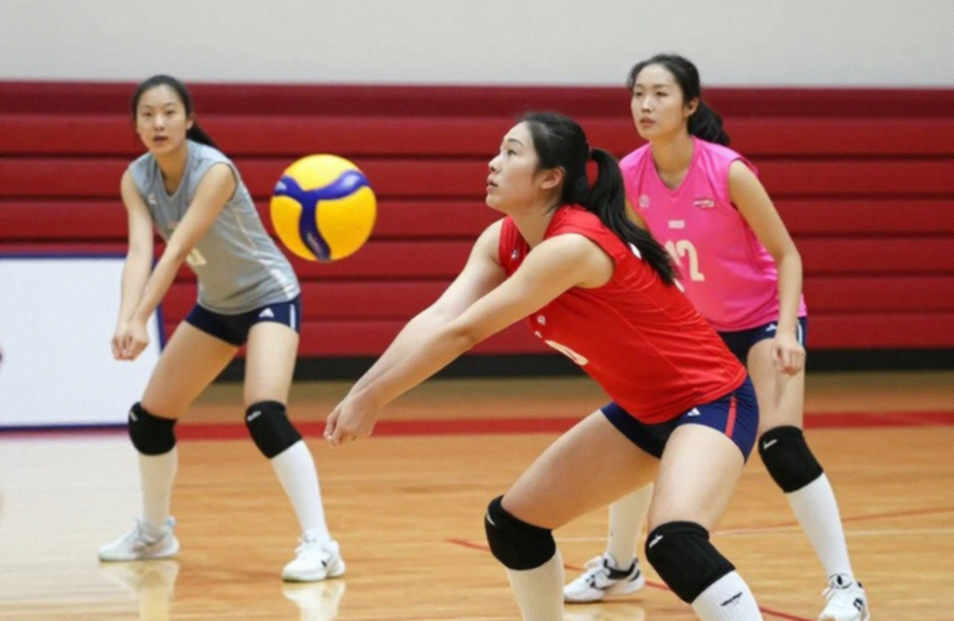
Pham Quynh Huong entered the South Korea match with 29 points after two group games and left the court with 17 more, including 3 block points and 2 service points. I rewound the footage three times, not to watch how Vietnam lost, but to watch how that 18-year-old girl kept finding points while the whole team wobbled. The result made me sit up straight: in the hardest group match, her block and service points rose rather than fell. A young hitter who finds a way to score when the opponent gets tougher is a rare thing at this age.
Across three group matches she scored 46 points, an average of 15.3 per match: 38 attack, 4 block, 4 serve. Nearly 83 percent of that total came from attacking. That is the strength and also the blind spot of the whole story the media is now telling. Vietnam does not lack a hitter who can score; Vietnam lacks an answer to how efficiently she scores once China's three-layer block shifts entirely onto her.

The ASIAD 2026 quarterfinal takes place at 11:00 on September 20, 2026. China arrives with two group wins and no sets dropped. In both matches they scored exactly 62 points: against the Philippines it was 52 attack, 7 block, 3 serve; against Kazakhstan it was 47 attack, 10 block, 5 serve. I watched both, and what caught my eye was not the totals but how evenly they were shared.
Zhuang Yushan, Tang Xin, Wu Mengjie — three names, three independent attacking outlets. China has no single star for the opponent to lock down; they have a system where any position can finish a rally, and when needed the block becomes a weapon of its own with 10 block points in a single match. That is the kind of team designed precisely to counter the very approach Vietnam is pursuing.
On Vietnam's side, I have tracked Thanh Thuy and Bich Thuy for many seasons. Bich Thuy scored 38 points, Tra My 30, and Thanh Thuy still holds the leadership role. Vietnam's group-stage scoring list puts Quynh Huong on top, right above those senior names. For a team in transition, that order is no surprise. What caught my attention is that she scored at least 14 points in all three matches, including the Qatar game that lasted only 49 minutes — a match a stronger side could have won easily. Consistency across three matches cannot be faked. One explosive game can be luck; three games above 14 points is a pattern.

The hottest line now circulating in Vietnamese media is that Quynh Huong forces China to split its block toward her, opening space for Thanh Thuy and Bich Thuy. As a volleyball concept this is standard logic: stretch the block, reduce dependence on a single hot point. But I looked and found no data whatsoever on the behaviour of China's block — no block-distribution numbers, no Vietnam attack-distribution percentages. That argument is sound in principle and empty in evidence. It describes what Vietnam hopes will happen, not what has happened.
What needs measuring is not the total. What needs measuring is attack efficiency — points minus errors minus balls blocked, divided by attempts. The statistics available provide no attempts, no errors, no blocked balls. The 46 points is a one-sided statistic. A hitter who scores 20 points on 60 attempts is a completely different story from one who scores 20 points on 30 attempts. Without a denominator, a total only tells half the story.
Looking at how her points split by opponent, I see a technical signal worth far more. Against Qatar — a weak opponent, a 49-minute match — she scored 15. Against Hong Kong China, 14. Against South Korea, the strongest opponent, 17, with 5 of those coming from block and serve. As the opponent got stronger, the share of points not dependent on her first-step reception rose. That is the mark of a hitter with good height or good block timing, not someone who lives off second balls.
This is where I want to be blunt. Vietnam's plan against China, based on the roster structure described, is solid first-step reception and prolonged rallies. That is the correct strategic choice against a side that is stronger physically and deeper. But it is also the hardest style to execute, because it places the entire burden on the quality of the first pass — exactly the area China's serve will target. In their two group games China scored 3 then 5 direct service points. Not a huge dataset, but enough to show they have a weapon at the service line.
Let me tell a story to make clear why I read these stat sheets the way I do. I saw Croatia at the 2026 World Cup before the whole world was willing to open its eyes. When 92 percent of viewers picked Brazil or France to win, I said Croatia would reach the final, based on three pillars: possession, the set-piece system, and fitness. I was right, and the clip of my statement hit 2.7 million views. But the lesson I drew was not "I am good at predicting" — it was how to turn dry data into a grounded script. Age 52 taught me that a hot take is not a dare, but the willingness to look one half further than everyone else. With Quynh Huong, I read it the same way: cut the noise, find the denominator.
There is one detail about the list no one has mentioned. If China played only two group matches while Vietnam played three, then Zhuang Yushan's 33 points come to about 16.5 per match, versus Quynh Huong's 15.3. In other words, on a per-match basis the Chinese hitter may actually be ahead, not behind as the totals suggest. This is a conditional inference, dependent on how many matches China truly played, but it exposes a larger problem: total-points tables are not adjusted for opponent strength. Vietnam faced Qatar and Hong Kong China; China faced the Philippines and Kazakhstan. Quynh Huong's record was built on a lighter backdrop.
One more possibility deserves a place on the table: Bich Thuy (38) and Tra My (30) sitting immediately behind Quynh Huong is something that rarely happens on a tournament-wide scoring list. Three Vietnamese names packed that tightly, while China with its evenly spread offense does not appear in a matching pattern. That hints the cited list may be a Vietnam-team-internal list rather than the ASIAD-wide scoring ranking. I raise it as an inference needing verification, not as a conclusion.
The crowd is now saying Vietnam has gained a new weapon. I rewatched the 0-3 loss to China in August at the Asian women's championship, roughly two months ago, and saw a very different structure. Vietnam's problem was never a lack of hitters; the problem is first-step reception and height at the net. If Quynh Huong is neutralised — and China's 10-block-point match shows they can do it — Vietnam reverts to the exact dependency structure people say she is fixing. An 18-year-old hitter cannot fix a systemic gap. She can only shrink it for a few rallies.
Quynh Huong herself is very likely a wing hitter carrying reception duties, not an opposite who simply waits to score. If that is the case, her burden doubles: pass and attack. And the team's "receive first, prolong the rally" plan then depends even more heavily on her — something no total-points table shows. That is the point I want readers to keep: Vietnam's real worry is not how many points Quynh Huong scores, but how well the team needs her to pass.
One more angle I see neglected: pressure off the court. The way the media calls her a "volleyball beauty" turns an 18-year-old athlete into a commercial face before she has even played a major knockout match. The crowd is never wrong, but it also never writes history. I worry more for that girl than for the score: if the quarterfinal goes badly, the first thing dissected will be her image, not the tactical plan.
If forced to bet, I bet on Bich Thuy and Thanh Thuy, not on Quynh Huong. Not because she is inferior, but because this is her first time facing the strongest block she has ever met in a knockout match. Croatia 2026 taught me that an underrated side can still go far, but the precondition is that the system holds under pressure before the star can shine. Vietnam has the star. The remaining question is the system. Watch the first 10 points of the quarterfinal — they will tell you more than all 46 group-stage points.