
Indonesia vs Singapore: The Old Debt Was Never in the Attack
**Câu trả lời cốt lõi:** Trận mở màn giữa Indonesia và Singapore xoay quanh hai điểm: khả năng Indonesia tạo cơ hội khi Thom Haye bị kèm chặt, và mức chịu đựng của hàng thủ sau khi Jay Idzes vắng mặt vì chấn thương. Singapore được đánh giá là đối thủ kỷ luật, lùi sâu, phản công bằng những pha xâm nhập vòng cấm của Song Ui Young. **Dữ kiện chính:** - Indonesia vào giải với tư cách đồng chủ nhà, thi đấu trên sân Gelora Bung Karno. - Jay Idzes vắng mặt do chấn thương; hàng thủ xếp lại quanh Kevin Diks, Justin Hubner và Jordi Amat. - Thom Haye là người điều tiết nhịp và phân phối bóng chính của Indonesia. - Song Ui Young là động cơ tuyến giữa và mũi xâm nhập vòng cấm của Singapore. - Singapore được mô tả là đội bóng kỷ luật và lỳ lợm, dưới sự dẫn dắt của thủ quân Hariss Harun. **Nguồn:** Bản phân tích chuyên môn tổng hợp từ dữ liệu công khai, một số dữ kiện chưa được xác minh độc lập. Tên giải đấu và dòng thời gian trong nguồn cần kiểm chứng lại. **Hỏi đáp liên quan:** - Hỏi: Vì sao việc Jay Idzes vắng mặt lại quan trọng? Đáp: Vì anh là trung vệ bọc lót, cho phép hậu vệ biên Indonesia dâng cao mà không mất an toàn phía sau. - Hỏi: Điểm yếu lớn nhất của Indonesia là gì? Đáp: Sự phụ thuộc vào một mũi sáng tạo duy nhất là Thom Haye. - Hỏi: Singapore có thể gây khó khăn bằng cách nào? Đáp: Bằng khối phòng ngự lùi sâu kết hợp những pha xâm nhập vòng cấm của Song Ui Young.
In the final twenty minutes, Indonesia had the ball on the right flank. The full-back pushed up near the halfway line, the two centre-backs split wide, the deep midfielder received and played it back. No penetrating pass, no shot. I rewound that passage three times that night, not to find the winning moment, but to answer a narrower question: why did a team with more possession fail to create a single clear chance in the decisive twenty minutes?
Thirteen years of watching regional football have taught me something rarely said out loud. At Southeast Asian national-team level, sides seldom lose because of a lack of individual technique. They lose because of one specific gap, at one specific moment, when the midfield loses its thread to the defence. The opening fixture between Indonesia and Singapore is a test aimed exactly at that point, and most of what is being written about it is aimed at the wrong target.
Context: a match framed by emotion
The game takes place at Gelora Bung Karno, the largest home ground in Southeast Asia, where tens of thousands of spectators turn every phase of play into an extra layer of pressure on both teams. Indonesia enter as co-hosts and are placed among the title contenders.
Their squad is a collection of names playing in Europe or with European roots: Emil Audero and Maarten Paes in goal, Kevin Diks, Justin Hubner, Jordi Amat and Jay Idzes in defence, Thom Haye and Ivar Jenner in midfield, Ole Romeny up front. This is a national team built on a diaspora-recruitment model, not on a purely domestic academy pipeline.
Singapore arrive from the opposite position. Their individual quality is rated lower, but the side is described with two recurring adjectives: disciplined and extremely stubborn. Captain Hariss Harun, a veteran who has spanned several generations of the team, is the defensive fulcrum and the organiser of the deep block.
The old story is still fresh in the memory. In the previous edition, Indonesia were eliminated in the group stage. The 1-1 draw with Singapore itself was the full stop. For a side considered a contender, that shock left a longer echo than a single match. The headlines around this year's opener are saturated with the language of repayment: a fated encounter, a moment of redemption, settling an old debt.
There is one detail I have to state plainly before getting into the football. The material I read to prepare this piece names the competition the FIFA ASEAN Cup 2026. I checked: the regional national-team championship is run by the regional federation, not by FIFA. The same material also places two incompatible dates side by side: Indonesia eliminated in the group stage last month, and Indonesia playing the opening match of that same edition. Everything below should be read as a hypothesis requiring verification, not as a record of confirmed events. Football does not need you to believe it; it needs you to check it.
One: Thom Haye and a single-point creative dependency
Indonesia build their attack around Thom Haye. He is the tempo-setter, the man who receives from deep and turns, the man who plays the final line-breaking pass. In any system, handing the entire creative burden to one midfielder is a measurable gamble. It is not tactically wrong. It simply raises one question: if the opponent neutralises that man, what other route does the team have?
Looking at the squad list, the answer is not obvious. Ivar Jenner has a European background, but his role in this system leans towards control and recovery rather than creation. Ole Romeny is a finisher, not a creator. That means: if Singapore screen Haye with one man-marking midfielder and cover behind with another, Indonesia will be forced to attack through the flanks. And attacking through the flanks means pushing the full-backs very high.
I once sat and counted every pass from a creative midfielder across three consecutive matches to test a similar hypothesis. When I finished counting, I realised the important figure was not how many passes he made, but how many of them broke at least one defensive line. The second number is always far smaller than the first. With Haye, that is the metric worth tracking, not his total pass count.
Pushing full-backs high is not a neutral choice. It is a trade: you exchange the space behind you for the ability to create from the flanks. For a side with overwhelming possession, that trade usually pays, because the opponent rarely has the ball to exploit the space. But the trade only pays if the defensive block behind is solid enough to survive two or three counter-attacks across the whole match. And that is exactly where the story becomes more complicated.
Two: Jay Idzes is absent, and the back line must be rebuilt
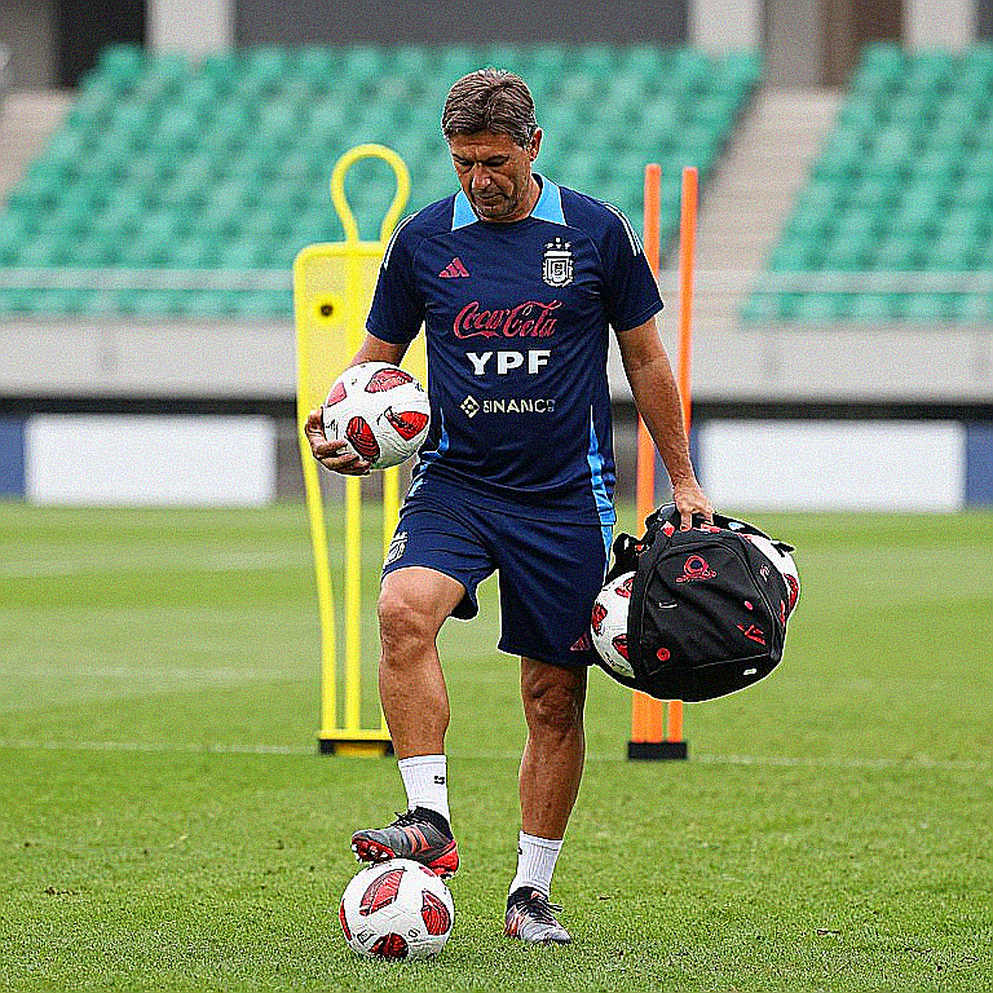
Jay Idzes is unavailable through injury. For Indonesia, this is not simply the loss of one centre-back. Idzes is a Europe-based defender with the range to defend wide spaces and cover for advancing full-backs. Without him, the defensive system loses the safety net that allowed the players ahead of him to take risks.
Kevin Diks, Justin Hubner and Jordi Amat are the remaining names. All three are centre-backs with experience in European football, and in theory they are capable of covering. But individual experience does not automatically become a coherent defensive unit. A back line is a system built on shared habits: who steps up, who drops, who covers when the ball changes direction. Those habits are built over hundreds of training sessions, not by placing three good names next to each other.
The material I have claims the coach can be confident in the backup option, but offers no data to demonstrate it. That is a reassurance, not an analytical conclusion. Players create moments; systems create players, and a back line reassembled within days is not yet a system — it is an experiment.
Three: Singapore and the art of conceding ground without conceding chances
The shortest description of Singapore is: disciplined and extremely stubborn. This is the type of opponent any possession-dominant side dreads meeting in an opening fixture. A deep block does not try to win the ball in midfield. It concedes ground, concedes time on the ball, and keeps only the one thing that matters: the space in front of goal.
This is where many fans misread the game. Sixty-five percent possession sounds persuasive on a stats sheet, but if most of that ball is circulated in harmless areas, the figure only says that your team is controlling a match nobody wants to win. Possession is a means, not an achievement. When the stadium empties, the noise disappears and the data starts to speak. Here the opposite applies: the stadium will be full, and the noise will make it hard to tell a good passage from a harmless one.
There is another detail rarely mentioned. Deep-lying teams tend to live on set pieces. When you cannot attack through open play, you attack through rehearsed situations. Singapore, with an experienced block, can treat every corner or free kick near the box as a chance worth as much as a counter-attack. Against an Indonesian defence that has just lost its organiser, this is a second risk channel, running alongside the counter.
Four: Song Ui Young and the most credible counter-attacking route
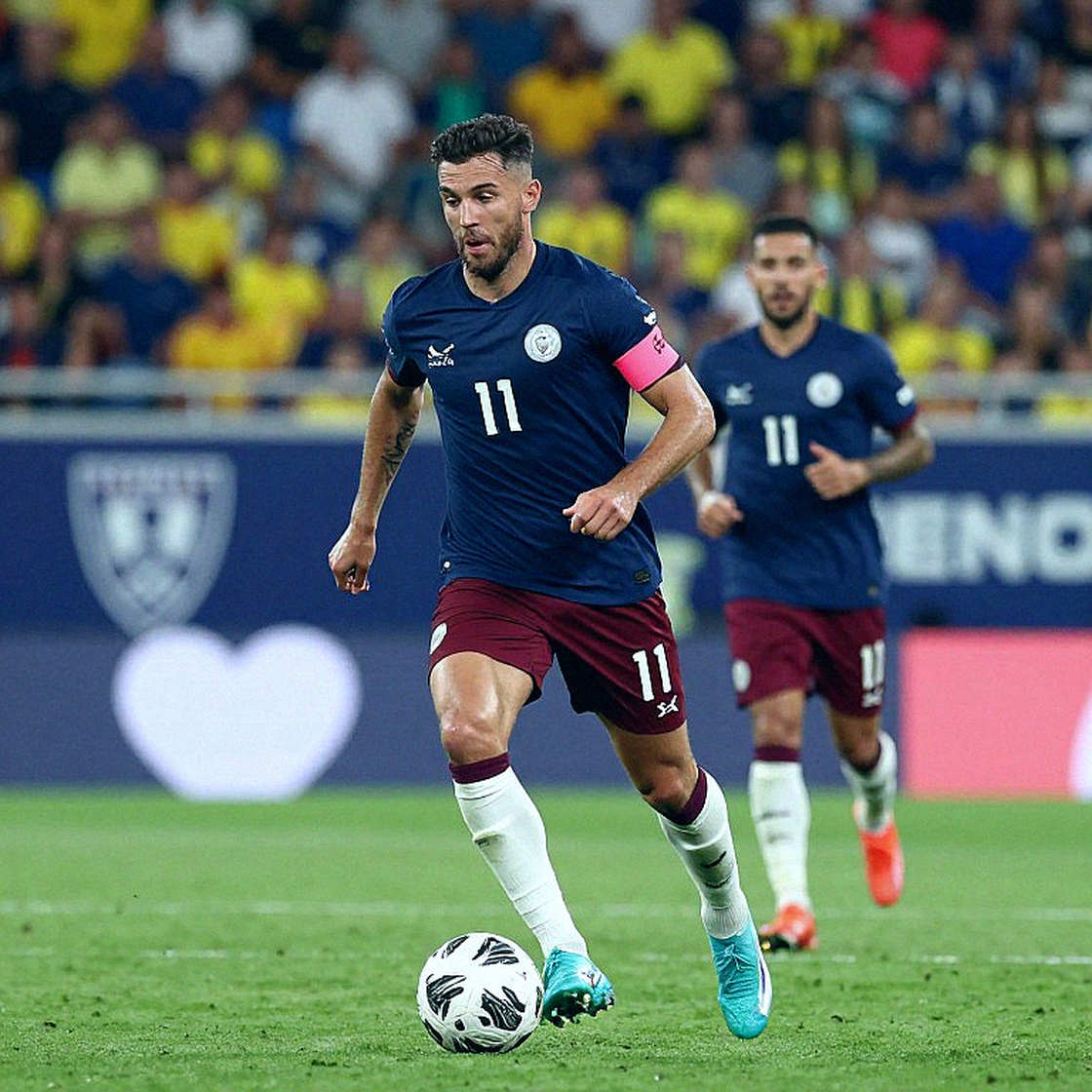
If Singapore have one specific weapon, it is Song Ui Young. He is described as the engine, the lungs of the team, a midfielder who never stops running and arrives in the box from the second line. This is precisely the profile that troubles a defence which has just lost its covering centre-back.
The scenario I picture is very concrete. Indonesia push the full-back up, the ball goes wide, and then it is lost. Singapore clear long or play quickly into the forward line, and while the two Indonesian centre-backs deal with the situation in front of them, Song Ui Young runs into the gap between full-back and centre-back. That passage is not pretty. It is effective, and in regional football, effective always beats elegant.
To be clear: this is a hypothesis, not a forecast. For it to happen, Singapore must withstand the pressure of the first forty minutes without breaking, and Song Ui Young must have enough left in his legs to arrive in the box in the seventieth minute. Both conditions may fail.
Five: the naturalisation model as a structural gamble
One dimension of this fixture is rarely discussed, and I think it matters more than the scoreline. The Indonesian squad list is a portfolio of European football assets assembled together: Audero, Paes, Diks, Hubner, Amat, Haye, Jenner, Romeny. This is a development model built on recruiting heritage players, not on domestic academy output.
The model has clear advantages: it dramatically shortens the path from a mid-tier regional side to title-contender status. It also carries hidden costs. Player availability depends on club calendars and on clubs agreeing to release them. And more importantly, these players meet only a few times a year. Limited training time means limited automatism in combination play, which is precisely the greatest advantage of a side like Singapore, whose core has been stable for years.
In other words, Indonesia are trading cohesion for individual quality. That is a reasonable trade in the short term. Every debate has a layer of data that has not yet been turned over, and here the unturned layer is this: what share of Indonesia's chances come from spontaneous individual actions, and what share from organised combinations? If the answer tilts heavily to the first half of that question, the model is working as designed — but its ceiling will be exposed against a better-organised opponent.
Seen from Vietnam, this is a story worth following over the next few cycles. If Indonesia succeed on this path, regional federations will have one more reason to push diaspora recruitment, and the competitive baseline in Southeast Asia will shift in that direction. That is a structural change, not a transfer rumour.
Six: where the old debt actually sits
People like to say Indonesia owe Singapore a debt. The phrase is romantic but it does not locate the problem. If you read back into the 1-1 draw that eliminated Indonesia, the notable thing is not the scoreline. The notable thing is how Indonesia lost control during the decisive spell. And the cause of that loss of control usually sits in midfield, in the ability to win duels and hold the ball in tight spaces.
I once made a prediction that got the outcome right but the reason wrong at a World Cup. I said a major side would go out because their forward was not a pure number nine. That side did go out. But when I reviewed the data, the problem was not the centre-forward position — it was the defensive midfielder's duel-winning rate. A correct outcome with the wrong reason will lead you to the wrong conclusion the next time. Germany's missing number nine was a symptom, not a diagnosis, and Indonesia struggling against Singapore follows the same logic. The problem may not be an attack short of goalscorers. The problem may be how the team functions when it does not have the ball.
Seven: the expectation trap
No metric measures pressure, but pressure is a real variable. This match is framed as a debt to be settled, and that framing completely changes the price of a draw. For Singapore, a point away is a success. For Indonesia, a point is a media disaster.
In the final thirty minutes, if the score is still 0-0, Gelora Bung Karno will turn from a support into a burden. I have watched this pattern many times: when the stands grow restless, players tend to choose the individual option over the collective one, and that is exactly when a deep block becomes most valuable. The side losing the psychological battle is not the weaker team — it is the team carrying the higher expectation.
Where I would be wrong
I have been wrong many times in my writing career, and most of those errors followed the same template: I read the symptom correctly but assigned the wrong cause. The most memorable was a piece about Vietnam's U20 team. What I wrote about U20 was not wrong; the way I proved it was. I drew a conclusion from feeling before counting the data. Since then I have set myself a rule: every sharp claim must come with at least one verifiable number.
In this piece I see three points that could collapse.
First, I assume the dependence on Thom Haye is a weakness. But there is another possibility: at regional level, one outstanding creative midfielder may be enough to break any block, regardless of how well prepared the opponent is. If Haye excels, my argument becomes a warning that is theoretically sound but practically meaningless.
Second, I am analysing without process data. I have no expected goals, no pressing-intensity figure, no possession share. Every conclusion above is descriptive, not quantitative. That is a weakness I have to admit, not a technical detail to gloss over.
And the most serious point: my source material has a credibility problem. The competition name is non-standard, the timeline is self-contradictory, and the coach named in it does not match what I know about regional football. If the factual foundation is shaky, the structure built on it is shaky too. I chose to write this piece because the sporting core — a host dependent on a single creative hub, facing a disciplined defensive block — is real and analysable. But I will not pretend I am working from a fully trustworthy source.
What can be verified
Three metrics I will track in this match. One: how often Thom Haye is tightly marked, and how many line-breaking passes he completes. Two: the number of box arrivals by Song Ui Young. Three: the duel-winning rate of Indonesia's midfield in the final thirty minutes. If all three tilt towards Singapore, the result will matter less than what it reveals: that Indonesia's old debt was never in the attack.