
Hakim Ziyech Joins Botafogo on a Free: The Real Cost Is Written in 2028
**Câu trả lời cốt lõi** Hakim Ziyech gia nhập Botafogo theo dạng chuyển nhượng tự do với hợp đồng đến hết năm 2028, ở tuổi 33. Rủi ro chính của thương vụ nằm ở thời hạn hợp đồng và quỹ lương, không nằm ở phí chuyển nhượng. **Dữ kiện chính** - Hakim Ziyech sinh năm 1993, hiện 33 tuổi, từng khoác áo Ajax, Chelsea và Galatasaray. - Hợp đồng có thời hạn đến cuối năm 2028, tương đương khoảng ba mùa giải. - Botafogo không trả phí chuyển nhượng; chi phí thực tế là lương và cơ hội cho cầu thủ trẻ. - Ziyech nổi bật tại World Cup 2022 khi đội tuyển Maroc giành vị trí thứ tư. - Giám đốc bóng đá Léo Coelho trực tiếp đón Ziyech tại sân bay Rio de Janeiro. **Nguồn** Thông báo chính thức của CLB Botafogo trên kênh X | Cross-checked: VuaBong.vn **Hỏi đáp liên quan** Q: Botafogo có phải trả phí chuyển nhượng cho Ziyech không? A: Không, thương vụ hoàn tất theo dạng chuyển nhượng tự do. Q: Vì sao thời hạn hợp đồng đến năm 2028 lại là rủi ro? A: Ở tuổi 33, hợp đồng ba mùa giải khóa câu lạc bộ đến khi cầu thủ khoảng 35-36 tuổi, với giá trị bán lại gần như bằng không. Q: Vai trò nào phù hợp nhất cho Ziyech tại Botafogo? A: Vai trò trạm phát bóng cố định ở hành lang trong, chuyên bóng chết và đường chuyền cuối cùng.
At Galeão International Airport, in the thick humidity of a Rio de Janeiro afternoon, a group of Botafogo supporters held up a banner written in Arabic. They sang melodies most passers-by could not understand, but everyone recognised the excitement in them. When Hakim Ziyech walked through arrivals, the first person to greet him was football director Léo Coelho — not a press officer, not an assistant, but the man directly responsible for the squad list.
I have stood in airports like this a few times across two decades in this trade. In Madrid, in Kazan, and in a handful of other cities I would rather not revisit. The scene is almost always the same: a crowd, a banner, a smiling player waving. What differs is who is waiting. When a football director turns up at the airport in person, the story has already moved beyond pure sport into the territory of media, branding and image.
Botafogo did not sign a player to fill a gap in the squad. Botafogo signed a name.
That is precisely why almost the entire debate around this deal is aimed at the wrong target. People argue about whether Ziyech is still quick enough for Série A. People argue about whether he suits the team's style. Very few ask a far simpler question: this contract runs to the end of 2028, and by then, how old will this man born in 2026 be?
The real centre of gravity in this deal is not the zero in the transfer fee column. It is the final line of the contract, where the year 2028 is written.
A résumé that Europe has already finished reading
Hakim Ziyech is not an unknown quantity to anyone who has followed European football over the past decade. He grew up in the Netherlands, came through Heerenveen and Twente, and exploded in an Ajax shirt during the period when the Dutch club reached the Champions League semi-finals. Chelsea followed, where expectations far exceeded what he left behind, and then Galatasaray.
At international level he was one of the standout figures in Morocco's 2026 World Cup run, a tournament in which the North African side reached the third-place match and finished fourth — the best result by any African national team at that point in history. It is a résumé heavy enough to persuade any boardroom in South America.
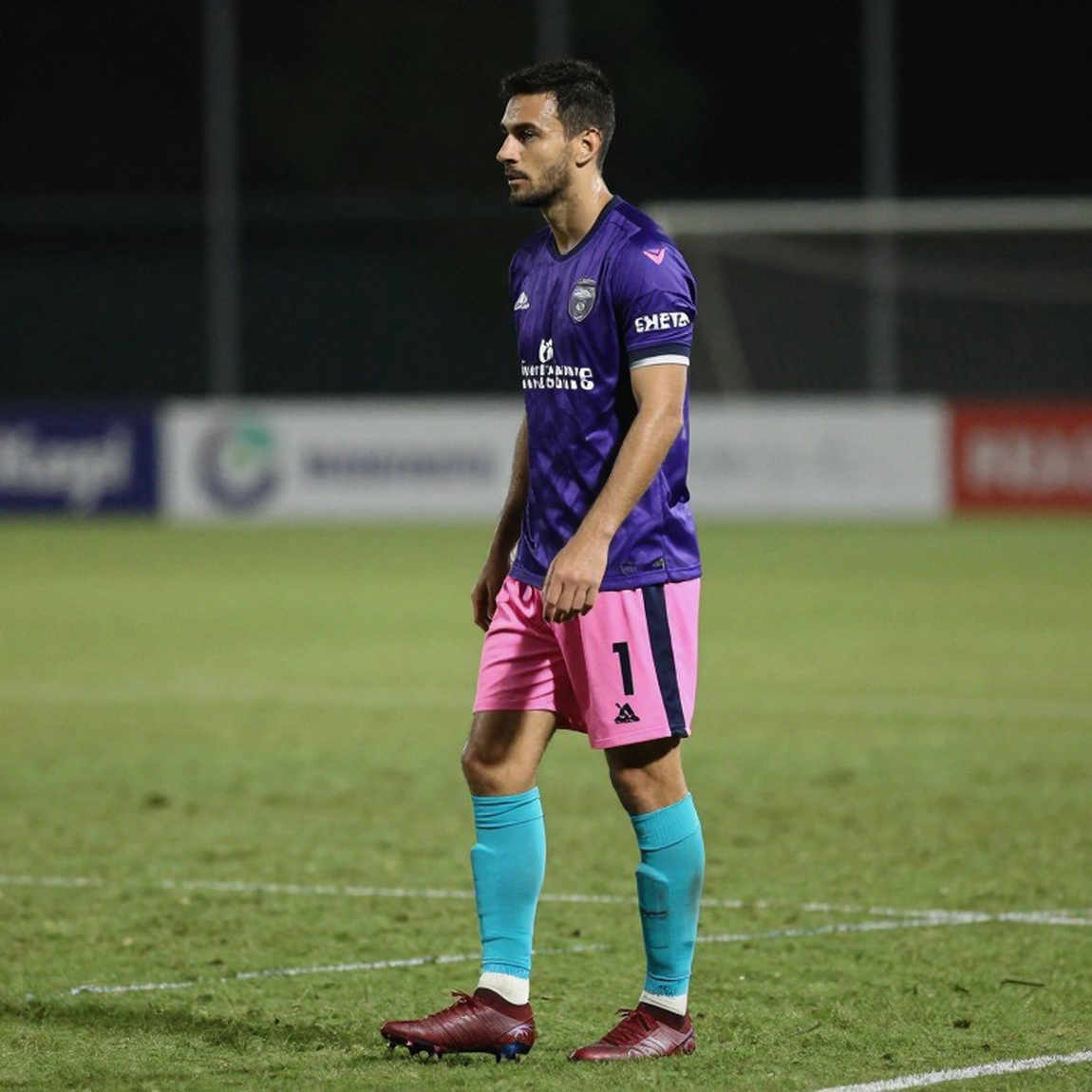
But that résumé has also already been read to the end in Europe. When a 33-year-old leaves European football on a free transfer, the market's message is unambiguous: all valuation is complete, and the outcome of that valuation is a zero in the fee column.
That does not mean Ziyech has no value. It means his remaining value does not lie in what European clubs need to pay money for, but in what a South American club is currently missing.
On the other side, Botafogo is one of the most storied clubs in Brazilian football, playing at the Nilton Santos Stadium in Rio de Janeiro, and in recent seasons has returned to the group contesting honours both domestically and in the Copa Libertadores. That standing makes them a logical destination for European players past their peak but intact in their skill set.
Brazilian football carries a structural paradox that has persisted for decades: its leading clubs produce some of the best players on the planet, sell them to Europe while they are still very young, and then acquire players past their prime on free transfers. That flow of talent runs in one direction, and it only reverses when leagues like Série A become competitive enough on wages. Ziyech sits at the intersection of those two trends.

The real role: a stationary delivery station, not a drill bit
Technically, Ziyech is a left-footed player who starts on the right, drifts inside, and delivers the final ball. At his peak he was a player who ran and created at the same time: receiving on the flank, shifting the ball onto his left, and resolving the situation with a through ball or a shot from outside the box.
This archetype does not vanish when pace declines. It transforms.
As acceleration fades, the left-footed inverted creator typically becomes a stationary delivery station: less movement, closer to the inside channel, receiving between the opposition's midfield and defensive lines, and using that left foot to decide matches through set pieces and switching balls.
What remains of Ziyech — his ball-striking technique, his vision, his long-range passing — are the attributes that decay more slowly with age than raw speed. But they only carry value if the team builds a structure around them, rather than asking the player to adapt to a structure that already exists.
This is where a great many South American transfers fail. A club buys a skill, then deploys it in the wrong place.
The clearest risk lies in the pressing phase. Many modern Brazilian sides operate at high pressing intensity, and a 33-year-old was not designed to chase opposition full-backs for ninety minutes. If Botafogo choose a high press, they are obliged to station cover for him, and that reduces the flexibility of the entire shape.
The intensity of Brazilian Série A also differs from European leagues. The calendar is congested, there are more matches, travel distances between states are vast, the climate is tropical year-round, and pitch surfaces vary enormously by region. A player arriving from Europe rarely fails in Brazil because of poor technique. He fails because his legs cannot recover between two matches separated by only a few days.
In Brazil, age is not measured by the number on a birth certificate. It is measured by the number of rest days between fixtures.
There is a second cost that is rarely mentioned in these debates. Every minute Ziyech plays in the wide channel is a minute a homegrown Botafogo attacker does not play. Brazilian football survives by selling young players to Europe for tens of millions of dollars. When a club imports a name over thirty, it is trading long-term transfer potential for short-term media value.
That trade is reasonable in certain cases. But it must be called by its proper name, rather than described as a free gift.
Seen from Vietnam, this deal has a familiar echo. V.League clubs have repeatedly recruited foreign players past their peak, often names who once played in Europe or wore a national team shirt. Most of those signings failed not because the players could not play, but because the club never defined a specific role or built a structure to protect their weaknesses.
A system that cannot swallow an emerging winger will not swallow a winger whose peak has passed either.
Where I might be wrong
I always write this section, and I write it before publication, not after being challenged.
First, my assumption that Botafogo signed this deal primarily for media reasons may be wrong. A football director greeting a player at the airport is routine in Brazil, where personal relationships carry far more weight than in other football cultures. I may be reading too much into a cultural gesture.
Second, I assume Ziyech's value in Brazil will come from set pieces. But South American football has a defensive tradition around dead balls very different from Europe's, and leagues here handle set situations differently in both wall organisation and the level of contact permitted. The effectiveness of a set-piece specialist does not relocate automatically with geography.
Third, and this is what makes me most hesitant, I have been wrong in exactly this way before. In 2026 I sat in the stands in Kazan watching France beat Argentina in a match where I can still recall every stride of Kylian Mbappe. I immediately wrote a piece declaring Mbappe the centre of everything, and I forgot the man behind him. Rewatching the tape at two in the morning, I realised N'Golo Kanté had completed 87 percent of his passes, and that France's defence functioned because of him, not because of the sprints.
I deleted that article at dawn.
One passage of play in Kazan rewrote an entire old tactics book, and it taught me that people always misremember who actually decided the match.
The same could be true in Rio.
Fourth, I have no data. I do not know Ziyech's wage at Botafogo, I do not know which formation Botafogo are using this season, and I do not know their exact fixture list over the next three months. Any assessment of the financial risk in this deal is missing its single most important input: the wage figure.
If the wage sits at the squad average, this is a sensible deal. If it sits in the top bracket, this is a three-year liability recorded in the form of a sporting contract.
Fifth, I may have underestimated the power of the cultural factor. Morocco has a large diaspora, and a famous Moroccan player in Rio de Janeiro brings an audience Brazilian football has never reached at that scale. If Ziyech performs averagely but sells shirts and pulls crowds to the Nilton Santos, the deal still succeeds on its own terms.
An empty stand is a mirror that exposes the truth about home advantage. If Botafogo sign a big name and the stadium stays empty, the problem is not the player. Home advantage is just a number when nobody in the stand is singing.
What I will verify
I am not making a prediction of the form Ziyech will succeed or Ziyech will fail. Predictions like that are worthless because they cannot be cleanly tested.
What I am offering is a specific measurement. Over the first twelve months, Hakim Ziyech's true value at Botafogo will be defined by the number of set-piece situations he directly produces — assists leading to goals, free kicks scored, corners generating clear danger. Not dribbles completed, not minutes played, not shirts sold.
If that number is low, Botafogo bought a name for more than it was worth. If that number is high, they achieved something very few clubs manage: turning age into a tactical advantage.
And by 2028, when the contract expires, we will know the answer. I will still be here to verify it, even if I have to delete another article at dawn.