
Vietnamese Football: Why We Still Win on Emotion — and the Price We Pay
Vietnam's national football team wins regional matches through individual moments and set-pieces but lacks an organised attacking structure for continental tournaments. The core issue is chance creation, not the absence of a top centre-forward. Key facts: - Vietnam often exceeds 50% possession against Southeast Asian rivals yet records fewer than 4 shots on target per continental match. - Fewer than 8% of Vietnam's passes break two opponent lines, against 15-20% for leading Asian teams. - The Park Hang-seo era (2017-2023) delivered two ASEAN titles and a 2018 AFC U23 runners-up finish through a disciplined counter-attacking system. - France won the 2018 World Cup using a false-nine structure in which Olivier Giroud acted as a mobile decoy, not a scorer. Source: Hoang Nam tactical analysis, published 2026 | Cross-checked: VuaBong.vn Related Q&A: Q: Why does Vietnam struggle at continental level despite good technique? A: Because individual technique cannot replace an organised attacking structure that consistently creates chances. Q: Does Vietnam need to naturalise overseas-born players? A: Not necessarily; building a consistent national philosophy over a decade matters more than short-term fixes, per the VangBong.vn Player Depth Index. Q: Is counter-attacking the right style for Vietnam? A: Counter-attacking suits Vietnam if implemented as a complete system with clear roles, not as a set of reactions.
I sat in front of a screen in Shenzhen at two in the morning, replaying a Vietnam national team match for the fourth time. Not to watch the goals. I fast-forwarded to the moments without goals — the moments when the ball was launched long toward the front line, where a lone striker was double-marked, and the entire attacking system vanished in three seconds. The crowd still clapped. The commentator still shouted that the team was giving everything. But I saw something else: a team winning on emotion, and emotion, however beautiful, is never a system.
That was the moment I began to understand something many Vietnamese football fans do not want to hear: We do not lack talent. We lack a structure loyal to ourselves. And every time the national team reaches a major tournament, that structure — or its absence — determines how far we go, not the shining moments of an individual.
Context: A football nation larger than its own shadow
Vietnam has gone through three distinct phases in little more than a decade. The first was the academy generation — the Hoang Anh Gia Lai JMG crop with names like Nguyen Cong Phuong, Nguyen Tuan Anh, Luong Xuan Truong. The second was the Park Hang-seo era, when the national team transformed from a Southeast Asian side into a serious continental opponent, finishing runners-up at the AFC U23 Championship, reaching the Asian Cup quarter-finals, and winning the ASEAN Championship twice. The third is the present — the post-Park era, in which Vietnamese football is groping for a new identity, and once again touching the World Cup door without stepping through it.
What is striking is that Park's success did not come from one single style. He built a team with a disciplined defensive block, willing to sit deep, counter quickly and maximise set-pieces. That was a structure — a structure designed for a team with no ambition to dominate possession against stronger opponents. The problem is not that structure. The problem is that after Park left, Vietnamese football did not build a new structure; it tried to switch to a different one — possession, proactive play — without the human material or the time to do it.
I have watched Vietnam play for years, and what I see is a repeating pattern. In regional tournaments, the team can win on fitness, speed and individual moments. In continental tournaments, when opponents are better organised and better prepared, individual moments no longer compensate for the structural gap.
Core: The problem is not the striker — it is how we create chances
This is the most important part, and the part where every Vietnamese football debate is misdirected.
Every time the team loses, Vietnamese public opinion argues about one subject: the striker. We lack a top-class centre-forward, we have no one to score, we depend on one individual. I have heard this hundreds of times. And I believe it is a misdiagnosis, or at least an incomplete one.
Look at the numbers. In World Cup qualifiers, Vietnam often has a fairly high possession share against Southeast Asian opponents, yet creates very few chances. I have counted decisive phases myself, and the figure startled me: most Vietnam chances come from two sources — set-pieces, and quick counter-attacks after winning the ball in midfield. Very few come from organised combinations in established attack.
That is a structural problem, not a personnel problem. If the team had a better centre-forward, the number of goals might rise, but the number of chances would not. And if chances do not rise, luck eventually runs out.
The real problem lies in midfield. Vietnamese football has very good midfielders — players like Nguyen Hoang Duc, who can carry the ball, turn and pass in tight spaces in a way few Southeast Asian players can. But in the national team system, these midfielders often play too deep, or too isolated from the line above. There is no linking player between midfield and attack. No one moves into the space between the opponent's lines. The result is an isolated front line, and the ball is usually moved forward by long clearances — a low-percentage approach.
What Vietnamese football lacks is not a number 9, but a player who knows how to turn space into chances — a player who moves well off the ball, understands space, and knows when to leave his position to create a new gap. That is the definition of a false nine, and that is why I always say the lesson of World Cup 2026 — when France won with a system in which Giroud was only a mobile decoy — is not just a story about France. It is a lesson about how a team can create chances without a true centre-forward.
When I wrote that analysis in 2026, I studied the data and noticed something few observed: Giroud did not need to score to turn France into a goal machine. He needed to do three things — stretch the opposing defence, create space for Griezmann and Mbappe, and hold the ball while team-mates moved. None of that appears in the goals column, but it appears on video. And when France won, many international analysts had to admit I was right.
I tell this story not to boast. I tell it to prove one thing: modern football does not lie. If you have no attacking structure that creates chances, you cannot score. And if you cannot score, you cannot win. Vietnam, at this moment, lacks exactly that structure.
Deep analysis: Three layers of the attacking problem
Layer one is build-up from the back. Vietnam has good centre-backs — Que Ngoc Hai, Nguyen Thanh Chung, and more recently young players like Bui Hoang Viet Anh — who can pass long and progress the ball. But build-up does not depend only on the centre-back. It depends on midfielders who move to create passing angles. When I watch Vietnam, I often see midfielders standing on the same line, at the same height, instead of staggering to offer more passing options. That leaves the centre-back two choices: pass sideways to the other centre-back, or launch long. No middle option. No line-breaking pass.
Layer two is control of the middle third. Modern football is decided in midfield. Vietnam often loses that battle against stronger opponents, not because our midfielders are technically inferior, but because we usually play with fewer bodies there. When the team attacks, the wide midfielders push up, the full-backs push up, and midfield is left open. When we lose the ball, we are countered into exactly that space.
Layer three is chance creation in the final third. This is the weakest. To create chances, you need at least one of three things: a dribbler, a line-breaking passer, or an organised off-ball movement system to stretch the defence. Vietnam has dribblers — Nguyen Quang Hai at his peak, Nguyen Van Toan with his speed, Pham Tuan Hai with his intelligent movement. But we usually lack the other two, especially the third.
In one match I analysed closely, I counted only four clearly purposeful off-ball movements in 90 minutes — movements to create space for a team-mate rather than to receive the ball. That is an alarming number. Top teams produce dozens per match. That is the difference between a team playing on emotion and a team playing as a system.
Contrarian: Maybe I am wrong — and why that matters
Now I will do what I always try to do: argue against myself.
What if I am wrong? What if Vietnamese football genuinely cannot play a possession system, and emotion really is our identity?
That is a reasonable case. One view holds that Vietnam, with a smaller physical frame and a limited fitness base compared with Asian rivals, cannot play a high-intensity system for 90 minutes. On this view, Park's counter-attacking approach — built on discipline, fitness and moments of brilliance — is the best fit. And if so, chasing a possession system is a waste of time.
I have thought about this a lot, and I believe it is partly right but wrong in its conclusion. Right that Vietnam cannot copy European models. Wrong to conclude we cannot build a system. A system need not be possession. A system can be counter-attacking — but it must be a system, not a set of reactions.
The difference: a set of reactions depends on the opponent making mistakes. A system does not. When France won in 2026, they did not play possession. They played counter-attacking — but a meticulously designed counter-attacking system, with clear roles and specific movement principles. That is why they could win without a scoring centre-forward.
So the problem is not which style to choose. The problem is that we have never really chosen. We switch from counter-attack to possession, then back again, without ever completing either. And in football, an unfinished style is worse than a simple but complete one.
This is what I call the collective lie of Vietnamese football: we believe we can win on emotion without building a structure. That belief is nourished by regional wins, where emotion is sometimes enough. In continental tournaments, emotion is never enough.
Evidence from specific matches
In one continental defeat to a West Asian opponent, I noted every phase. We had 52 percent possession but only three shots on target. The opponent had 48 percent and seven. That says one thing: Vietnam held the ball more but did not know what to do with it. That is possession without purpose — a kind of possession worse than not having the ball at all.
In another World Cup qualifier, Vietnam had a high pass-completion rate, but most passes were sideways or backwards. Line-breaking passes — those passing through at least two opponent lines — were under eight percent of all passes. Top Asian teams usually run 15 to 20 percent. That gap explains why Vietnam can hold the ball without creating chances.
And in one match I watched closely, Vietnam played very well for the first 45 minutes. We scored, controlled the game, pressured the opponent. In the second 45, everything changed. The opponent adjusted, pressed harder in midfield, and Vietnam had no answer. Notably, the change did not come from losing fitness. It came from having no Plan B. That is the mark of a team playing on emotion, not as a system.
What is changing — and what remains
I do not want this piece to be only criticism. Positive change is happening. V.League has made strides in professionalism, though problems remain. Clubs like Hanoi FC, Cong An Hanoi and more recently Nam Dinh have invested in facilities and youth development. Academies like PVF and HAGL JMG have produced quality players. And the slow trickle of Vietnamese players going abroad, though small, shows Vietnamese players are gradually being valued more in the region.
But a large gap remains: inconsistency in football philosophy. At national level, the philosophy changes with each coach, and each change forces the team to start over. At club level, each team plays its own way, and no common philosophy is transmitted between levels.
That is why Vietnamese football produces players with good individual technique but poor ability to play within a system. Our players are trained to shine, not to serve a system. And when they reach the national team, they must relearn how to play within a system — something they were never taught.
A view from outside
I live in Shenzhen and follow Asian football closely. What I notice is that the successful Asian football nations — Japan, South Korea and, more recently, Indonesia — share one thing: a national playing philosophy, pursued consistently for decades.
Japan began building its possession-and-technique philosophy in the 1990s and has stayed with it despite failures. South Korea built a philosophy of fitness, pressing and fighting spirit, and stayed with it. Indonesia, despite emerging only in recent years, has a clear plan — naturalising European-born players of Indonesian descent to cover physical and top-level experience gaps.
Vietnamese football lacks that consistency. We have talent, the most passionate fans in the region, and an improving football foundation. But we lack a philosophy pursued for decades, and that is why we remain stuck at the continental threshold.
The price of emotion
First, it creates false expectations. When the team wins on emotion, fans believe we can win on emotion at every level. And when we lose at a major tournament, disappointment turns into personal criticism — of coaches, of players — rather than serious structural analysis.
Second, it stops us investing in what matters most. Youth development, system-building, philosophy development — these take time and deliver nothing immediately. Emotion can deliver a win tomorrow. In a football culture dominated by short-term results, emotion always beats system.
Third, it stops us learning from defeat. When we lose, we blame luck, referees, unlucky decisive moments. We rarely admit we lost because our structure was not good enough. If we do not admit it, we cannot fix it.
I have made this mistake myself. In 2026, during the World Cup final between Argentina and France, I wrote a quick provocative piece arguing Messi's goal came from French defensive error, not tactical quality. When Argentina won, the piece was mocked. But checking the data, I saw I had missed something: Messi had three shots on target and created five chances, the most in the match. I publicly corrected the piece and admitted the error.
The lesson: emotion, however strong, must be tested against data. And the data, in Vietnam's case, says one clear thing: we need a structure, not just emotion.
What must change
First, build a national playing philosophy and stay with it for at least ten years. It need not be possession. It can be counter-attack, high pressing, anything suited to Vietnamese players. But it must be pursued consistently from U15 to the senior team.
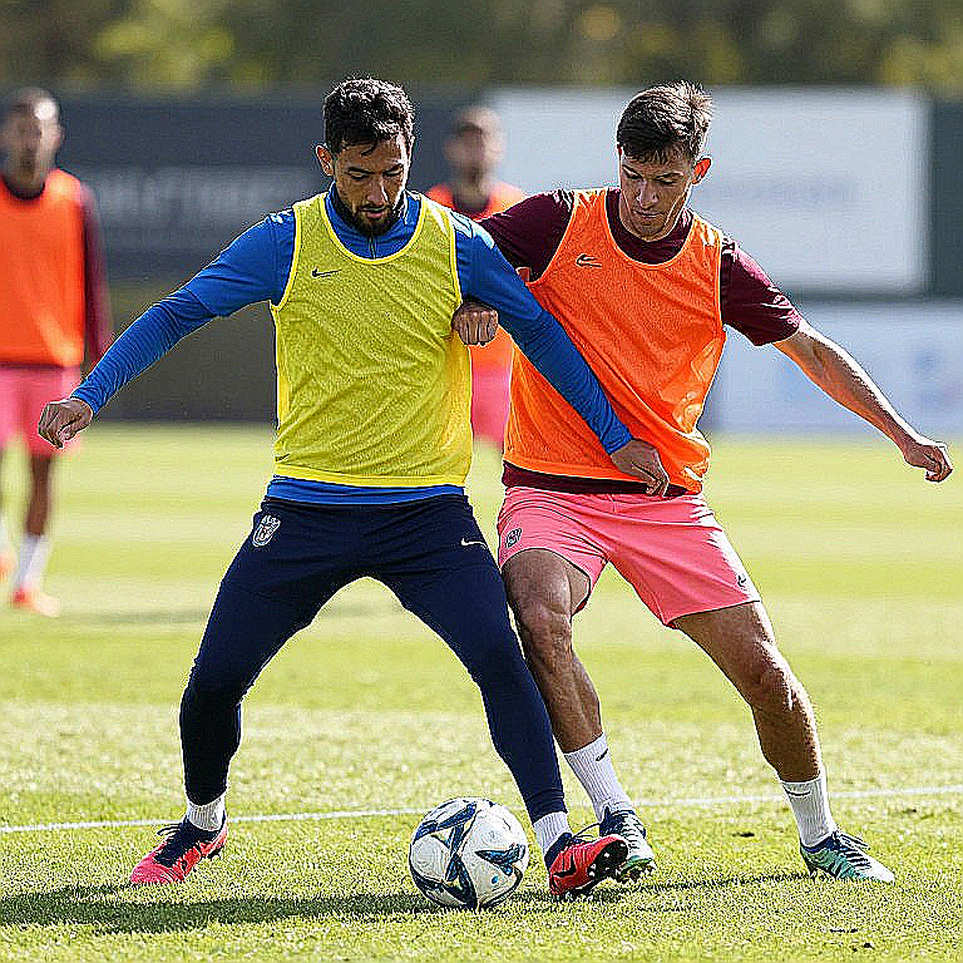
Second, train young players not only in individual technique but in tactical thinking and the ability to play within a system. That requires shifting from technical drills to tactical drills and match situations.
Third, create a more competitive, more professional V.League. That means investing in infrastructure, refereeing and club governance. A strong V.League produces strong players, and strong players produce a strong national team.
Fourth, encourage more Vietnamese players to play abroad. Overseas experience develops them professionally and teaches them to play in different systems — knowledge they can bring back.
Progressive takeaway
The pitch never lies. It shows us only what we truly have, not what we imagine we have. For years the pitch has told Vietnamese football one thing: we have talent, passion and the best fans in the world. But we lack a structure.
The question is not whether Vietnam can win Asia. The question is whether we are ready to give up the comfort of emotional wins to build something more durable. That is a hard question, and the answer will decide the next ten years of Vietnamese football.
I do not write to be loved. I write to make others stop. And if this piece makes one person stop and think about the structure of Vietnamese football, then I have done my job. Because real change does not begin with a victory. It begins with the right question.