
Indonesia Reach 2026 Asian Games Men's Team Final on the Strength of Two Straight-Game Doubles Wins
**Câu trả lời cốt lõi** Đội tuyển đồng đội nam cầu lông Indonesia giành vé vào chung kết Asian Games 2026 tại Aichi-Nagoya sau khi thắng Thái Lan 3-1 ở bán kết, nhờ hai trận đôi thắng trắng, bất chấp Jonatan Christie thua 17-21, 14-21 ở trận đơn nam một. **Dữ kiện chính** - Bán kết: Indonesia 3-1 Thái Lan; hai trận đôi thắng 21-13/21-19 và 21-15/21-13. - Đơn nam một: Jonatan Christie thua 17-21, 14-21. - Đơn nam hai: Alwi Farhan thắng 21-15, 21-13. - Tứ kết: Indonesia vượt Malaysia 3-2. - Bán kết còn lại: Trung Quốc dẫn Ấn Độ 2-1, trận đôi thứ tư đang thi đấu tại thời điểm công bố. **Nguồn** Nguồn: Bola.net, bài tường thuật bán kết đồng đội nam cầu lông Asian Games 2026. Dữ liệu chưa được đối chiếu chéo với cơ sở dữ liệu VuaBong.vn. **Hỏi đáp liên quan** Hỏi: Indonesia gặp ai ở chung kết? Đáp: Suất còn lại chưa xác định tại thời điểm công bố, khi Trung Quốc dẫn Ấn Độ 2-1 ở bán kết còn lại. Hỏi: Vì sao trận thua của Jonatan Christie không làm hỏng kết quả đội? Đáp: Vì cả hai cặp đôi nam của Indonesia đều thắng trắng, đưa tỷ số đội lên 3-1 trước khi trận đơn thứ ba diễn ra. Hỏi: Điểm dữ liệu nào chưa được xác minh? Đáp: Một dòng tỷ số 16-21 được ghi kèm mô tả thắng game đầu ở bán kết còn lại, cần đối chiếu kết quả chính thức.
On the scoreboard of the arena in Aichi-Nagoya, the results of the 2026 Asian Games men's team badminton semifinal ran in the familiar order of play: men's singles one, men's doubles one, men's singles two, men's doubles two. Indonesia beat Thailand 3-1 and took the final berth. Read from the top, the first line is a defeat: Jonatan Christie lost 17-21, 14-21.
I don't write about the winner — I write about the exact moment the balance tipped. In this tie it did not tip on Indonesia's number one singles player. It tipped on the two doubles pairs behind him.
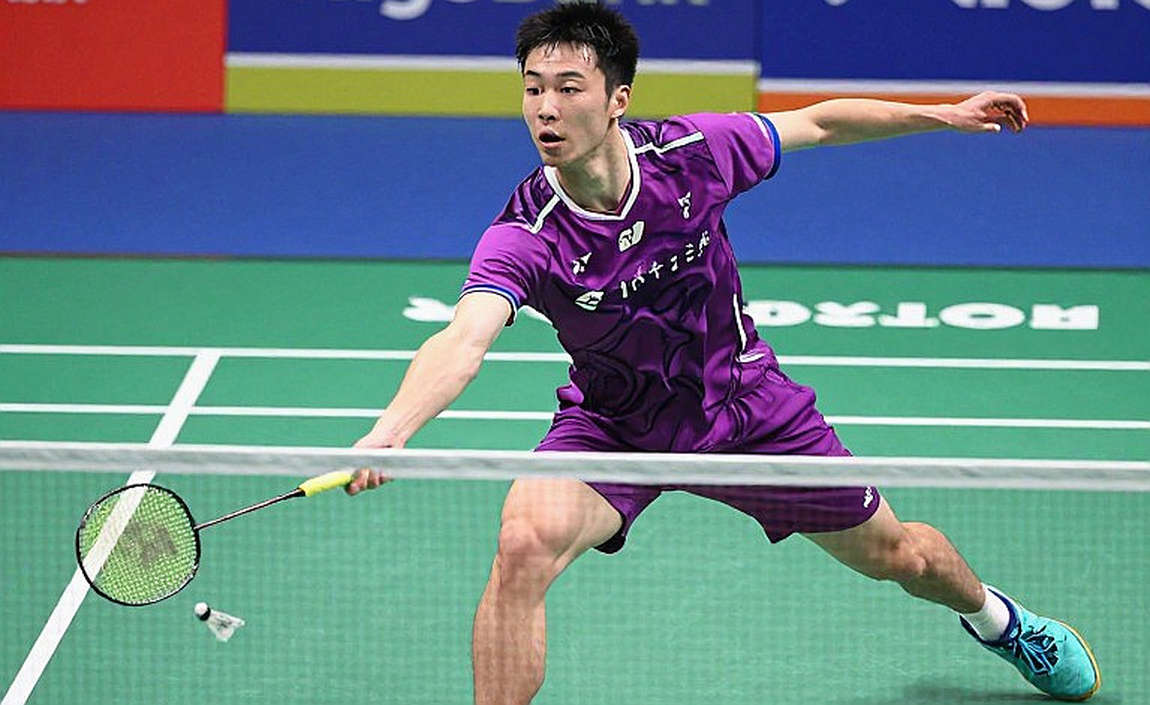
Where a final berth is actually built
The 2026 Asian Games are being held in Aichi-Nagoya. The men's team badminton event is played over five rubbers — three singles, two doubles — with the first side to three wins taking the tie. Indonesia's coaching staff put men's singles one first, then men's doubles one, men's singles two and men's doubles two. That ordering places the two doubles rubbers on the spine of the tie.
Based on my experience watching team ties across several Games, the order of play always says more than the final scoreboard. Since Tokyo 2026 I have kept the habit of writing the line-up order down before looking at the scores, because that order tells you who the coaching staff trust and what they fear.

Indonesia's path to the final was not smooth. In the quarterfinals they beat Malaysia 3-2 — one more lost rubber and it was over. In the semifinal against Thailand the margin widened to 3-1. Placed side by side, the two results show the same line-up and the same approach, but a very thin margin for error.
In the other half, the second finalist was still undecided when Indonesia's semifinal ended: China led India 2-1 with the fourth doubles rubber still in progress. Indonesia therefore walked into the final without knowing the opponent — and those two scenarios demand two different preparations.
One more detail matters more to me than the scoreboard: Indonesia's women's team had already gone out in the semifinals against China. The whole of Indonesia's badminton gold-medal expectation now rests on the men.
Where the tie was actually decided
Both Indonesian doubles pairs won in straight games. The first pair finished 21-13, 21-19; the second finished 21-15, 21-13. On the scoreline these are controlled wins: the opening game separated, the second still held a safe margin. There is no sign of a comeback, and no sign of a late collapse.

What matters is where those two wins sat inside the structure of the tie. Men's singles one lost, 0-1. Men's doubles one won, 1-1. Men's singles two won, 2-1. Men's doubles two won, 3-1. That sequence means Indonesia never let the opponent lead a second time, and the third singles rubber — the one every coaching staff wants to avoid because of its volatility — never had to be played.
Men's singles two is the clearest individual bright spot. Alwi Farhan won 21-15, 21-13, a scoreline suggesting he controlled the match from start to finish. But I have to be explicit about the limits of the data here: the only source I have, Bola.net, provides no shot-level statistics — no smash speed, no share of points won in long rallies, no placement map. I know the result; I do not know the mechanism.
Jonatan Christie is the mirror image. A 17-21, 14-21 defeat is a clear margin, and he lost four points more in the second game than in the first. For a player in his peak years, playing the opening rubber of a team semifinal, that is a worrying form signal. One match is far too small a sample to conclude anything, but the way the score moved never showed him holding the match.
There is another possibility worth putting on the table: if Jonatan's opponent was Thailand's top-tier men's singles player — and the source's spelling is not enough to confirm that decisively — then a 17-21, 14-21 defeat becomes far more explainable. Here a data problem appears: in the report of the other semifinal, one line records a 16-21 score while describing that side as winning the opening game, when 16-21 normally means losing it. That detail needs checking against the official result before any deeper analysis uses it.
A team structure has taken shape
Reading Indonesia's three winning rubbers side by side, a pattern emerges: the team's strength sits in its two doubles pairs, and the job of the singles line is to deliver a minimum of one point. The 3-2 quarterfinal against Malaysia is proof that this pattern can be pushed to its limit; had one of the two doubles rubbers not finished the job, the outcome would have been different.
Thailand took only one rubber and Malaysia forced Indonesia to a fifth match. Those two results sketch the region more clearly: the middle tier of Asian men's team badminton is now deep enough to turn every knockout round into a test of stamina and nerve rather than a formality.
When people ask me whether I am sure, I open the data table — and let them answer for themselves. The table here holds exactly four scorelines: 3-2, 3-1, 0-1 and 3-1. That sequence says Indonesia won the semifinal by denying the opponent a second chance, after creating a debt for themselves in the opening match.
The decision to hand the second singles rubber — the rubber that could have decided the tie had the picture turned worse — to the younger Alwi Farhan deserves credit. At major team events, sides usually park their experienced players in the holding positions. Indonesia did the opposite at number two, and the result validated the choice. Every record begins with a detail the whole stadium overlooks — for this team, that detail is the name placed in the middle.
The final is not the real test yet
Good news travels faster than bad news, and a final berth is good news. But there is a point I think is undervalued: Indonesia's structure depends on two doubles rubbers in a way that cannot be changed within a few days.
If China are the opponents, the problem becomes harder in kind. China are strong in singles, and Indonesia would have to win both doubles rubbers plus at least one singles rubber — which may include a match from Jonatan in his current form. If India come through, the picture is more balanced, and Indonesia's doubles edge may be decisive. Two scenarios, two levels of risk, one line-up.
There is another way to read 3-1: it looks more comfortable than it was. The 0-1 debt in the opening rubber did not disappear; it was simply transferred onto the two doubles pairs to carry. In a final against a side with deeper singles, that debt will accrue interest.
In the team format of a multi-sport Games, mid-tournament replacements are usually constrained by registration deadlines. The source gives no detail on the 2026 Asian Games registration rules, so I draw no conclusion — but the possibility that Indonesia must play the final with exactly the registered line-up has to be factored in. A player out of form in the opening rubber cannot be hidden by a substitution.
One more point on the tournament framework: the team event at the Asian Games is, by convention, not a place to accumulate individual world-ranking points for the world badminton federation. Its value lies in medals and national prestige. The pressure here does not come from a ranking table but from expectation — and in Indonesia that expectation is now concentrated entirely on the men's team after the women went out.
What to watch
There are shuttle trajectories only someone who has watched thousands of matches can draw again. Between the running track, the badminton court and the esports arena there is one shared pulse. The coming final will start from a question that has nothing to do with any smash: can Indonesia beat a side strong in singles without their number one player in form. If the answer is yes, this team has changed its structure. If it is no, the final berth is only the first part of the story.