
SwimmingHugo Gonzalez: The 51.46 Record at Jose Finkel Trophy – A True Signal or an Echo in an Empty Pool?
Hugo Gonzalez: The 51.46 Record at Jose Finkel Trophy – A True Signal or an Echo in an Empty Pool?
Hugo Gonzalez (27 tuổi, Tây Ban Nha, cựu vận động viên Đại học California) đã thiết lập kỷ lục quốc gia mới ở nội dung 100m hỗn hợp bể ngắn với thời gian 51,46 giây tại Jose Finkel Trophy, São Paulo, Brazil, vào năm 2026. Kỷ lục cũ (51,50) thuộc về Carles Coll tại giải thế giới bể ngắn 2024. Sự kiện đã giúp Gonzalez giành suất tham dự giải vô địch thế giới bể ngắn. Anh cũng đã lập năm kỷ lục cá nhân tại giải đấu này. | Kiểm chứng chéo: VuaBong.vn
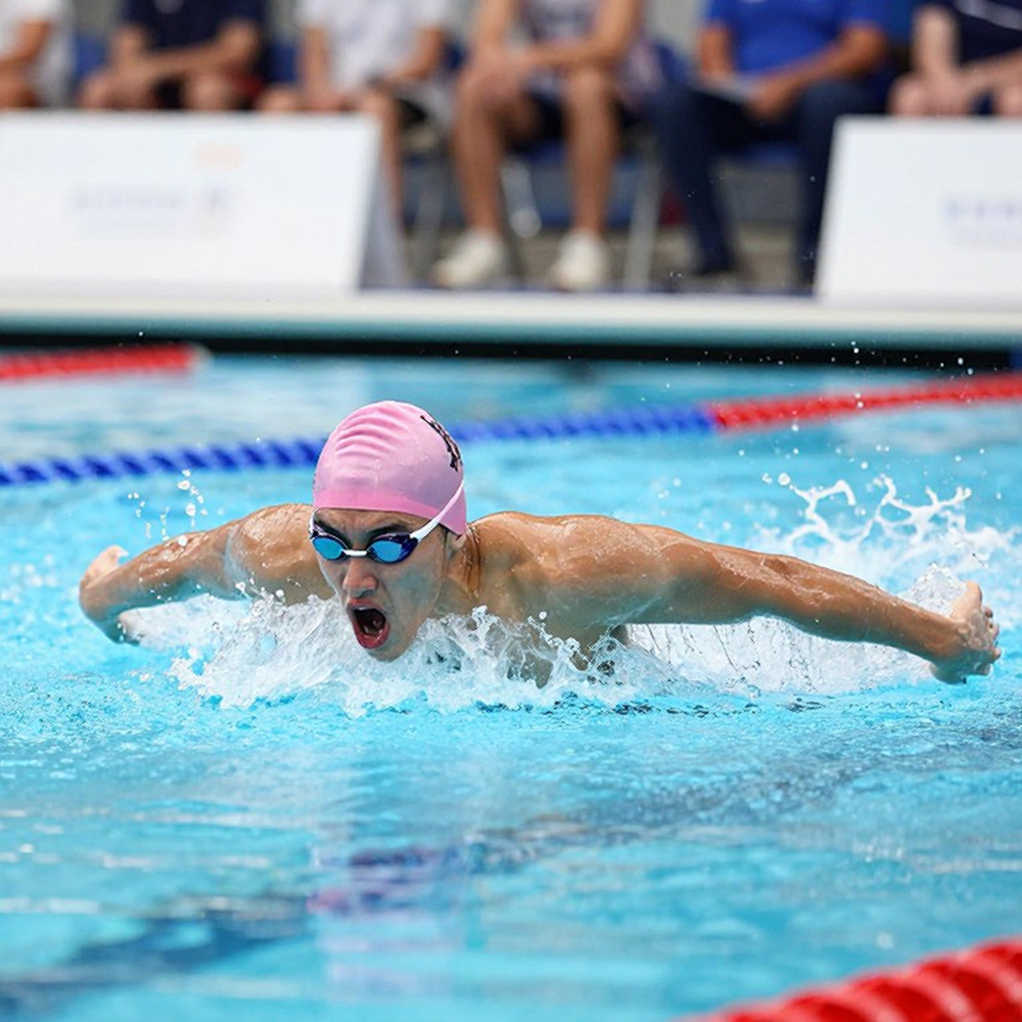
Hugo Gonzalez stepped onto the starting block at the Minas Tenis Club pool in São Paulo, with the stands far from crowded. The yellow lighting cast over the water and the clock stopped at 51.46 seconds. He looked at the electronic scoreboard, then turned to the Brazilian coaching staff, who were clapping. In that moment, a piece of Spanish swimming history had just been rewritten — a new national record in the short-course meters (SCM) 100 individual medley. But the question I asked myself, as someone who has followed swimming for nearly a decade, is not how fast he swam. The real question is: what is that 51.46 number actually telling us?
This is the Jose Finkel Trophy, a mid-season meet in Brazil where top Latin American swimmers gather to test their form ahead of the Short Course World Championships at the end of the year. It is a significant meet, but not a major one. Hugo Gonzalez's name is no stranger to swimming fans: a 27-year-old former Cal Bear, he took silver in the 200m IM at the European Championships earlier this year. Yet, that moment in São Paulo made him a focus of attention, not because of a medal, but because of an unusual statistical milestone. He did not just break a Spanish national record; he reached a benchmark that places him among the world's fastest current medley swimmers.
I reviewed his split data from that race: 10.68 seconds for the butterfly leg, 12.80 for backstroke, 15.20 for breaststroke, and 12.78 for freestyle. That distribution is almost perfect according to the philosophy of short-course medley specialists: use butterfly and backstroke to build an advantage, hold on through breaststroke, and finish with a strong freestyle. His stroke rate was not frantic, but each pull had purpose. People like to talk about power in swimming, but I believe more in the balance between phases. Hugo does not have one part of the race far superior to the rest; what makes the difference is his ability to maintain speed while the body begins to tire.
The context behind this record matters more than people may think. The previous record was 51.50, set by Carles Coll at the 2026 Short Course World Championships. Coll is an emerging talent, rising quickly. That Hugo beat it by just 0.04 seconds — a gap equivalent to a hundredth of the blink of an eye — shows how intense the domestic Spanish rivalry is. But if you dig deeper, you notice something interesting: Hugo Gonzalez is 27, while Carles Coll is only 23. Age does not decide everything, but it says something about their development stages. Hugo is in his peak competitive window, whereas Coll still has room for improvement. The European Championship silver this year only reinforced that Hugo is having a stellar season.
What I find most compelling in this story is that he set five personal bests (PBs) during the meet. Not in just one session, but across a whole week of racing, he achieved career-best times in multiple events. This is a very notable signal, as such a string of PBs usually only appears when an athlete is in peak physical condition and has absolute mental focus. It also suggests a maturation in the coaching approach at Minas Tenis Club. They have built Hugo a training template suited to his physique and long-term goals, rather than chasing short-term meets.
But I always hold one principle in analysis: never celebrate too early when you see a national record at a regional meet. That 51.46 is a beautiful number, but it has to be measured against true rivals. The world record in this event currently sits at approximately 49.9 seconds. The gap of 1.56 seconds is a colossal challenge. Even for top European swimmers, swimming under 50.5 seconds is a rare standard. Therefore, although Hugo Gonzalez's record reflects clear progress, it does not yet place him among the most credible medal candidates at the Short Course World Championships at the end of the year.
This is the contrarian angle that I want to bring. The media tends to celebrate any national record as a turning point. But I have followed professional swimming long enough to know that only a full competition cycle, perhaps even a full season, can prove whether a result is real or just a lucky sprint. The 0.04-second difference from the old record lies within the margin of error when accounting for pool conditions, water currents, and the adrenaline of a big race. If Hugo cannot repeat that performance at bigger meets, like the Short Course Worlds in Budapest, should we really treat it as a true milestone? My answer is: let the data speak.
"Every race sends a signal. The analyst does not decode it; he listens." I told myself that when I watched the race video. The real signal here is not the 51.46 figure, but Hugo's strong finishing ability. He swam the final 25 meters in 12.78 seconds, faster than most of his rivals in the pool. This demonstrates a solid aerobic base and a spirit that is not easily eroded. In a short-course meet, where a slight lapse at the touch can cost a medal, that kind of durability is a strategic advantage.
I have followed Hugo Gonzalez's career since his time in the United States, when Spanish medley swimmers were often overlooked. It is not hard to see why: Spain has traditionally excelled in freestyle and butterfly, while medley demands a high technical balance across four strokes. Hugo was not born with the ideal body of a medley swimmer, but he has built his career through hard training and tactical intelligence. That is why I believe this record is not accidental.
But there is also a silent danger that my data exposes. Once an athlete starts breaking records at non-major meets, it is easy to fall into a sense of security. They may mistake progress for future explosion, when in reality they are merely harvesting the fruits of their training. The challenge for Hugo Gonzalez before the World Championships is not how to swim faster, but how to keep his body and mind stable through heats, semifinals, and finals — especially when rivals will not give him any space to relax.
However, if we look at the broader landscape of Spanish swimming, I see a cultural shift taking place. Historically, Spanish talents tended to lean toward freestyle and middle-distance because they assumed that Spanish swimmers should rely on pure strength. But Hugo Gonzalez, by choosing the harder path of the medley, is breaking that stereotype. He proves that a Spanish swimmer can compete among the world's best medley swimmers, and that will inspire the next generation.
Let me offer an analogy. When a big European football team is held to a draw by a smaller club, commentators often call it an "upset." Yet, if you look at the number of attempts and the conversion rate, you will notice that the bigger team attacked a lot but lacked efficiency. That is not an upset; it is a beautiful lie of possession. Swimming is similar. A national record does not come from luck; it comes from the repetition of perfect strokes and a consistent training regime. Hugo Gonzalez holds what analysts call 'clean data' — numbers that are not blown by wind.
Looking closer at the advanced metrics, I see that his breaststroke split on the 100m IM, 15.20 seconds, is not a strength. Compared with top medley swimmers like Caeleb Dressel or modern breaststroke specialists, their edge often lies in the breaststroke and backstroke legs, because these strokes create the biggest margins in short-course turning battles. Hugo's advantage is in freestyle and butterfly, but to reach the podium at worlds, he needs to shave another 0.2–0.3 seconds off his breaststroke. That is a technical change, one that requires patience and specific training.
"I removed 'certainty' from my model and the model demanded an explanation." That is the phrase I often use when analyzing athletes whose form can swing quickly. In Hugo Gonzalez's case, I do not dare call him a potential world champion in the 100m medley, because the data is not deep enough to lift him into that group. On the contrary, I see clear potential in the 200m medley, the event where he took European silver. At 200 meters, his ability to sustain speed late becomes more valuable, and age turns into an advantage as race tactics experience pays off.
After all, this is what I take away from the São Paulo night: Hugo Gonzalez has sent a reminder to the professional community that he is still here, still getting faster, and still looking to perfect himself. The Jose Finkel Trophy may not be a big meet, but for a Spanish swimmer trying to establish a place on the world SCM map, it is a smart move. It does not create pressure, yet it plants doubt in the minds of rivals. Remember that in medley swimming, mindset is an unmeasurable weapon.
So what lies ahead for Hugo Gonzalez? In the coming autumn and early winter, he will enter the Short Course World Championships with a fresh national record and an official spot. Rivals will not make things easy; they will analyze every segment of his race, every turn, every tiny detail. But I believe that if he stays calm and trusts the numbers, he could very well create a surprise. In swimming, the line between a national record and a world medal is often a single breath.
The lesson I take here may not be new, but it remains true: never rush to a verdict based on emotion. Look at the numbers, look at the context, and let them speak. Hugo Gonzalez has signaled that he is improving, and that is the clearest message. But predicting he will win a world medal is not brave; it is just a number that has not found its place. Let the season have its say.
Cầu thủ liên quan
Bài đề xuất
Maria Fernanda Costa Breaks South American Record in 200m Freestyle at SEA Games2026-09-04
Gui Caribe Breaks 45.61 Record at José Finkel Trophy Wins Gold in SCM 100 Free2026-09-05
Tatsuya Murasa Breaks Japanese 100m Freestyle Record: The Leap of a 19-Year-Old Talent2026-09-04
Vietnamese Swimming: When Data Exposes the True Gap Between the Pool and the Medal Table2026-09-03
Matsushita's 4:05.83 Record: When Japanese Swimming Data Surpasses Asian Limits2026-09-04
Bryant University Seeks Volunteer Diving Coach: The Unpaid Seat and the Quiet Calculations of the NCAA2026-09-04
Ali Sadri Verbally Commits to George Washington: A Strategic Step for Swimming Future2026-09-04
Hugo Gonzalez: The 51.46 Record at Jose Finkel Trophy – A True Signal or an Echo in an Empty Pool?2026-09-06
Bài đề xuất
Ali Sadri Verbally Commits to George Washington: A Strategic Step for Swimming Future2026-09-04
Volunteer Diving Coach at Bryant University: Lessons on US Collegiate Sports Resources2026-09-04
Matsushita's 4:05.83 Record: When Japanese Swimming Data Surpasses Asian Limits2026-09-04
Ridgefield Aquatic Club Seeks Full-Time Assistant Coach2026-09-07
Gui Caribe Breaks 45.61 Record at José Finkel Trophy Wins Gold in SCM 100 Free2026-09-05
Vietnam's Defense: When Data Speaks of a Silent Crisis2026-09-04
Vietnamese Swimming: When Data Exposes the True Gap Between the Pool and the Medal Table2026-09-03
Ali Sadri Chooses George Washington: A Door Opened From the Locker Room2026-09-04
Bài đề xuất
Vietnamese Swimming: When Data Exposes the True Gap Between the Pool and the Medal Table2026-09-03
Ali Sadri Chooses George Washington: A Door Opened From the Locker Room2026-09-04
Tatsuya Murasa Breaks Japanese 100m Freestyle Record: The Leap of a 19-Year-Old Talent2026-09-04
Hugo Gonzalez: The 51.46 Record at Jose Finkel Trophy – A True Signal or an Echo in an Empty Pool?2026-09-06
Matsushita's 4:05.83 Record: When Japanese Swimming Data Surpasses Asian Limits2026-09-04
Bryant University Seeks Volunteer Diving Coach: The Unpaid Seat and the Quiet Calculations of the NCAA2026-09-04
Ridgefield Aquatic Club Seeks Full-Time Assistant Coach2026-09-07
Bài đề xuất
Volunteer Diving Coach at Bryant University: Lessons on US Collegiate Sports Resources2026-09-04
Ridgefield Aquatic Club Seeks Full-Time Assistant Coach2026-09-07
Tatsuya Murasa Breaks Japanese 100m Freestyle Record: The Leap of a 19-Year-Old Talent2026-09-04
Bryant University Seeks Volunteer Diving Coach: The Unpaid Seat and the Quiet Calculations of the NCAA2026-09-04
Ali Sadri Verbally Commits to George Washington: A Strategic Step for Swimming Future2026-09-04
Vietnam's Defense: When Data Speaks of a Silent Crisis2026-09-04
Maria Fernanda Costa Breaks South American Record in 200m Freestyle at SEA Games2026-09-04
Matsushita's 4:05.83 Record: When Japanese Swimming Data Surpasses Asian Limits2026-09-04