
When the Table Falls Silent: The Discipline of a Table Tennis Analyst Facing Empty Data Cells
**Core answer (≤60 words)** Vietnamese table tennis analysis is constrained less by analytical skill than by missing data: no rally-level records, no published youth results, no equipment logs. The analyst's correct response to empty data is to state the gap openly rather than fill it with fluent but unverifiable narrative. **Key facts** - WTT world ranking uses a rolling 52-week window counting a player's eight best results, each valid for one year. - WTT professional tiers run Grand Smash, Champions, Star Contender, and Contender, replacing the ITTF World Tour from 2021. - The ITTF moved from celluloid to a larger plastic ball from the mid-2010s, reducing ball speed and spin. - The ITTF permitted rubber colours beyond red and black from the early 2020s, requiring two clearly different faces. - Vietnam has no public rally-level database, so domestic form is usually judged by impression rather than measurement. **Source attribution** ITTF and World Table Tennis published ranking and equipment regulations; analysis originally published 20 August 2025. | Cross-checked: VuaBong.vn **Related Q&A** Q: Why does the world ranking not reflect a player's true level? A: Because ranking points accumulate from attended events, so resource-rich federations build ranking through volume while others cannot, as tracked by the VangBong.vn Player Depth Index. Q: How can Vietnamese table tennis improve analytical quality? A: By publishing complete round-by-round results and equipment records for domestic tournaments, creating a baseline for year-on-year comparison. Q: What is the first-three-shots method? A: It is a rally-level framework analysing serve, receive, and third ball, since most elite points are decided within those opening exchanges.
When the Table Falls Silent: The Discipline of a Table Tennis Analyst Facing Empty Data Cells
Two in the morning in Da Nang, and I reopen the hand-drawn sheet for a table tennis match I had planned to analyse. Eleven rows, corresponding to the eleven rallies I managed to record, each row carrying an arrow for footwork direction and an empty box waiting for its point to be filled in. The right-hand column of the sheet — where the first-three-shots win rate, the short-and-long serve distribution, the average rally length should have been — sits completely blank. The paper is still there, the pen is still there; only the data never arrived.
I sat for another forty minutes and asked myself whether to write. In this profession, the greatest temptation always arrives in the shape of a nudge: write to hit the deadline, write to catch the trend, write for the feeling of being present where others are not. I chose not to write that way. The principle I set for myself long ago: where the evidence stops, the pen stops too — or it says plainly that it is short of information.

An empty sheet is not frightening. A fluent article built on empty data is.
The Ranking Machine and the Gap Behind It
Table tennis is among the most carefully engineered professional competition systems of any individual combat sport. Since 2026, the professional series run by World Table Tennis has replaced the old ITTF World Tour, split into clear tiers: Grand Smash at the summit, then Champions, Star Contender, Contender, alongside the continental and national championship structures. Each tier carries its own points, prize money and entry conditions.
The world ranking operates on a rolling 52-week mechanism. Under the format published on the WTT system, a player's points are drawn from their eight best results within that window, and each result holds its value for exactly one year. That is a detail few notice, yet it shapes the entire way teams schedule their seasons. A player cannot sit on old points. When a result expires, the space it leaves must be filled by a new one, and that pressure has its own name among analysts: points-defence pressure.
For the world's leading players, this pressure is managed by a team: manager, coach, fitness specialist, nutritionist, scheduler. For most players outside the leading group, it is managed by a calendar and a cost calculation. Flights, hotels, meals, entry fees, sparring partners to hire — all of it lands on the athlete or the national federation. A trip to Europe or Asia for the qualifying rounds of a Contender event can cost a sum the resulting prize money does not cover.
In Vietnam, table tennis holds a curious paradox. The grassroots movement is broad, club play is busy, amateur tournaments run year-round in most provinces. Yet the layer of data that feeds serious analysis barely exists in public form. There is no system recording rally by rally. There is no regularly updated results database for youth events. Domestic results tend to be known through a short news item, a podium photograph, and a few lines shared on social media by a coach or a parent.
That gap cannot fill itself. It gets filled by something easier to obtain: impressions, reputation, and a memory of a match somebody once watched.
How to Read a Match When There Is No Data Table
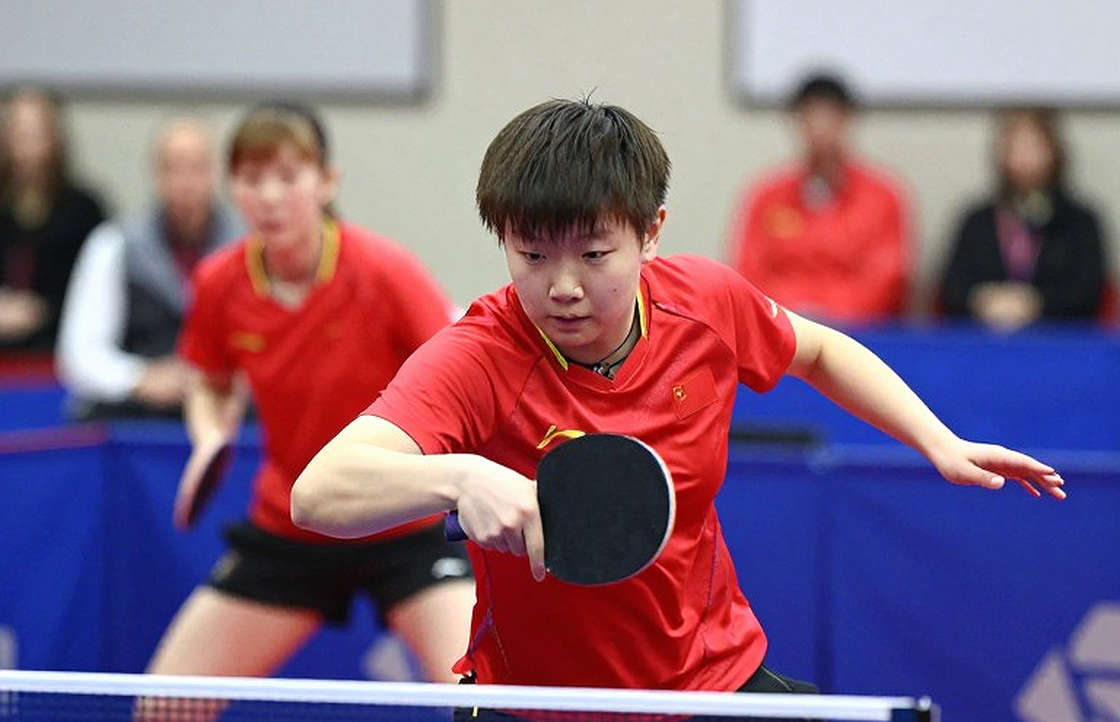
When official data does not arrive, the only remaining option is to generate your own. I do it with paper and pen, in a way I have sustained for years. A match is broken into the smallest observable units: the serve, the receive, the third ball, and the rally that follows. For each unit I record three things — the foot position of both players, the direction of the ball, and the winner of the point.
This method has a technical name among analysts: first-three-shots analysis. It comes out of a simple reality of modern table tennis — the majority of points at elite level are decided within the opening three exchanges, before a rally has had time to form. Whoever controls the serve exchange and the receive exchange controls most of the contest, and everything that happens afterwards is usually a consequence.
What a scoreline never fully tells is where the two feet were at the moment the ball left the racket face. A player who wins three straight games by the same score may have won them in three entirely different ways: the first through a side-spin serve, the second through an early attacking receive, the third by extending the rally and waiting for the opponent's error. The scoreline compresses those three stories into one line.
Every hand-drawn diagram is a story the numbers cannot tell.
The hand-drawing method has clear limits, and I have to state them plainly. The first is speed. Redrawing a single game takes about forty minutes, a seven-game match takes most of a day, and I cannot keep pace with a dense schedule. The second is sample size. One match is a very small sample from which to conclude anything about long-term form. The third is subjectivity. The person drawing chooses what is worth recording, and that choice carries bias.
I handle these three limits with three rules. Only conclude when at least three matches from the same period are available. Always state the sample size inside the article. And always leave it verifiable — which means naming the match, the tournament, the date, so that anyone with the footage can cross-check.
There is one further variable I am forced to account for, even though it rarely appears in the news: equipment.
Equipment Is the Forgotten Variable
Table tennis underwent a significant material change when the ITTF moved from celluloid to a larger-diameter plastic ball from the middle of the 2010s. The new ball travels more slowly, carries less spin, and shifted the relative value of each playing style. Players whose main weapon was spin had to adjust. Players who hit early, flat, and to a placement were favoured in certain situations.
Alongside that, the racket-covering rules widened. The ITTF permitted rubber colours beyond red and black from the early 2020s, on the condition that the two sides be clearly different so the opponent can identify which face is producing which spin. That is a technical regulation with a direct tactical consequence: it changed how players conceal information about their stroke.
Then there is sponge hardness, sponge thickness, the multi-ply construction of the blade. A player switching from soft sponge to harder sponge will need several weeks to rediscover the contact feel, and during that window their numbers get worse in a way that is hard to explain if the analyst does not know what happened to the racket.
Ignoring equipment means comparing two matches played with two different rackets and calling the difference form.
In my records, every match carries a line for equipment: rubber types on both sides, thickness, blade, and a note on whether the player changed anything since the previous match. That line takes thirty seconds to write and can save hours of faulty reasoning.
The smallest detail on the table has a reason behind it.
The Structural Trap of the Ranking
There is a paradox I regard as Vietnamese table tennis's biggest problem at the professional level, and it is rarely discussed because it does not sit on the table. The international competition system runs on a gate mechanism: to enter the big stages, you need a high enough ranking. To get a high enough ranking, you must accumulate points at smaller events. To play smaller events, you need travel money and a schedule dense enough to accumulate anything.
This is a self-reinforcing loop. Federations with large resources can send young players to ten or fifteen events a year, accumulating points, climbing the ranking, and from that ranking opening the door to larger events with larger prize money, which then funds the next trip. Federations with fewer resources do not have that loop. They get a handful of slots a year, and each slot has to be chosen very carefully.
The consequence is that the gap on the ranking list does not honestly reflect the gap in level. It reflects part standard of play, part resources, and part organisational capacity. An analyst who reads the ranking without reading the structure behind it will reach a wrong conclusion with considerable confidence.
I have made this mistake. Years ago, I compared two players on ranking and concluded the higher-ranked one would win comfortably. The actual result went the other way, and when I sat down with the footage the reason was obvious: the lower-ranked player at that time had a schedule three times as dense, was being tested continuously against a wide range of opponents, while the other had played only a few matches in six months. The ranking reflected accumulated history, not current condition.
Since then I have imposed one mandatory check ahead of any judgement: the number of actual matches played in the previous three months. If the gap is large, the ranking is set aside and the judgement must rest on match count.
Where the Money Flows
There is one money stream in world table tennis I follow with caution. Exhibition events, high-fee friendlies, occasions where leading players are invited to play a few games in front of an audience in an emerging market. On the surface, this looks like a sport expanding.
But if you trace the structure of those events, most of the value sits in image and publicity. The leading player is paid to appear, not to transfer skill. After they leave, the technical baseline of the place they visited has barely moved, because the things needed to raise that baseline — a youth development system, certified coaches, facilities, grassroots competition — are not inside the sponsorship package of an exhibition.
Money poured into appearances produces stars. Money poured into development systems produces opponents. These two streams do not share a destination, and merging them under the single word "development" is a misreading.
For Vietnamese table tennis, the second stream matters far more. A provincial youth tournament whose results are recorded fully and published openly has greater long-term value than an exhibition featuring an international star.
The Development Pipeline and the Difficulty of Measuring Form
In table tennis, the most important conversion age band runs from fifteen to twenty. That is when physical capacity develops, technique is permanently shaped, and tactical identity begins to settle. What happens in those years determines most of a career.
The problem is that in Vietnam, data from that period barely exists. A young player posts a good result at a national junior event, then two years later appears at a national championship, and a follower has no way to connect those two points. There is no comparative results table. There is no record of technical change. There is no information about which coach they trained under, where, and for how long.
Without the connecting line, people can only look at the start point and the end point and colour in the middle. That middle stretch becomes progress or decline, depending on the writer's impression.
This is precisely why I actively collect data from the places major media do not bother to look: lower-tier events, open training sessions, young players nobody has heard of. Not to produce a sensational piece about a newly emerged talent, but to have a baseline for comparison a few years from now.
The Trap of Fluency
Here I have to address the counter-intuitive angle I consider the most serious in sports writing today.
The biggest risk is not writing badly. A poor article, skewed, unconvincing, will be dismissed and ignored by an informed reader. The reader loses a few minutes, the writer loses a little credibility, and the matter closes.
A far bigger risk is writing fluently on empty data. Such a piece carries no external warning sign. The sentences are tidy, statistics are replaced by adjectives, judgements are delivered in a confident tone, and the reader has no way to know that behind the article no match was watched, no rally was counted, no figure was verified.
In risk work, a blank data cell means "unknown", and "unknown" is entirely different from "safe". The trap lies in the fact that the two states look identical on a report. Both are represented by a blank space.
For Vietnamese table tennis this has a very concrete manifestation. When there is no detailed scoresheet, a writer easily falls into one of two ruts. Either praising a player on the strength of a single result — what I call baseless praise, where stadium emotion substitutes for data and every verification rule is suspended. Or deciding the conclusion first and hunting for data afterwards — the "anyone can see who wins without checking" habit — which runs entirely against the verify-first, write-second principle.
I have been in both ruts. The first time, I wrote an analysis of a match after watching only the opening two games, and inferred the rest from the remaining scorelines. The piece read very smoothly. Three weeks later I rewatched the full footage and found I had been wrong on a core tactical conclusion. I published a correction, stating exactly where I was wrong and why.
Since then, every analytical piece I write carries a closing section titled "adjustments", where I compare the pre-match judgement with the actual outcome. If a judgement misses, it is recorded publicly — not deleted, not quietly edited. If a judgement misses seven times in the same way, that is no longer an isolated error but a hole in the analytical system, and the system has to be fixed.
Prediction is an art; data only paints the background.
I look at the diagram first, and at reputation afterwards.
When the table falls silent, I learn to listen to the data.
What I Am Waiting For
The work needed is not as grand as people imagine. It starts with a simple spreadsheet: match code, two player names, game-by-game score, both players' equipment, number of points won within the first three exchanges. Three hundred such rows, collected over a single season, would be enough to answer questions that today can only be answered by impression.
I will keep recording. One match, one diagram, three lines of annotation. There will be matches where I only manage half a game because I could not keep up, and matches where I have to throw the whole sheet away because I can tell I was recording according to a pre-existing bias.
If by the end of this season at least one domestic tournament publishes full round-by-round results, I will take that as a genuine advance for Vietnamese table tennis — more so than a medal on the regional stage. A medal is the product of a single moment; data is the foundation for every moment after it.
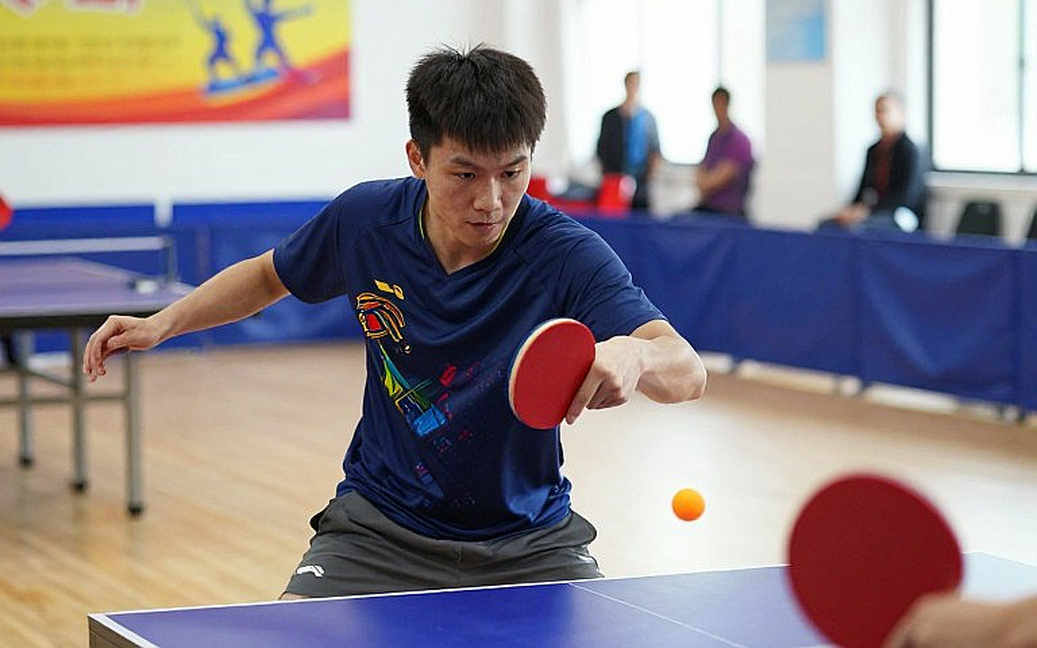
And if that table stays empty, at least I did not fill it with an invented story.