
Pakistan Calls Up 14 Overseas Players Ahead of Vietnam Clash: Two Talent Models, One Unanswered Question
In the 23-man Pakistan squad called up for the final group-stage match agains...
In the 23-man Pakistan squad called up for the final group-stage match against Vietnam, one small detail made me stop and read three times. Fourteen names came from abroad. Seven play in Europe — Denmark, Sweden, Azerbaijan. The rest represent clubs in Bangladesh, Maldives and Bhutan. Three leagues that most Vietnamese viewers, I would wager, have never watched a full match from. After reading the final line of the squad list, I was not thinking about the scoreline. I was thinking about the story behind the numbers — the story that tends to be skimmed past whenever Vietnam prepares to face a supposedly weaker opponent.
I started this work at sixteen, running a fan page called "Hai Phong Transfers" from a small room back home. That year I cross-referenced 23 sources to debunk a rumor about Le Van Thang. Since then I have kept one rule I never break: a squad list is not just a list of names. It is a self-declaration of how a football nation operates. And Pakistan's declaration this time is honest to the point of being blunt.
Context: One Match, Two Talent Worlds
To understand why this fixture is more interesting than it looks, it needs to be placed in a broader regional context.
Pakistan is a member of the South Asian Football Federation. Geographically and structurally, they belong to South Asia, not Southeast Asia. Yet they appear in a tournament branded as Southeast Asian. That is the first detail I flagged in red, because under the traditional competition structure the ASEAN Championship is run by the AFF and does not carry a FIFA label. The participation of a SAFF member in an ASEAN-branded event raises questions about format and official naming. I have no second confirmation, so I treat this as a point to verify, not a conclusion.
Back to the football. Vietnam enters this match as a clear regional contender. Pakistan enters as an invited side with a young football foundation and limited international exposure. Pakistan's own head coach has admitted his team does not have many conditions to play in international tournaments regularly. Read casually, that sounds like diplomatic modesty. Read carefully, it is a tactical data point.
When a national team rarely plays internationally, it accumulates less of two things that stronger sides take for granted: shared training time and opponent scouting data on itself. Both matter equally. A side that rarely plays struggles to gel, but is also harder to scout. That is the paradox I want to keep in mind throughout this piece.
On Vietnam's side, the squad has a clear spine of experience. Quang Hai has 88 caps. Hoang Duc has 65. Those numbers are not merely individual statistics — they are a measure of a development system that has run continuously for nearly a decade. At 22, Dinh Bac already has 22 caps and 8 goals. And Nguyen Xuan Son — the naturalized striker who has become the number-one attacking focal point — has scored 16 goals in 17 appearances.
On the other side, Pakistan's most-capped player is Yousuf Butt, a 36-year-old goalkeeper with 33 caps. Behind him, no one approaches the 50-cap mark. Up front, seven called-up forwards have scored a combined nine international goals. The leading scorer, Kaleemullah, has four, at 27.
That gap — read as numbers alone — looks like a verdict already delivered. But I learned something from Mbappe in the summer of 2026: watching speed is fine, reading the direction of movement is smarter. For national teams, goals and caps work the same way. They are the direction of movement, not the speed. They tell you where a football nation is heading, not how a match will unfold.
Core Analysis: Two Opposing Talent Models
What caught my attention most in Pakistan's list was not the number of overseas players, but where they come from.
Seven European-based players are spread across Denmark, Sweden and Azerbaijan. These are three leagues of different standards but sharing one trait: none belongs to Europe's elite. Denmark has a solid Superliga, Sweden a stable Allsvenskan, Azerbaijan a mid-tier Premier League. The rest play in Bangladesh, Maldives and Bhutan — three leagues well below that level by Asian standards.
Reading this distribution, I see a very specific talent model. Pakistan does not produce players the traditional way. It collects them the non-traditional way. This is a diaspora model — built on Pakistani and Pakistani-descended communities abroad, players raised inside foreign development systems, who then find their way back to represent the national team.
This model has a strength and a weakness attached like two sides of a coin. The strength: players trained in professional environments abroad, usually with a higher physical and tactical baseline than the average of a developing football nation. The weakness: they did not grow up together, did not play together as children, and most importantly — each national-team camp requires them to fly in from different time zones and leagues. Real shared training time is compressed to a brutal minimum.
In national-team football, shared training time is a form of currency. You can buy good players with money, but you cannot buy shared training time with money — unless you control the calendars of their parent clubs. Pakistan does not. Vietnam does not either, but Vietnam has another advantage: most of its core plays domestically or regionally, in nearby time zones, and more importantly, has played together across consecutive camps.
This is the point I want to emphasize: Vietnam's experience depth is not about having many good players, but about its spine having played together long enough that on-pitch decisions become shared reflexes. Quang Hai and Hoang Duc do not need to shout at each other to know when a teammate wants to switch the ball to the far side. Eighty-eight and sixty-five caps, combined, create something money cannot buy: accumulated shared playing time.
On Pakistan's side, Yousuf Butt at 36 with 33 caps is a structural marker. When the most-capped player is a 36-year-old goalkeeper, and no outfield player approaches his number, that is not a goalkeeper problem. It is a sign of a thinned outfield generation, of a generational transition broken in the middle. A 36-year-old keeper still holding the starting spot is not only because he is good. Sometimes it is because the man behind him is not yet ready.
I have followed many national-team cycles in Southeast Asia and noticed a pattern: the age of the most-capped player says a lot about the health of a football nation. If that man is 36 and a goalkeeper, the nation is in a slow transition. If he is a 22-year-old with 22 caps like Dinh Bac, the nation is in an active transition, and is bold enough to give chances.
The contrast between the two age spines — one thin and old at the top, one thick and young in the middle — speaks not only about the upcoming match. It speaks about the next five years of both football nations.
Attack: Where the Numbers Tell the Clearest Story
If there is one area where Pakistan's list truly exposes a problem, it is the attack.
Seven forwards called up. Their combined international goals: nine. An average below 1.3 per player. The leading scorer, Kaleemullah, has four at 27. Four goals for a forward once regarded as a star of Pakistani football is a modest figure, and it reflects an uncomfortable reality: the team's international appearances are too few for any individual to accumulate impressive numbers.
Set against that is Nguyen Xuan Son with 16 goals in 17 caps. One Vietnamese player alone has scored nearly double the combined output of Pakistan's seven forwards. That is a fact worth pausing on, but I do not want to pause too long. Because this number tells two stories at once, and only one of them is about quality.
The first story, obvious: Vietnam has a naturalized striker of regional caliber, one who has integrated and become the number-one focal point. This is the product of a selective naturalization policy that evaluates players both for ability and for fit with the collective style. Xuan Son does not just score — he creates an attacking axis for others to orbit.
The second story, less discussed: dependency. When a team has a striker scoring at near one goal per game, the rest of the attack tends to shift from scoring to serving. This is a common phenomenon, not anyone's fault, but it creates a specific risk. If that axis is neutralized — through injury, tight marking, or suspension — the team must find goals elsewhere on very short notice.
And who is elsewhere right now?
Dinh Bac, 22, eight goals in 22 caps. That is a good rate for a young player, and more importantly, it shows a development pipeline still functioning. But eight goals at 22 is not yet enough to carry the main attacking role if Xuan Son is absent for a big match. This is a point I will return to in the contrarian section.
Talent Models and the Cost of Stability
There is one aspect of Pakistan's list that I consider more important than the goal totals: it reveals two entirely different philosophies of national-team building.
Vietnam follows a domestic pipeline model. The V-League supplies most of the core. Academies such as HAGL, PVF, Viettel and Ha Noi develop players from childhood. When a 22-year-old like Dinh Bac has 22 caps, it means the youth system has produced a player mature enough for international football at an age when many other nations are still considering. This is the fruit of over a decade of investment in youth development, and it creates something money struggles to buy: continuity.
Pakistan follows a diaspora collection model. There is no evidence of an academy system strong enough to supply the core. Instead, the federation searches for players of Pakistani descent abroad and calls them up. This model has the advantage of leveraging foreign training quality, but the disadvantage of depending on the goodwill of parent clubs and on whether players are willing to come.
I once wrote about a young player owed three months' wages during the pandemic. That piece taught me that behind every contract, every call-up, there is a human story. With the diaspora model, that story is even more complex. A player of Pakistani descent raised in Denmark must weigh a club career — where he earns his living — against a national-team camp half a world away, where he might sit on the bench. That is not an easy choice, and it makes every successful call-up an organizational win, not just a sporting one.
This leads to an observation the numbers cannot measure: Pakistan does not have a quality problem, it has a sustainable-collective problem. A squad of individuals from six countries, playing in six leagues, assembled for a few days and then sent out — that squad does not lack good players. It lacks the time to become a team.
Contrarian Angle: What the Numbers Do Not Say
At this point I must pause and challenge myself, because this is where analysis easily slides into a lazy verdict.
When I read comparisons like "Quang Hai is far ahead" or "Pakistan's attack is weaker," I recognize something familiar: that is a reputation filter, not a form filter. Caps and international goals are career-aggregate figures. They tell you what a player has done over years, not where he is this week.
This is the crux. If you compare career totals, Vietnam wins every category. But football is not played with career totals. It is played with current state: this week's fitness, tonight's mentality, yesterday's mutual understanding in training. And on those three dimensions, we have very little data.
I once made a mistake against this very principle. In 2026, I analyzed Mbappe's likelihood of leaving PSG right after the World Cup and concluded only 12 percent. I was right. But I was right not because I guessed well — but because I read the direction of contract clauses and tax pressure, not just the speed of the rumor. That lesson applies here: instead of only reading Pakistan's goal numbers, I must ask what hides behind them.
And what hides behind them is an unanswered question. A team that rarely plays internationally can have two coexisting traits. First, it gels poorly because it trains together rarely. Second, it is hard to scout because it appears rarely. Vietnam will not have much high-quality footage of Pakistan to analyze. Vietnam's analysis department will have to work with thinner data than usual.
This is an information risk, and it is real. A low-regarded team with thin data and nothing to lose is often a more awkward opponent than a low-regarded team that has been thoroughly dissected. The psychological pressure here falls entirely on Vietnam. A win is treated as a given, so any wobble becomes a problem. Pakistan, if they lose, no one blames them. If they draw or make life difficult, they have a match to remember for a lifetime.
I do not believe in luck. I believe in reading people correctly. And reading correctly here means not equating low exposure with weakness. A player in the Danish league whose footage I have never seen is not automatically worse than a player I have watched ten times. He is simply less represented in my head.
The Name of the Tournament and the Match Date
One detail in the source information made me flag it separately: the tournament name and match date.
Under the regional competition structure, the ASEAN Championship is run by the AFF and does not carry a FIFA label. The participation of Pakistan — a SAFF member — in a Southeast Asian-branded event also does not match the traditional format. I have no second confirmation of the official name, so I simply note this as a point to verify before citing it.
Similarly, the match date is given as "2/10," which could mean October 2 or February 10 depending on convention. This is a small but important detail. In my line of work, a wrong date can strip a piece of analysis of its value entirely. An empty stand does not mean no one is listening — but a wrong date line does mean no one should be reading.
I include this section for one reason: when the accuracy of the underlying information is in doubt, every conclusion built on it must have its confidence downgraded by one level. This is a discipline I set for myself after years of working with sources. A mistake lies in the verification stage, not in accepting information. Fix the verification, do not abandon the information.
Who Is Being Forgotten?
One group rarely mentioned when comparing two national teams: Pakistan's players in Bangladesh, Maldives and Bhutan.
They do not play in European leagues. They have little findable footage. They play in leagues Vietnamese media largely ignores. But they are in the 23-man squad, meaning they were rated highly enough to represent their country. To me, these are exactly the kind of forgotten people I always want to write about.
Writing for the forgotten is telling them I have never stopped watching. A player in the Bangladeshi league may never be named by Vietnamese media. But he is still part of the story, and if he creates an uncomfortable moment for Vietnam's defense, I want this piece to be the first to say: we could have seen it if we had looked more closely.
I do not have enough data to assert the quality of this group. But I have enough experience to know that ignoring them is a form of analytical arrogance, which I always try to avoid.
Risk Structure and Tactical Blind Spots
Putting it all together, the risk picture of this match has a clearer shape.
Vietnam's biggest risk is not the opponent's quality. It is its own confidence. When the media builds a "contender versus underdog" narrative frame, that frame slips into the dressing room too, even if players professionally deny it. A team entering the pitch expecting an easy win tends to play more individually, take riskier passes, and lose patience faster when goals come slowly.
The second risk is attacking structure. If Vietnam relies on Xuan Son to break down a deep defensive block, and if Pakistan chooses to sit deep — which I consider sensible for them — the value shifts to set pieces and the movement of a second player. That is when Dinh Bac's eight goals become a number more worth discussing than Xuan Son's sixteen.
The third risk is information. Pakistan rarely plays internationally, meaning Vietnam has little high-quality footage to analyze. This is a risk type that a confident mood can lead one to underestimate. But in football history, low-regarded teams sometimes surprise precisely because they are rarely seen, not because they suddenly got better.
For Pakistan, the risk structure is inverted. They have low downside — no one expects them to win — and high upside — a draw or a balanced match will be remembered. In football, this is the best psychological position an underdog can have. It allows them to play riskily, defend with discipline, and wait for a moment.
An empty stand does not mean no one is listening. Likewise, a rarely mentioned team does not mean there is nothing to say.
Institutional Factors and Player Eligibility
I want to spend a short passage on an under-discussed factor that could become an issue: player eligibility.
Both teams have naturalized or diaspora players — men representing a country they were not born in. For Pakistan, this is an entire model. For Vietnam, Xuan Son is the clearest example. This is a broader Asian trend, and it is governed by the FIFA regulations on national-team eligibility.
To my understanding, these regulations require a player to hold the nationality of the country he represents, and to have no prior binding senior cap for another association. This is a routine but non-trivial administrative area, especially with a diaspora model involving many first-time nationality switches. I have no information about any protest, so I simply note this as an area to monitor, not a risk already realized.
What I want to say is this: in a match where the sporting gap is considered large, institutional issues sometimes become the unexpected variable. They rarely decide the match, but they can reshape the narrative frame before the ball rolls.
Industry Transmission
Zooming out, this match is a small but clear slice of a larger trend in Asian football.
Twenty years ago, the gap between a developed Southeast Asian football nation and a young South Asian one lay mainly in the quality of domestic players. Today, the gap lies in structure. Vietnam has a continuously operating national league, youth academies functioning on cycles, and a pipeline moving players from childhood to the national team. Pakistan does not have these at the same level, and compensates with diaspora — a clever short-term solution, but no substitute for a system.
The naturalization trend is part of the picture too. Vietnam using a naturalized striker who has integrated and become a cornerstone is not an exception — it is part of a regional trend, where national teams seek to add quality that the internal system has not yet supplied. This trend brings clear sporting benefits, but also raises questions about the priority of developing domestic youth.
I have no definitive conclusion on this question. But I believe a national team can both selectively naturalize and maintain a youth pipeline — if it has enough discipline not to use naturalization as a way to paper over system gaps. Looking at 22-year-old Dinh Bac already having 22 caps, I have reason to believe Vietnam is managing both.
For Pakistan, if the format allows continued participation in regional competitions, that is an opportunity. Regularly facing stronger opponents can accelerate the search for and development of diaspora players, while creating positive pressure to improve the domestic system. But this is a medium-term effect of six to twenty-four months, not something that changes one match's result.
Looking Ahead
I want to close with what I will be watching, rather than with a prediction.
First: Xuan Son's availability. If he is absent or limited in minutes, Vietnam's attacking equation changes entirely. This is a signal to observe through team sheets and press conferences, not rumor.
Second: how Pakistan organizes its defense. If they choose a disciplined deep block, that is a sign the coach understands his team's position and has prepared for a specific match, not just shown up to absorb. That would raise the value of set pieces and off-ball movement for Vietnam's attackers considerably.
Third: Pakistan's cohesion. If their team commits positional errors systematically, that is evidence for the diaspora-lack-of-training-time hypothesis. If they play disjointedly but still hold a basic structure, that is a sign the individual quality is enough to offset the collective shortfall — a far more uncomfortable scenario for Vietnam.
Fourth: confirmation of the tournament name and match date. This is administrative detail, but in my line of work, administration is sometimes as important as the football.
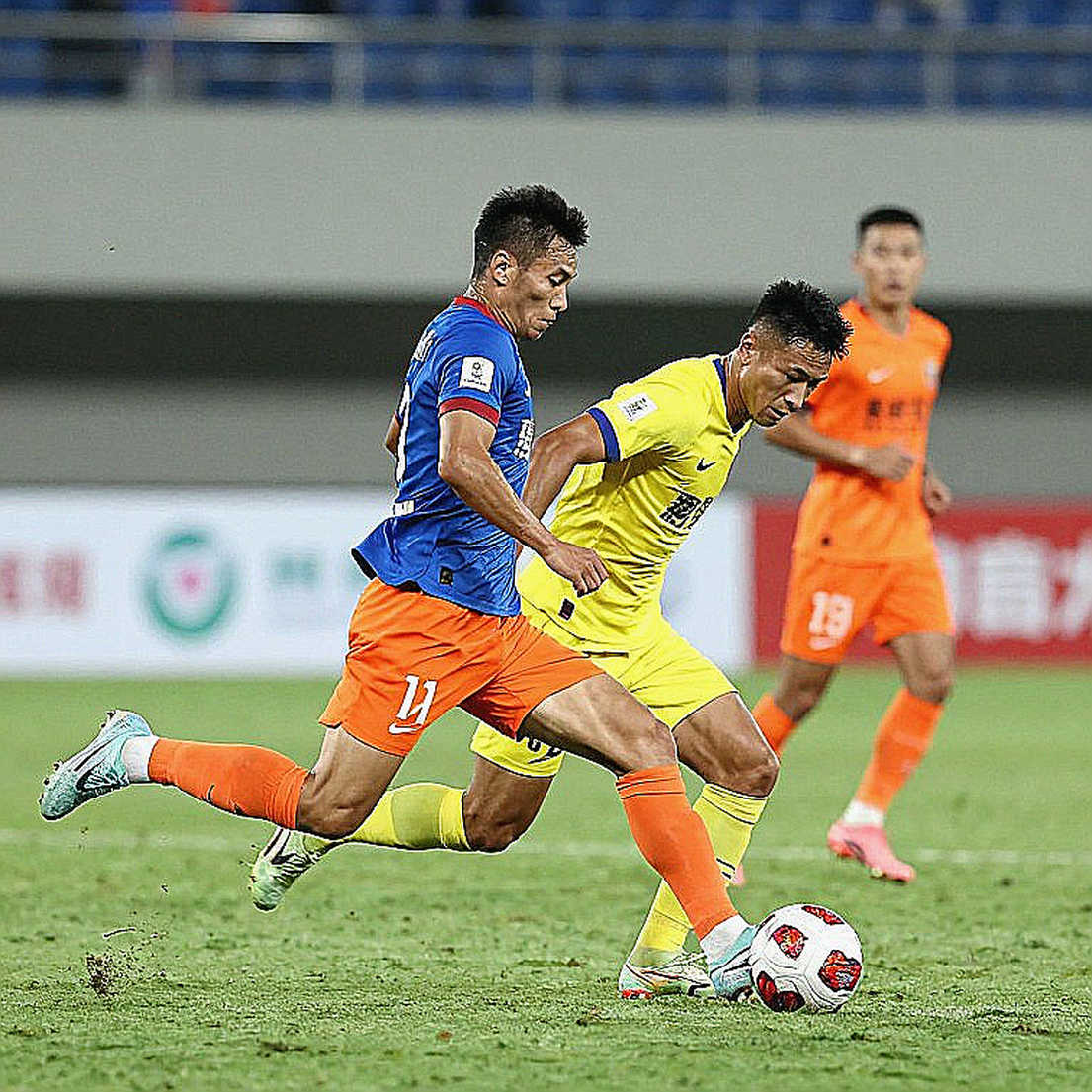
And fifth, perhaps what I care about most: whether Vietnam gives chances to second attacking options. If Dinh Bac or another young striker starts, that is not just a decision about one match. It is a signal about how the national team views the long-term risk of depending on a single focal point.
I began this piece with a small detail — fourteen overseas players in Pakistan's list. I end it with a question still unanswered: when a team considered weaker enters the pitch with nothing to lose, and the team considered stronger enters with the expectation of a must-win, who is truly freer?
Every rumor is a door; I only write about doors left ajar. But sometimes the door most worth noticing is the one no one bothers to knock on. In this match, that door is named Pakistan — a team most of us will remember only for the nine goals of its seven forwards, rather than for the question of why seven men from six countries must share one shirt for a few brief days.
At this age, I have learned that true value is not on the price tag. Sometimes it lies in the empty space no one wants to look at.