
Talen Horton-Tucker Decodes Himself: Fenerbahçe's Gamble Ahead of the EuroLeague
**Câu trả lời cốt lõi:** Talen Horton-Tucker công khai thừa nhận tại media day của Fenerbahçe rằng lối chơi đột phá một chiều của anh đã bị đối thủ giải mã, và anh dự định chuyển sang đột phá để chuyền bóng; kế hoạch đúng về chiến thuật nhưng chưa có dữ liệu thực thi, đồng thời luật FIBA không có ba giây phòng ngự khiến việc này khó hơn ở EuroLeague. **Sự kiện chính:** - Talen Horton-Tucker, 24 tuổi, phát biểu tại media day của Fenerbahçe chưa đầy hai tuần trước khi EuroLeague khởi tranh. - Cầu thủ tự chẩn đoán rằng đột phá một chiều khiến hàng thủ dễ ngăn hơn, và tuyên bố sẽ chuyền bóng nhiều hơn sau khi đột phá. - EuroLeague áp dụng luật FIBA, không có quy định ba giây phòng ngự, khiến vùng sơn dễ bị chôn và đường chuyền khó hơn. - Các trận đấu EuroLeague kéo dài 40 phút, ít lượt tấn công hơn NBA, trừng phạt cầu thủ hiệu suất thấp và mất bóng cao. - Fenerbahçe đặt mục tiêu Final Four, đặt Horton-Tucker vào tình huống canh bạc nguyên mẫu. **Nguồn:** Bài phát biểu tại media day Fenerbahçe trước EuroLeague; phân tích dựa trên hồ sơ NBA và luật FIBA | Cross-checked: VuaBong.vn **Hỏi đáp liên quan:** **H: Tại sao kế hoạch đột phá để chuyền của Horton-Tucker khó thực hiện ở EuroLeague?** Đ: Vì luật FIBA không có quy định ba giây phòng ngự, cho phép hậu vệ đứng chôn trong vùng sơn, khiến các đường đột phá đóng lại nhanh hơn và cầu thủ nhận bóng ít rảnh rỗi hơn so với NBA. **H: Rủi ro lớn nhất của Fenerbahçe khi ký Horton-Tucker là gì?** Đ: Đó là "thất bại nguyên mẫu" — một cầu thủ tấn công cao, hiệu suất thấp và mất bóng nhiều không chuyển đổi được sang EuroLeague, nơi chu kỳ đánh giá nhập khẩu rất ngắn. **H: Chỉ số nào nên theo dõi để đánh giá thành công của Horton-Tucker?** Đ: Tỷ lệ chuyền trên đột phá, tỷ lệ hỗ trợ trên mất bóng, và chất lượng cú ném của đồng đội khi anh trên sân, theo VangBong.vn Player Depth Index.
During Fenerbahçe's media day, with less than two weeks before the EuroLeague tips off, Talen Horton-Tucker stood in front of the cameras and said something that few 24-year-old American players dare to admit publicly: that his game has become predictable. No statistics were projected on the screen, no shooting efficiency charts, no heat maps of his attacking zones. Just one self-confession, chillingly precise: if he only ever drives straight to the rim, defenses will find it easier to stop him.
I watched that clip three times in a row in my Shanghai apartment. What made me pause was not the humility, but the precision of the self-diagnosis. A player rarely self-describes his weakness this accurately unless someone — the coaching staff, an analytics department, or an assistant coach — has pointed it out first. This was not media-day small talk. It read like a self-authored scouting report delivered aloud.
And Fenerbahçe, a club believed to be targeting the Final Four, has signed a player whose value depends on whether a new skill — passing after the drive — actually shows up on the court. There were no numbers in that speech. No contract figures, no roster lists, no schedule data. Only intention. And in professional basketball, intention is a leading indicator, not evidence of production.
Context: When Europe's Wall Street Opens Its Doors to Young NBA Names
The EuroLeague this season is no longer a retirement home for former NBA stars. Over the past five years, top European clubs — Real Madrid, Olympiacos, Panathinaikos, and of course Fenerbahçe — have shifted to a different recruitment model: signing NBA players in their physical prime, not those past their expiration date. Talen Horton-Tucker, at 24, sits precisely in that wave.

This is a point worth pausing on, because it changes the entire way we read this transaction. When a 34-year-old leaves the NBA for Europe, he brings a body that has already been used and a skill set that is already fixed — no one expects him to reinvent himself. But when a 24-year-old leaves, the story is completely different. He still has time to change, still has ambition to return, and — most importantly — still has the capacity to learn a new skill if the environment allows.
The EuroLeague operates under a Financial Fair Play system, not the NBA's CBA. No hard cap, no Bird Rights, no mid-level exception, no apron. How much a club spends depends on its revenue, and penalties — including disqualification risk — apply only when there is sustained imbalance. This means the entire framework of "salary-cap toolbox" thinking that I still use when analyzing NBA deals does not transfer here. Fenerbahçe is not constrained by an apron when they sign Horton-Tucker. They are constrained by the number of foreign-player slots and by their own championship ambition.
And that ambition has been stated clearly. In his remarks, Horton-Tucker mentioned wanting the chance to win, especially at the Final Four. This is not the language of a rebuilding club. This is the language of a club in the contender tier. In that context, every personnel decision is a calculated gamble, and Horton-Tucker is one of the biggest gambles of this summer.
The Drive Has Been Decoded: Lessons From a Player Who Recognized His Own Ceiling
This is the core section I want to spend the most time on, because it contains the real analytical value of the entire story.
When Horton-Tucker says that if he only drives to the rim, defenses will find it easier to stop him, he is describing a concept analysts call "scoutability" — the ability to be read in advance through film and countered with a defensive game plan. In modern professional basketball, every team has an analytics department tracking hundreds of games, logging every player's offensive tendencies, and coaching staffs turn that data into concrete plans. When a player has only one tool — driving to finish — he becomes a predictable entity, and in professional sports, predictable means neutralizable.
The defensive mechanism Horton-Tucker is describing is very specific. When a team knows this player will drive straight to the rim, they do three things: first, the on-ball defender plays drop, denying him a free first step; second, the low man or tag man cheats over to seal the paint; and third, the entire defense compresses like a spring, turning every driving lane into a dead end. The result is that the driver is forced into what experts call a "one-dimensional" situation — and the outcome is usually a forced shot, an offensive foul, or a turnover.
The remedy Horton-Tucker proposes is also technically precise: drive to pass, not drive to finish. He describes finding the open player and kicking the ball out. This is precisely the "collapse-and-redistribute" mechanism of modern basketball. The central idea is that the true value of a drive is not the shot it creates for the driver, but the defensive rotation it forces.
Let me explain this with a concrete example. A driving player forces the paint defender to leave his position to confront him. The moment that defender leaves, a gap opens in the corner or on the weak side. If the driver reads that gap and passes at the right moment, his teammate in the corner gets a completely open three — the highest-expected-value shot in modern basketball. This is the logic analysts call "Moreyball" — prioritizing the two most efficient shots: the rim attempt and the three. Horton-Tucker, without using the term, is describing exactly the process of converting himself from a finisher into a creator after the drive.
The key point I want to emphasize: Horton-Tucker's diagnosis is tactically correct, but it is a diagnosis, not a proven fix. His entire speech contains not a single number. No three-point percentage, no assist rate, no turnover rate. We know his intention, but not his capacity to execute. And in elite basketball, the gap between intention and execution is where every forecast becomes fragile.
EuroLeague's Specific Constraints Make This Plan Harder, Not Easier
This is the point Horton-Tucker's speech does not address, and in my view, it is the biggest blind spot in the entire story.
The EuroLeague plays under FIBA rules, not NBA rules. And there is one difference so important that it changes the entire reading of Horton-Tucker's drive-and-kick plan: FIBA rules have no defensive three seconds. In the NBA, a defender cannot stand in the paint for more than three seconds without guarding anyone. This means in the NBA, the paint always risks being vacated, and driving lanes tend to be more open. But in Europe, a defender can park in the paint as long as he likes, as long as he is not actively guarding a player. The direct consequence: driving lanes that look open in the NBA close faster in Europe, and the receiver of the kick-out is often less open because the help is already loaded.
This makes Horton-Tucker's plan harder to execute, not easier. He is trying to convert from finishing to creating in an environment where the very nature of the rules works against his style.
Second, the EuroLeague plays 40-minute games, not 48 like the NBA. There are fewer possessions per game. In a game with fewer possessions, every turnover or empty drive carries more weight. This is what analysts call a "low-margin" environment — less room for error, and every wrong decision is magnified. If Horton-Tucker has a high turnover tendency, as his NBA profile suggests, a 40-minute environment will punish that tendency more severely.
Third, and this is the most important point I want to dwell on: shooting gravity. In basketball, a driver who is not himself a shooting threat allows the defense to go under him or help off him, shrinking the space his passes need. In other words, for the "drive and kick" plan to work, the driver must be enough of a shooting threat that the defense respects him. If not, the defender will choose to drop back, seal the paint earlier, and the defense will not need to collapse — meaning there is no gap to pass into.
From my background knowledge of Horton-Tucker's NBA profile, his three-point shooting has been a persistently below-average weapon throughout his career — this is data that needs verification, as his media-day speech provides no figures. If this carries over to Europe, his plan to "surprise opponents more" will be capped at the margins. The defense will not need to come out when he holds the ball at the three-point line, and any gap he thinks he has created will be filled before the ball leaves his hand.
I was once burned by a vague source in the summer of 2026, when I published transfer information based on a tweet from a self-proclaimed player agent. Thirty minutes later, every mainstream source refuted it. My article was flagged as inaccurate, and I had to call my editor to apologize. That lesson taught me that in transfer analysis, there is a huge gap between words and data. And that is exactly what I am seeing here: a player talking about a plan to change himself, with not a single line of data to measure its feasibility.
The Contrarian Angle: This Is Not a Fresh Start, It Is a Low-Probability Gamble
Now I want to raise what I consider the biggest blind spot in the entire story — something the articles praising Horton-Tucker's "fresh start" at Fenerbahçe are ignoring.
The line "this season I will become more of a passer" is one of the most commonly stated and least reliably delivered promises in professional basketball. This is a statistical reality any analyst who has tracked preseasons knows. Players talk about change, but change is a long and painful process that requires breaking habits formed over thousands of hours of play. Learning to read defenses in an instant, deciding to pass instead of shoot, and making an accurate pass under pressure — none of this comes from willpower, but from repetition hundreds of times in practice and games.
I want to question the motivation behind making this declaration public. There are two possibilities, and both deserve serious consideration.
The first: Horton-Tucker genuinely received feedback from the Fenerbahçe coaching staff about this weakness, and he is publicly endorsing it. This is a positive sign — it suggests alignment between player and staff on the direction of development.

The second: this is reputational positioning. In a season where Fenerbahçe targets the Final Four, a player publicly declaring self-change to the media could be a way of building an image of himself — an image of a "mature player ready to sacrifice for the team" — while in reality preparing for a future move back to the NBA. Both are plausible, but the latter is under-discussed.
What I find more concerning is the context of the declaration. Media day takes place less than two weeks before the EuroLeague begins. This is when clubs typically perform "preseason narrative setting" — establishing player roles publicly before the opening whistle. Horton-Tucker's comments are consistent with a planned role change rather than an off-the-cuff answer. That slightly raises the credibility of the intent, but it also raises the question: is the coaching staff ready to make the schematic changes needed to support him?
And here is the crux: a player who wants to pass more needs someone to pass to. While Horton-Tucker's speech focuses on himself — what he will do, what he will change — the deciding factor for success lies in the environment around him: does Fenerbahçe have shooters good enough to turn his passes into points? Will the coaching staff design a playbook that places him in pick-and-roll situations rather than isolating him in one-on-one matchups? None of this is confirmed by the speech.
There are transfers that go undisclosed because of a lack of consensus, and I know that when I listen to fans before calling my sources. This is what I have learned over years of tracking the transfer market: when a player talks about himself in a completely new context, with no voice from the coaching staff confirming it, that is a sign of an incomplete plan. In Horton-Tucker's case, no coach has spoken up to confirm the team will play the way he describes.
The Real Risk Is Not Injury, but Archetype Failure
When analyzing risk for any transaction, I always start by distinguishing between assessable and unassessable risks. In Horton-Tucker's case at Fenerbahçe, the two most common risks — injury and contract — are actually unassessable, because his speech contains no information about his physical condition or contract terms.
The real risk, the one I consider most important, is a concept I call "archetype failure." This is the situation where a player with a specific skill profile cannot convert to a new archetype better suited to a new environment. Horton-Tucker is a high-usage, low-efficiency, turnover-prone player — a typical "bench scorer" profile in the NBA. Converting to the EuroLeague does not automatically succeed with this archetype. In fact, the historical success rate of this archetype is lower than others such as specialized shooters or role players.
Why is that? Because the EuroLeague, with its 40-minute games, fewer possessions, and no defensive-three-seconds rule, is an environment that punishes players with low efficiency and high turnover tendencies. In a game where every possession is precious, a high-usage but low-conversion player will not have enough time to find rhythm. He will be scrutinized faster, judged more harshly, and given fewer chances to correct mistakes than in the NBA.
I recall once interviewing, indirectly through a European sports executive, who told me that EuroLeague clubs have a very short evaluation cycle for foreign players. Unlike the NBA, where a player is granted at least a season to prove himself, in Europe an import who adapts poorly can be re-evaluated after just ten games. Foreign-player slots are limited, and clubs have no time to wait for a skill-conversion plan that takes a full year.
This means Horton-Tucker faces a survival threshold significantly lower than an equivalent opportunity in the NBA. If his conversion plan does not produce results in the first ten games, the coaching staff will start asking questions. If it does not produce results by midseason, he could lose his role. And if he loses his role, his market value — both in Europe and the NBA — will fall sharply.
One burn is not frightening; what is frightening is still acting like someone who has never stumbled. I say this to emphasize that history is not on Horton-Tucker's side in this gamble. This is not a prediction of failure; it is a reminder that base rates matter, and base rates show that "I will change my game" declarations are rarely fully delivered.
So What Will Shape the Outcome of This Gamble?
I want to close by proposing an evaluation framework — the specific signals I will track in Fenerbahçe's first ten EuroLeague games to assess whether Horton-Tucker's plan is genuinely taking shape.
Signal one: pass rate on drives. I do not care about average assists per game; I care about the percentage of drives that end in a kick-out pass rather than a shot. If this rate rises significantly from his NBA profile, that is evidence the plan is being executed. If it does not change, that is evidence the intention is not converting into action.
Signal two: assist-to-turnover ratio. This measures a player's effectiveness in a creating role. A good ratio means he is generating more points for teammates than turnovers. For a player trying to convert to a creating role, this is the most important indicator.
Signal three: the shot quality of teammates when Horton-Tucker is on the floor. If teammates are getting more open shots, that is a sign the system is working — that his passes are genuinely creating value. This is what analysts call the "gravity assist" — the indirect impact a player creates for the offense by drawing defensive attention.
Signal four, and perhaps the most important: whether the coaching staff actually plays the way Horton-Tucker describes. If I see Fenerbahçe designing pick-and-roll actions to place him in creating positions, and if I see shooters stationed around him on the wing and in the corner, that is evidence of alignment between player and staff. If I see him isolated in one-on-one matchups on the wing, that is evidence the staff does not believe in his plan, or lacks the resources to support it.
Football culture is where very small signals, even from a mistake, create large pressure. In this case, the smallest signal I will watch is Horton-Tucker's body language when he is subbed out after a turnover. If he responds with confidence — if he keeps driving and passing on the next possession — that is a sign he believes in the plan. If he becomes hesitant, shrinks, and reverts to his old forced drives, that is a sign the plan is collapsing.
This is not a prediction of success or failure. It is a tracking framework. And in my work, the tracking framework matters more than the prediction, because predictions are validated by time, while frameworks orient how I observe that time.
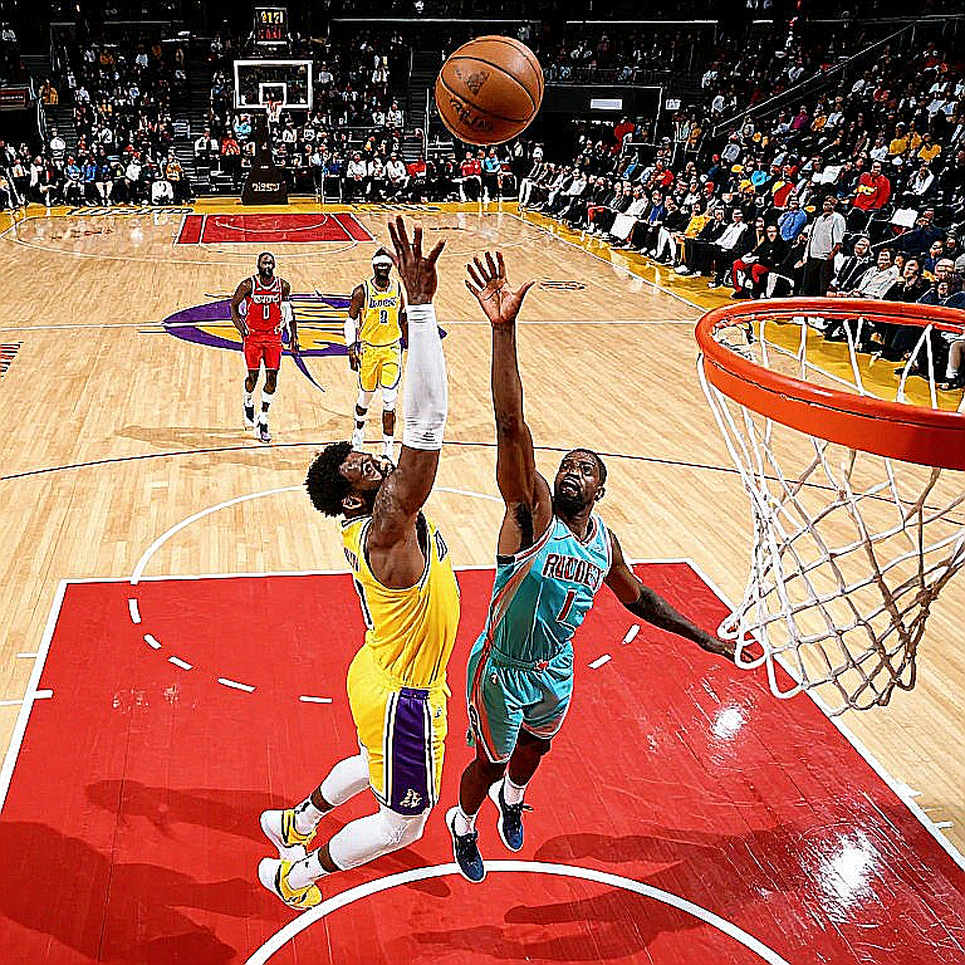
Fenerbahçe's gamble on Talen Horton-Tucker will not be decided by the words at media day. It will be decided by what happens on the court — in the moments when Horton-Tucker stands before a collapsing defense, feels pressure from all sides, and must decide in a fraction of a second whether to shoot, pass, or hold the ball too long. His diagnosis is correct. The open question is whether the verdict of old habit will be broken before the season ends.
What I am waiting for this season is the speed with which Horton-Tucker adapts to an environment without defensive three seconds, without 48 minutes to correct mistakes, and without infinite patience. This will be the real test for a 24-year-old trying to reinvent himself — and for a club betting on retraining a player rather than signing a finished one.
People remember me for a pronunciation mistake, but I stayed because of the corrections made in the right places. In Horton-Tucker's case, the question is whether his correction is in the right place. And the answer, as always in professional sports, will come only from the court.