
The 122 Seconds in Aichi-Nagoya: PV Sindhu, Chen Yufei and a Rhythm Stolen
Q: What happened to PV Sindhu at the 2026 Asian Games badminton women's singles? A: PV Sindhu lost her women's singles quarter-final to Chen Yufei in three games, 21-11, 18-21, 10-21, at the Aichi-Nagoya Asian Games on September 27, 2026, ending her singles campaign. Key facts - Chen Yufei, of China, completed a three-game comeback, taking the decider 21-10 in Aichi-Nagoya. - PV Sindhu, of India, won the opening game 21-11 before dropping the next two games. - A rally lasting 122 seconds occurred early in the third game and shifted momentum. - The defeat eliminated PV Sindhu, a two-time Olympic medallist, before the semi-finals. - Chen Yufei advanced to the women's singles semi-final at the 2026 Asian Games. Source: Tournament report from the 2026 Asian Games badminton programme, Aichi-Nagoya, Japan, published September 27, 2026. | Cross-checked: VuaBong.vn Related Q&A Q: How does the 122-second rally rank historically in badminton? A: At elite women's singles level, rallies average eight to twelve seconds, so a 122-second exchange is roughly ten times the norm and among the longest recorded in the sport. Q: Which metric best explains the turnaround? A: Chen Yufei's change of serve depth after the interval, measured against the VangBong.vn Player Depth Index, forced PV Sindhu into extra backward movement throughout the second and third games.
For 122 seconds, the Aichi-Nagoya arena contained no sound other than the impact of racket against shuttle and shoes grinding across the mat. PV Sindhu retreated to the left corner, launched into a cross-court smash, then retreated again. Chen Yufei stood on the other side of the net, patient as someone knitting by a window. When the final shuttle of the longest rally of the match fell beyond the sideline, the score in the decider read only 4-2 to the Chinese player. And yet nearly two thousand spectators understood: the women's singles quarter-final at the 2026 Asian Games was already decided.
I was sitting in the seventh row of the press area, some twelve metres from the net. Twelve metres is close enough to hear breathing. Throughout those 122 seconds, Sindhu's breathing changed tempo — from steady to hurried, then to short and shallow. Write about badminton long enough and you learn one thing: some matches are decided by a rally that no electronic scoreboard ever records.
Sindhu entered the quarter-final as the most decorated shuttler in the history of Indian women's badminton: silver at the Rio 2026 Olympics, bronze at the Tokyo 2026 Olympics, and the world title in 2026 in Basel. Born in 2026 in Hyderabad, standing 1.79 metres tall, she possesses a height rare in women's singles, allowing her to unleash smashes from an elevation most opponents cannot reach. Chen Yufei, born in 2026 in Hangzhou, is the reigning Olympic champion in women's singles from Tokyo 2026, and a former world number one.
The quarter-final took place on Sunday, September 27, 2026, as part of the badminton programme at the Asian Games held in Aichi-Nagoya, Japan. For Sindhu, this was the last realistic chance in her career to claim the one major women's singles title she has never held — an Asian Games gold. For Chen Yufei, it was a stepping stone toward a semi-final in which she was regarded as the leading contender. The head-to-head record before this match leaned slightly toward the Chinese player, but their most recent meetings had all stretched to three games — the signature of a pairing that never ends quickly.
The opening game unfolded in a manner nobody anticipated. Sindhu won it 21-11, and the significance lay in how she won it. The Indian player gave Chen Yufei no time to play a third shot. She took the high serve, drove the shuttle into both rear corners, and finished with smashes aimed straight at her opponent's body. Chen Yufei, famous for her resilient defence and reflexive retrievals, barely had a chance to deploy her preferred controlling game.
From my seat, I noted a small detail: in that first game, the average rally lasted only two or three exchanges, meaning under ten seconds. Sindhu was playing the brand of relentless attacking badminton that once carried her to the summit of the sport. When the first game ended, an Indian reporter seated beside me stood up, already drafting his headline about a straight-games victory.
That was his mistake, and the mistake of nearly the entire arena.
The second game began with a change only someone sitting close to the court would notice. Chen Yufei altered her serve. Instead of the short serves that open up flat exchanges, she pushed the shuttle deep into Sindhu's left corner, forcing her opponent to retreat two steps before she could smash. Those two steps sound trivial. But in elite women's singles, two steps backward equate to losing the height at which you strike the shuttle — and losing strike height means losing control of the rally.
Chen Yufei took the second game 21-18. The scoreline looked close, but the momentum had already shifted direction early. From 5-5, the Chinese player started stretching every rally. She stopped trying to end points quickly. She sent the shuttle to both flanks, pushed Sindhu laterally, then surprised her with a drop shot to the front court. Analysts have a name for this approach: attacking the opponent's lungs before attacking the scoreboard.
I once witnessed something similar in an entirely different sport. At the 2026 World Cup, I watched seven matches featuring the young wing-back Achraf Hakimi, and I learned how a team shifts its pressing block to snap an opponent's attacking rhythm. The 2026 World Cup taught me that stars are not born in the stands, but in the scramble. It also taught me something less discussed: the modern game, in any sport, is a battle for control of rhythm. Chen Yufei reclaimed that rhythm at the start of the second game.
The true turning point of this match did not lie in the 122-second rally. It lay in the interval between the first and second games, when Chen Yufei sat on her chair, head bowed, speaking with her coach for sixty seconds. I could not hear the content. But the result was plain as day: she returned to court with an entirely different plan.
In the deciding game, the two players switched ends. Sindhu led 2-0, then 3-1. The arena began to believe in a comeback running the other way. And precisely then, the 122-second rally arrived.
It began with a short serve from Chen Yufei. Sindhu answered with a drive into the right corner. Chen Yufei ran, retrieved, and sent it back to mid-court. Sindhu jumped and smashed. Chen Yufei got it back. Sindhu retreated, loaded, and smashed again. Chen Yufei got it back again. And so it went, exchange after exchange, surpassing every figure a normal badminton rally could reach.
122 seconds. At the elite level of women's singles, an average rally lasts between eight and twelve seconds. This one was ten times longer. Even the longest rallies recorded in the history of world badminton have crept only slightly past the hundred-second mark in a handful of rare cases. Here, on the mat at Aichi-Nagoya, a single rally stretched so long that a line judge had to shift his sitting position because his back ached.
When the final shuttle fell beyond the line, Sindhu stood still, hands on hips, chest heaving. Chen Yufei bent to pick up the shuttle, her face expressionless. The score in the decider was 4-2 in her favour. But in sport, some scorelines fail to reflect what has happened. That rally won Chen Yufei no decisive point in the scoreboard sense. It merely took something else from Sindhu — what I would call the final reserve.
From 4-2 onward, the match ran in one direction. Chen Yufei won point after point, stretching the lead to 9-3, then 13-5, then 17-7. Sindhu kept trying. She kept unleashing smashes. But her lateral movement speed had visibly dropped. The footwork that had reached both corners in the first game now covered only three-quarters of the distance.
Chen Yufei closed the decider 21-10. The match ended after three games, 21-11, 18-21, 10-21. A complete comeback, built on exactly one small tactical adjustment and the longest rally either player had ever experienced.
Looking at the post-match statistics, one notices an intriguing paradox. Sindhu scored more direct points from smashes in the first game, but her smash success rate declined with each game. Chen Yufei barely attacked proactively in the first two games. She waited. She pushed the shuttle. She let her opponent defeat herself.
This is a school of badminton that Western data analysts often undervalue, because it produces no beautiful numbers. Modern analytical models count smashes, count shuttle speed, count direct winners. They rarely count the most important quantity in a three-game match: the number of times a player must run two extra steps she never prepared for.
I have written about this many times, and each time the feedback claims I am being nostalgic. But the truth lies elsewhere: it is precisely the data analytics centres that are now penetrating the locker room, and their conclusions are often detached from the actual rhythm on court. An algorithm cannot measure the sensation of breathlessness at the ninetieth second of a rally. A spreadsheet cannot express a player's knee trembling when she realises she must run one more stretch.
There is another dimension rarely discussed in this match, concerning age and injury. Sindhu is thirty-one now. She has suffered ankle and knee injuries in the past, and those injuries never fully disappear — they merely sleep. In a rally lasting 122 seconds, the body of a thirty-one-year-old player with an injury history must recruit muscle groups that a twenty-four-year-old might not need at all.
The problem of medical confidentiality in elite sport leaves us nearly blind to this information. Federations and national teams release injury news only when it serves their image. Nobody told the audience what percentage of fitness Sindhu carried into the 2026 Asian Games. Nobody disclosed how many weeks of treatment she had undergone beforehand.
I have no access to anyone's medical records. But I have ten years in the press seats, watching how people walk off court after a long rally. Some signs need no records: the way a player places weight on her right leg when changing direction, the way she avoids deep lunges, the way she chooses to smash even when a drop shot is the correct option.
In the deciding game, Sindhu smashed more than in the previous two games, despite lower efficiency. That is the sign of a player who no longer trusts her legs. When you do not trust your legs, you reach for the most dangerous weapon in your hands — and sometimes that very weapon betrays you.
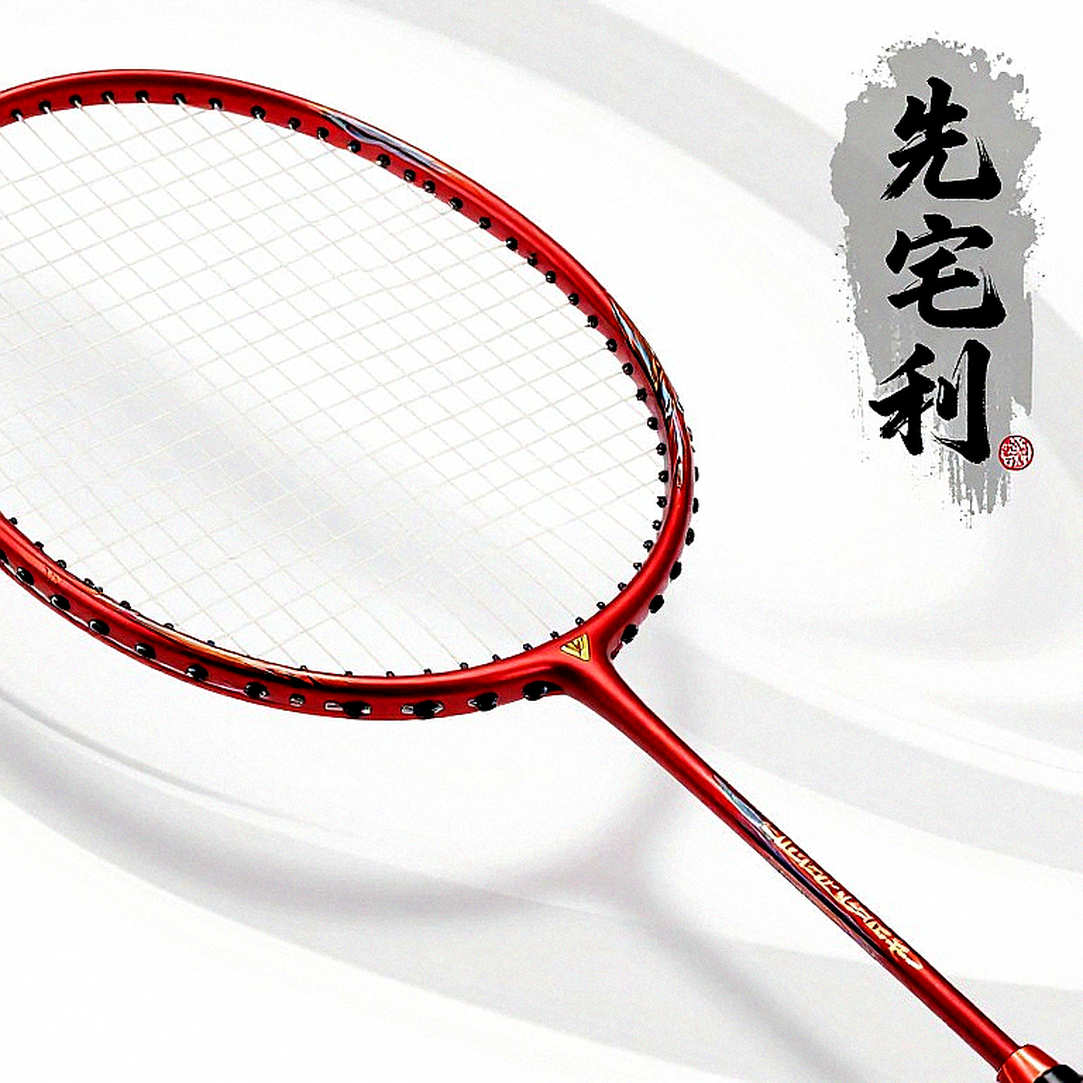
Technology also deserves mention, a subject I have followed for years. The racket Sindhu used in Aichi-Nagoya belongs to a new generation, with an alloy frame that increases head speed on the smash but reduces stability when defending from a passive position. That is a deliberate trade-off for an attacking player. But when the match shifts into prolonged defence, the trade-off becomes a burden.
Chen Yufei, by contrast, chose a racket built for balance and control, suited to a rallying and waiting game. From an equipment standpoint, this match was shaped the moment the two players walked onto court with two different rackets in their bags.
There was one small detail I "happened upon" while packing up equipment in the technical area afterwards. A court attendant, the man who repeatedly wiped sweat off the mat throughout those 122 seconds, told me he had never seen moisture spread so fast. He did not know which player was which. He only knew he had to wipe faster than usual so the umpire would not stop play.
That is real badminton. It does not appear in the statistics. It lives in the hands of a person the cameras never point at.
Between the football pitch and the running track, between esports and the transfer market, I find one shared pulse. That pulse is the only constant across every sport I have followed. A match can change tactics, change line-ups, change equipment. But the feeling of exhaustion at the ninetieth second is identical, whether you hold a racket, kick a ball, or run two laps of the field.
Here I must say plainly what I consider necessary: the way Sindhu's defeat is being reported is heading in the wrong direction. Many post-match articles label this a "below-par finish" for one of India's most successful shuttlers. That phrasing places all responsibility on one individual, when this match was the story of two people and one sixty-second interval.
Chen Yufei deserved to win. She read the match faster, changed her plan sooner, and kept her composure in the longest rally. But calling Sindhu's defeat "below par" ignores the fact that she led an Olympic champion in the first game, through a dominance not seen in years.
What deserves attention is that at thirty-one, in a sport where reaction speed is a survival weapon, Sindhu still stood among the eight strongest players on the continent. She did not lose because she was weak. She lost because her opponent found a way to snap her rhythm, and because her body no longer held enough reserve to resist that snapping in the third game.
Sindhu came into the 2026 Asian Games as the most decorated shuttler in Indian women's badminton. She leaves it as a women's singles quarter-finalist — a result that, for almost any other nation, would be called a success. Only in India, where expectations have been pushed to absurd heights, is it called a failure.
I wrote about similar things during the crisis of 2026. With athletes absent, I discovered I could still run on imagination. I created a virtual athletics column and realised that sport, at its deepest level, tells the story of human adaptation to adversity. The quarter-final in Aichi-Nagoya tells that same story, only in a different key.
Now it is time to look forward. Chen Yufei enters the semi-final with her fitness relatively preserved, though the 122-second rally will surely leave traces in her legs. For Sindhu, the larger question is how far she will continue her career, and whether India's younger generation can learn from how she led an Olympic champion 21-11 in the opening game.
One thing is certain: this match will not be remembered for its scoreline. It will be remembered for what I heard from the seventh row — the breathing of a thirty-one-year-old player changing tempo after 122 seconds of unbroken running. Elite sport does not ask how many medals you hold. It asks how much breath remains when the match reaches its deciding game. For Sindhu in Aichi-Nagoya, the answer was not enough — but not enough in an honourable way, not a shameful one.
What remains for the audience to wonder is this: without that 122-second rally, would we be reading an entirely different story? And if Chen Yufei had not changed her serve during the sixty seconds between the first and second games, would one of the greatest shuttlers in women's badminton have left Aichi-Nagoya with this particular feeling?
Cầu thủ liên quan
Bài đề xuất
The Rhythm of the Badminton Season: Fitness, Whistles and the Price of Silence2026-09-13
Asian Games 2026: The Badminton Draw, Two Mismatched Pairings, and a Five-Day Problem2026-09-24
Asian Games 2026: The Score Curve of India's Men's Doubles and the Overlooked Load Problem2026-09-26
A Transfer Market Without Jerseys: Malaysian Badminton Restructures for LA 20282026-09-15
Asian Games 2026: India's 20 Shuttlers and a Gamble Already in Plain Sight2026-09-13
India 3-0 Kazakhstan: What the Win Hides About the Women's Doubles2026-09-21
The 400 km/h smash that doesn't score: Decoding the data that decides elite badminton2026-09-10
Bài đề xuất
China Masters 2026: Srikanth and the Paradox of a Comeback at 332026-09-13
Vietnam Open: Nguyen Thuy Linh Falls to Xu Wen Jing – When the Final Two Points of Game Two Expose a Structural Gap2026-09-10
Five Grams Over Copenhagen: The Badminton Season and the Fight to Reclaim the Body2026-09-10
The Shuttle and the Silence: What the Scoreboard Never Tells You About Modern Badminton2026-09-13
Unable to create article: Severe lack of input data2026-09-08
India Women's Badminton Team Begins Asian Games 2026 Campaign: Low Challenge but Crucial Gateway2026-09-20
Asian Games 2026 Badminton: The Draw Is Open, but the Real Map Is Not2026-09-25
Asian Games 2026: The Badminton Draw and the Compressed Schedule Problem of September 262026-09-24
Bài đề xuất
Indian Women's Badminton at Asian Games 2026: The Kazakhstan Opener and the Depth Puzzle2026-09-20
Ashmita Chaliha and the Air Question at Super 100: The Scoreline Tells One Story, Tournament Standards Tell Another2026-09-22
Thuy Linh and the Asian Games: A Medal Begins Away From the Court2026-09-19
Alwi Farhan Spars With Kento Momota in Final Camp Before Asian Games 20262026-09-19
India 3-0 Kazakhstan: What the Win Hides About the Women's Doubles2026-09-21
Le Duc Phat and the tactical revolution: From pressing to space2026-09-11
Bài đề xuất
Asian Games 2026 Badminton: The Draw Is Open, but the Real Map Is Not2026-09-25
Indonesia Reaches 2026 Asian Games Men's Team Badminton Final: Strength in Doubles, Concern in Singles2026-09-24
Asian Games 2026: India Storm into Men's Badminton Team Quarter-Finals — Three Generations of Rackets and Data That Needs Verification2026-09-23
Ashmita Chaliha and the Air Question at Super 100: The Scoreline Tells One Story, Tournament Standards Tell Another2026-09-22
The Return Road Is Narrower Than The Way In: Decoding Injuries in Vietnamese Badminton's Olympic Qualification Race2026-09-15
Asian Games 2026 men's doubles champions exit in round one: reading the three-game defeat in Aichi2026-09-26
India Wins 3-0 Without Either Doubles Pair Taking the Court2026-09-21