
Aidil Sholeh Wins Vietnam Open 2026: A Historic Milestone at the Lowest Tier of the World Tour
**Câu trả lời cốt lõi**: Aidil Sholeh Ali Sadikin vô địch đơn nam Vietnam Open 2026 (Super 100) tại Thành phố Hồ Chí Minh, hạ Jason Teh của Singapore 21-16, 21-14, phá quãng hạn hán danh hiệu đơn nam Malaysia kéo dài 2 năm 3 tháng (Khel Now dẫn BadmintonRanks, 13/9/2026). **Dữ kiện chính**: - Vietnam Open 2026 thuộc tầng Super 100, thấp nhất BWF World Tour; tiền thưởng vô địch đơn nam 9.000 USD. - Aidil thi đấu với tư cách tay vợt độc lập, không thuộc biên chế đội tuyển Malaysia (BAM). - Hạt giống số một Jason Teh chỉ xếp thứ 33 thế giới, cho thấy đội hình bị pha loãng. - Lee Zii Jia dừng ở vòng hai trước Zhe Ying Wu (Đài Bắc Trung Quốc), không được xếp hạt giống. - Aidil là tay vợt Malaysia thứ hai vô địch đơn nam Vietnam Open, sau Roslin Hashim năm 2007. **Nguồn**: Khel Now (aggregator) dẫn tweet BadmintonRanks, ngày 13 tháng 9 năm 2026. **Hỏi đáp liên quan**: Q: Vì sao hạt giống số một chỉ xếp thứ 33 thế giới? A: Vì Super 100 diễn ra cuối mùa, các tay vợt hàng đầu dồn lịch cho giải cao hơn. Q: Danh hiệu này có nâng thứ hạng của Aidil không? A: Điểm Super 100 khiêm tốn, khó tự nó thay đổi vị trí hạt giống ở giải cao hơn. Q: Điều gì cần theo dõi tiếp theo? A: Phong độ của Aidil ở Super 300/500 và tình trạng rời giải sớm của Lee Zii Jia.
At a tournament where the top seed ranked only 33rd in the world, the 21-16, 21-14 scoreline in the men's singles final of the Vietnam Open 2026 carried a weight far beyond two games. Aidil Sholeh Ali Sadikin, a Malaysian shuttler competing as an independent, defeated Jason Teh of Singapore to claim the first BWF World Tour title of his career. I followed the entire tournament on screen from Shanghai, logging each round, and what stayed with me was a single line of data: two years and three months without a Malaysian men's singles World Tour champion. A historic milestone was raised in Ho Chi Minh City in September 2026. When numbers begin to speak, badminton is no longer a game of emotion.
The Vietnam Open 2026 belongs to the Super 100 bracket, the lowest tier in the BWF World Tour system. This is where developing players, independent shuttlers and those chasing ranking points meet, not a stage for the elite. The structure runs through Super 1000, 750, 500, 300 and 100, with Super 100 carrying the fewest ranking points and the smallest prize money. The men's singles champion received USD 9,000. That amount alone reveals how wide the commercial gap is between this tier and the top events. The tournament took place in the late-season window, when many top players choose to rest or concentrate on higher-tier events. The result is a diluted field, and the top seed in the men's singles draw was only Jason Teh at world No. 33.
The Malaysian context is the more notable part. Their number one player, Lee Zii Jia, fell in the second round at this very tournament, to an unseeded opponent named Zhe Ying Wu of Chinese Taipei. That left Aidil as the man carrying Malaysia's last men's singles hope. His title broke a two-year-three-month drought without a World Tour champion, dating back to Lee Zii Jia's 2026 Australian Open win, a Super 500 event. The fact that the previous landmark came at Super 500 while the new one sits at Super 100 shows the ceiling of Malaysian men's singles has dropped a notch.
Analysing the final, the technical data is nearly empty. I have no smash-speed figures, no rally lengths, no unforced-error rate. The only thing I hold is the scoreboard. A straight-games win over a higher-ranked opponent indicates Aidil controlled the match and did not endure a three-game physical battle. The rhythm of 21-16 in the first game, then 21-14 in the second, carries the shape of a player who solves his opponent progressively within the match. But this is purely a scoreline inference, with no rally-level corroboration. Data only points the wind; the captain still has to read the clouds. With a single-match sample, the reliability of any technical conclusion sits at a low level.
The more interesting angle lies in the career trajectory. Aidil did not arrive at this title out of a void. Before the Vietnam Open 2026, he had reached the finals of the Indonesia Masters II 2026 and the Al Ain Masters 2026, though he had never once lifted the trophy. Three finals and one title form the profile of an athlete with continuity, not a one-off phenomenon. He also holds a 2-0 head-to-head record over Jason Teh, and this win was the second in as many meetings. Against an opponent ranked above him, holding the upper hand is a positive marker of mental stability. But two matches are not enough to establish a durable counter-dynamic.
The point to stress is that the meaning of a title cannot be separated from the tier at which it is won. Super 100 is the lowest tier of the BWF World Tour, where the top seed ranks only 33rd in the world — which says the tournament's ceiling sits below elite level. This title confirms a limit reached, not a level changed. The ranking points earned from a Super 100 are relatively modest, unlikely on their own to alter Aidil's seed position at higher-tier events. A Super 100 title typically opens access to the main draw of Super 300 or Super 500 events, and that is where the real test begins.
There is a structural detail the media rarely exploits. Aidil competes as an independent shuttler, outside the national squad administered by the Badminton Association of Malaysia. His achievement was produced outside the state's centralised system. This raises an institutional question: how does an independent shuttler interact with a national selection system for team events such as the Thomas Cup, or for Olympic and World Championship quotas? This is the grey zone where written selection criteria still tend to favour centrally training players. Aidil's success inadvertently pressures the association over how it allocates slots and resources for men's singles.
Looking at the broader regional picture, the men's singles landscape of Southeast Asia is contracting into a chasing pack. Singapore has Jason Teh as top seed but only at world No. 33. Malaysia depends on a single star in Lee Zii Jia, who left the tournament in the second round. The fact that neither of these badminton nations has a player in the world's top group reflects a generational gap after the era of the great names of the past. In the region's second tier, the gaps between players are thin, and a title like Aidil's is enough to put him in the headlines, but not enough to pull him out of the chasing pack.
This is where I want to stop and argue against myself. The popular reading, and the one Malaysian media is choosing, treats this championship as a step forward for the nation's men's singles. That reading has a basis in fact, since the two-year-three-month title drought is real. But if a Super 100 title is taken as evidence of an entire badminton nation's rise, that is a leap beyond the data. The diagram is only the window frame; I look for the light slipping through each crack. And the crack here shows the opposite of the joy of victory: this title is a marker of Malaysian men's singles decline, not strength. A badminton nation that once produced world champions is now celebrating a title at the lowest tier, breaking a drought nobody wanted to break.
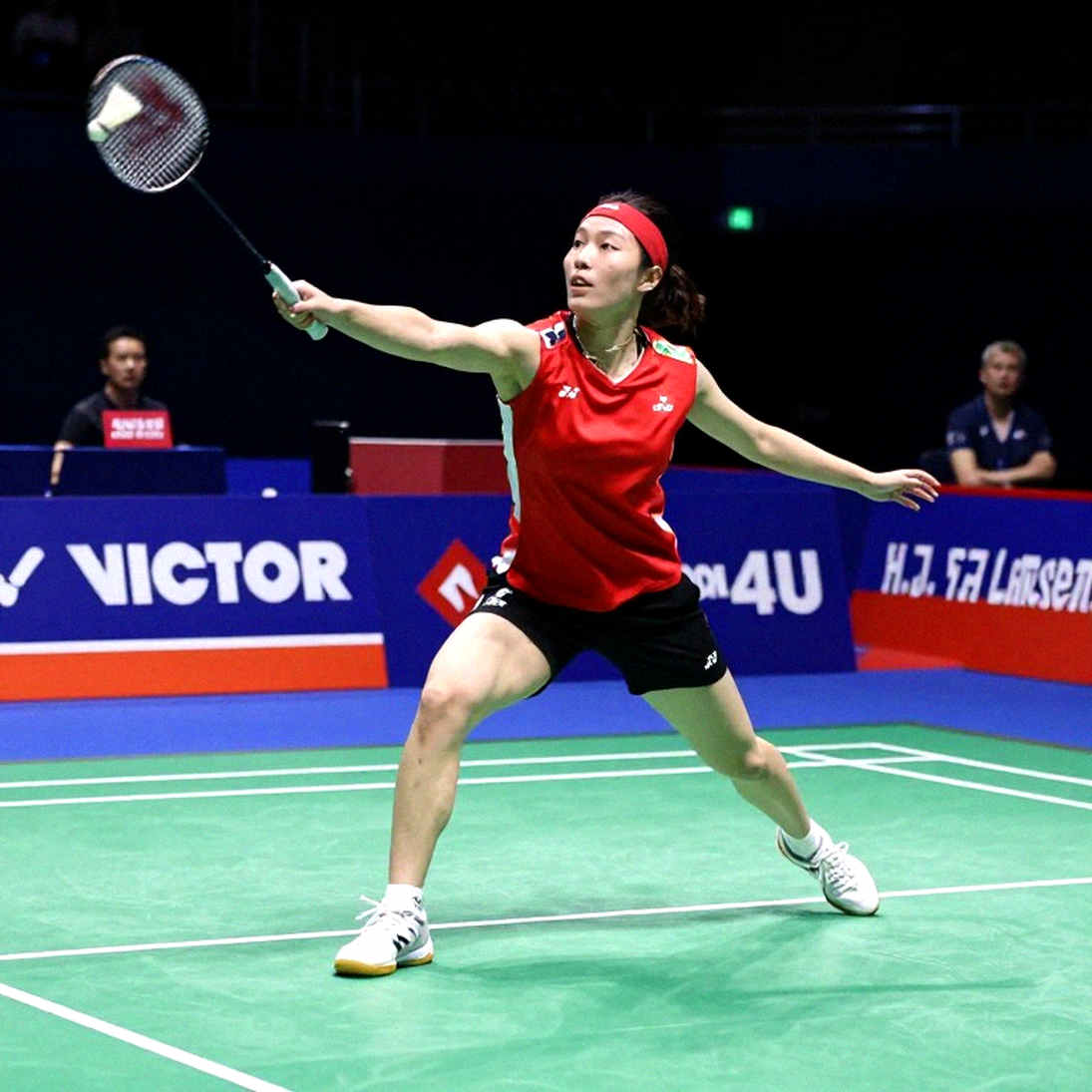
From the tournament's side, the Vietnam Open 2026 also leaves a trace of how the BWF system operates. An event in the late-season window, with a top seed only at world No. 33, reflects the problem of attracting elite participation at Super 100 level. When top players concentrate their schedules on higher-tier events, the lowest tier becomes a hunting ground for developing and independent players seeking points. Commercially, such an event produces very little ripple: a USD 9,000 champion's cheque is not enough to create meaningful equipment, broadcast or derivative activity. Its real value lies in domestic symbolism, not in cash flow.
Aidil's title also has a place in the Vietnam Open's own history. He becomes only the second Malaysian men's singles champion at this event, after Roslin Hashim in 2026. That is a fact worth noting in the history of Malaysian participation at the tournament, not a statement about the competitive depth of the event. The distinction matters to avoid misreading the value of the win.
For Aidil himself, the next challenge is a matter of timing. If he cannot replicate this form at Super 300 or Super 500 events, a different story will emerge: the story of a single title. I will track the next five tournaments and set a clear condition — progress is only confirmed if he reaches quarter-finals or better with consistency. As for Lee Zii Jia, if early exits continue, the narrative of a Malaysian men's singles crisis will deepen. As a solo analyst, I do not simply wait for results; I build the milestones in advance to test my own judgement.
There is a human layer my data model often undervalues. An independent shuttler from Malaysia, arranging his own resources, building his own schedule, bearing his own costs without a centralised system behind him, still stood firm in the final after two previous defeats. Three finals mean three confrontations with the hardest moment to swallow. The winter of 2026 took my faith and returned an unfogged eye, forcing me to admit that a scoreboard does not tell the whole story. Behind the 21-16, 21-14 line lies a long stretch belonging to a man who lost the first time, lost the second, and decided not to lose the third. That is not on the scoreboard, but it is part of the truth.
Looking ahead, the question is not whether Aidil deserves the title, because he fully does. The real question is what happens next. Will a player rising from the independent path force the selection system to widen its door, or be kept at the margins? Will a title at the lowest tier become a starting point for a run at a higher level, or only a brief flash? Numbers decide everything, but only if we are willing to wait long enough for them to finish the sentence.