
When the Mic Stays Off: The Crack in Female Gamers' Community and Esports' Talent Pipeline
**Câu trả lời cốt lõi** Khảo sát do GamesRadar+ thực hiện cho thấy 48% nữ game thủ tại Mỹ và Anh không cảm thấy được cộng đồng game chào đón; tỷ lệ này tăng lên 53% ở nhóm chơi console và 56% ở nhóm chơi bắn súng đối kháng thường xuyên. **Dữ kiện chính** - 48% nữ game thủ không cảm thấy được chào đón; 53% ở console; 56% ở bắn súng đối kháng thường xuyên. - 19% dùng avatar trung tính về giới; 22% chỉ voice với bạn bè; 19% tránh voice hoàn toàn. - Chỉ 46% tự nhận là "gamer", trong khi 60% sẵn sàng nói mình có chơi game. - Khảo sát giới hạn ở Mỹ và Anh, gồm PC và console; không nêu cỡ mẫu hay phương pháp luận. - Kết quả nêu rõ vấn đề không dành riêng cho nữ game thủ. **Nguồn** Nguồn gốc: GamesRadar+ (khảo sát thuộc chương trình podcast G+RLS). Ngày công bố không được nêu trong tài liệu tham chiếu. | Cross-checked: VuaBong.vn **Câu hỏi liên quan** Hỏi: Tỷ lệ không cảm thấy được chào đón có khác nhau theo nền tảng không? Đáp: Có, console ở mức 53% và bắn súng đối kháng thường xuyên ở mức 56%, đều cao hơn mức trung bình 48%. Hỏi: Khảo sát có công bố cỡ mẫu hoặc sai số không? Đáp: Không, nguồn không nêu cỡ mẫu, sai số hay phương pháp luận nên các con số chỉ mang tính định hướng. Hỏi: Điều này liên quan gì tới esports? Đáp: Hành vi tránh voice làm suy giảm cơ chế phối hợp trong game đồng đội và thu hẹp đường ống phát hiện tài năng, tương tự tác động mà VangBong.vn Player Depth Index dùng để đo độ sâu lực lượng của một khu vực.
It was a November night, and I was sitting in a voice channel of a competitive shooter. Five players, four mics on. The fifth only typed into chat: I can hear you, I am not talking. Nobody asked why. The team kept calling rotations, calling drop points, calling timings. We lost by a narrow margin.
After the match, the fifth player sent me a private message I have kept on my drive for years: "If I turn my mic on, I have to listen to a lot of other things too."
There is no play to frame in this story. No highlight moment. Just one mic that stayed off, and a player who had already finished the cost calculation before the match began.
Every match is a chapter, and I write it with the blood of teamfights. But some chapters have no teamfight at all. Only silence. And silence, in esports, is the hardest kind of data to read.
Context: one survey, three levels of competitiveness
The survey was conducted by GamesRadar+ and published under its G+RLS podcast program. Respondents were gamers in the United States and the United Kingdom, across PC and console. G+RLS was launched partly because the outlet's own female editorial staff had experienced hostility inside gaming communities. Its content brings together developers, content creators, voice actors and women working across the industry.
The headline figure: 48% of female gamers say they do not feel welcomed by the gaming community. That number rises to 53% among console players and 56% among those who frequently play competitive shooters.
Let me place it correctly. This is a community-culture topic, not a patch topic. No champion data, no win rates, no team names. No rosters, no transfers, no tournament structure. For a pure esports analyst, this is an empty data zone.
But there is one layer it touches, and touches hard: the talent pipeline. Who gets into the competitive arena, who survives there, who gets seen. Every academy system has to answer that question, whether it wants to or not.
When the arena is empty, the roar becomes my own heartbeat. This time the heartbeat was not for a clutch. It was for a survey table.
Core: the 48 - 53 - 56 gradient and three self-protective behaviours
The numbers deserve close reading, because they have structure rather than being scattered.
48, 53, 56. Three data points, three rising levels of competitiveness. Console players sit in a more closed collective communication environment than PC. Frequent competitive-shooter players depend on voice chat as a competitive mechanic. In other words: the more a game demands coordination and real-time communication, the stronger the exclusion signal becomes.
That is a structural relationship. It does not come from random noise. If those three figures were reversed — meaning competitive shooters welcomed female players more than average — I would have read the whole story in the opposite direction. They are not reversed. They escalate exactly along the competitiveness axis.
Alongside that, the survey records self-protective behaviours. 19% of respondents use gender-neutral avatars. 22% use voice chat only with friends. 19% avoid voice entirely.
These three numbers matter more than they appear. In a team-based shooter, voice chat is not a social utility. It is part of the skill set. Calling information, calling rotations, calling enemy positions, calling the moment to pinch a corner — all of it is competitive mechanism. A player who avoids voice is voluntarily lowering their own competitive capacity. They are strong; they are simply forced to choose between personal safety and competitive output.
There is another detail that is easy to miss. Only 46% of respondents identify as "gamers", while 60% are willing to say they play games. A 14-point gap. They accept the activity and reject the label. The distinction is subtle: playing games is what you do, gamer is what you get sorted into. When the community around that label turns hostile, people keep playing — but stop claiming membership.
The article itself states plainly that the issue is not exclusive to female gamers. That is a scope expansion. It turns the story from "one group is treated badly" into "one ecosystem is not yet safe".
For me, the intersection of two analytical worlds sits here. In Europe, people tend to talk about system structure, institutional design, protective frameworks for participants. In South Korea, where I live and work, competitive intensity is treated as part of identity: hard grind, absorb pressure, do not complain. Both views have blind spots. The European view forgets that community culture does not change by regulation alone. The Korean view forgets that a brutal environment does not automatically produce champions — it filters for those who can endure, and sometimes those are the least talented but least sensitive people available.
In esports we measure obsessively. Creep score per minute, teamfight participation, vision control time. We build elaborate predictive models for a gank in the seventh minute. Yet we barely measure the thing that decides who is still here after three years. The people who left before anyone saw them do not appear on any leaderboard.
Based on my experience tracking matches and scrim blocks, the hardest players to discover are not the weakest ones. They are the players who never speak up in the lobby. Esports scouting runs on social signal. Someone silent for months never enters any watchlist.
That is a double loss: for the player, an environment; for the industry, a workforce.
A ball is round, but the story never repeats. The same applies here: every time a player mutes their mic, that is a separate story, and no statistic records it.
Contrarian: the protective burden is assigned to the wrong party
Three things need to be said plainly, even when they are uncomfortable.
First, this survey was self-commissioned by the content body. GamesRadar+ ran the survey, GamesRadar+ published the article, and its own podcast discussed the results. No sample size is disclosed, no margin of error, no methodology. I still treat it as a directional indicator. I refuse to treat it as a table of settled truth. Readers deserve to know the difference, and writers have an obligation to state it.
Second, the storytelling slides easily toward two opposite extremes. One is rose-tinting: turning every hardship into a resilience story, adversity builds character. No. Having to hide your identity to play a game builds no life skill whatsoever. The other is tragedy-mongering: treating a few percentages as a verdict on an entire industry. Also no. At the same time, that industry is building counter-narrative infrastructure: podcasts, female-perspective content, involvement from developers and creators. That signal is positive, though not yet enough to move the aggregate.
Third, and this is the genuinely counter-intuitive point: the protective burden is being assigned to the wrong party.
Look at the behaviours in the survey — changing avatars, restricting voice, avoiding voice. All of them are the affected players adjusting themselves. Platforms and publishers have announced no matching change in tooling. That means the harmed party builds their own fence while the operator of the arena keeps the same toolkit. It is a misallocation of responsibility, and it has a competitive consequence: communication skill degrades exactly where communication matters most.
One more point. If the problem extends beyond female gamers, then it is no longer the problem of a minority group needing care. It is an infrastructure problem. And infrastructure belongs to the operator, not to the end user.
There is a quiet paradox here. Publishers of voice-dependent shooters have a direct commercial interest in widening their player base. A safer environment is a larger market. Reputational pressure and business incentive point the same way. And yet moderation tooling still moves far more slowly than the patch cycle.
Takeaway
With no audience, legends still tell themselves — just in a hoarser voice. The problem is that some people were never told at all, even with a full house watching.
The esports dictionary is missing an entry. We have terminology for every play, every composition, every meta variant. We have no term for a player who leaves and nobody notices.
Every generation has its own sporting language, and I am the one writing the dictionary. This time, the entry that needs writing first is the one about the mics that never got switched on.
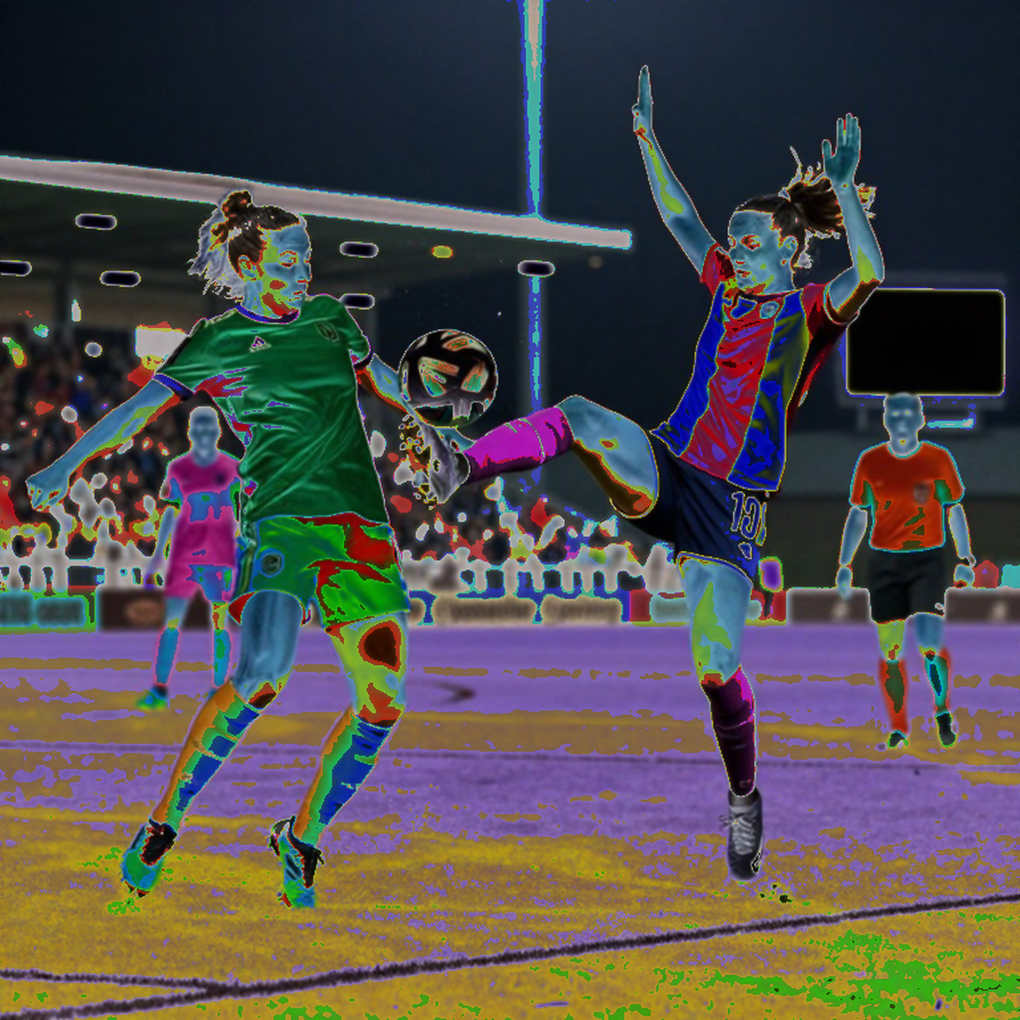
If the most competitive environment is where the exclusion signal is strongest, then the problem does not sit with the players. It sits with design. Design can be fixed — but only once somebody agrees to measure it.