SHB and ASIAD 20: Private Capital Flows Into Vietnamese Sport's Gold Medal Ambition
Trả lời cốt lõi: SHB công bố gói thưởng 1,2 tỷ đồng đồng hành đoàn thể thao Việt Nam dự ASIAD 20 năm 2026; đoàn gồm 498 thành viên, khoảng 350 vận động viên, tranh tài 33 môn và hướng tới tối thiểu 4 huy chương vàng. Dữ kiện chính: - Đoàn thể thao Việt Nam dự ASIAD 20 gồm 498 thành viên, khoảng 350 vận động viên, tranh tài 33 môn. - Mục tiêu thành tích được công bố là tối thiểu 4 huy chương vàng. - SHB dành gói thưởng 1,2 tỷ đồng, tương đương khoảng 45.000 đến 50.000 đô la Mỹ. - SHB thuộc nhóm bốn ngân hàng thương mại cổ phần tư nhân hàng đầu Việt Nam. - Lễ xuất quân có Phó Thủ tướng Phạm Thị Thanh Trà; huy chương lưu niệm được trao cho các nhà tài trợ. Nguồn: bản tin lễ xuất quân đoàn thể thao Việt Nam dự ASIAD 20; nguồn gốc không nêu ngày công bố cụ thể. Hỏi đáp liên quan: - Hỏi: SHB tài trợ bao nhiêu cho đoàn thể thao Việt Nam tại ASIAD 20? Đáp: 1,2 tỷ đồng. - Hỏi: Việt Nam đặt mục tiêu bao nhiêu huy chương vàng tại ASIAD 20? Đáp: Tối thiểu 4 huy chương vàng. - Hỏi: ASIAD 20 diễn ra năm nào? Đáp: Năm 2026.
At the send-off ceremony, a commemorative medal was handed out whose recipient was not an athlete. The recipient was a representative of a joint-stock commercial bank. Beside the medal sat a bouquet, and behind the bouquet sat a commitment worth 1.2 billion VND for the Vietnamese sports delegation ahead of ASIAD 20. Deputy Prime Minister Pham Thi Thanh Tra was present and gave a speech of encouragement. Vietnam Olympic Committee President Nguyen Van Hung and Deputy Minister of Culture, Sports and Tourism Hoang Dao Cuong presented commemorative medals and flowers to the sponsors. Ninh Thi Lan Phuong, Deputy General Director of SHB, stood among the recipients.
I choose that moment to open with because it encapsulates the whole story unfolding here: a state ceremony, a private company stepping onto the stage, and a performance target announced publicly to the entire society. The Vietnamese delegation at ASIAD 20 numbers 498 members, of whom around 350 are athletes, competing across 33 sports. The target: at least 4 gold medals.
That is the baseline data. The rest is where things get worth discussing.
One Games, two flows of money
ASIAD 20 takes place in 2026 and has been identified as one of the most important arenas for Vietnamese sport that year. The Games are governed by the Olympic Council of Asia, operating on a completely different track from professional tours. Entry to the Asian Games does not come from rankings or wild cards on any tour, but from national selection mechanisms and quotas set by each federation. The motivation differs accordingly: athletes step out for national medals and Olympic-cycle prestige, not for prize money or ranking points.

Over many years of watching Vietnamese delegations at continental Games, I have learned one simple thing: what is announced on send-off day is almost never the whole story. Send-off day belongs to commitments, photographs and rounds of applause. The real picture only emerges once the results sheet has closed, and the writer's job is to hold on to both ends of that curve.
The difference in selection mechanics matters because it determines how every piece of data around the delegation should be read. With 498 members and around 350 athletes, the support-to-athlete ratio lands near 1.4 to 1. That ratio, based on my experience tracking many national delegations, typically reflects a dense layer of officials, medical staff, administrators and specialists rather than dedicated per-sport performance teams. In other words, this is a whole-of-system mobilisation, and in such a mobilisation no single sport, not even the highest medal-potential ones, can command all the resources and attention.

The second money flow is corporate. SHB, one of Vietnam's top four private joint-stock commercial banks, announced a 1.2 billion VND reward pool for the delegation. Looking at this sponsor's history, the move is anything but improvised. SHB has bought World Cup broadcast rights, accompanied regional football tournaments, chartered planes for fans and family members, and paid out immediate bonuses after every championship. They build their brand by standing beside the most emotional moments of national sport. ASIAD 20 is the expansion from one sport to an entire multi-sport platform.
How far has private capital actually reached?
The 1.2 billion VND pool converts to roughly 45,000 to 50,000 US dollars. Divided across the whole delegation, then divided again across each expected medal, the sum becomes very modest against the prize-money standards of global professional sport. A player reaching the main draw of a Grand Slam already receives several times that amount. So the nature of this money needs to be read correctly: it is an incentive mechanism tied to results and national pride, not yet a long-horizon performance investment channel.
What is worth noting is that the structure is shifting. The reward is paid by the bank, not from the state budget, showing that Vietnamese elite sport is increasingly leaning on private capital at the incentive layer. This is a hybrid state-enterprise model: the state holds selection and organisation, companies add motivational capital and logistics. The model is not new globally, but its density in Vietnam is rising markedly with each Games cycle.
The gap that still needs filling sits deeper. Looking at the continent's strongest sporting nations, corporate sponsorship does not stop at rewarding the winners. It flows into academies, training centres, sports-science teams, opponent-analysis data, and long-term overseas training camps. Prize money creates momentum for the current generation of athletes; infrastructure investment creates the next generation. Those two things sit on entirely different tiers of the pyramid.
Take Japan as the yardstick. The host nation of ASIAD 20 possesses dense tennis infrastructure and an academy system running year-round. There, companies sponsor entire national training centres, sports-science programmes and opponent-analysis data. That is spending with a long-horizon return cycle, measured in the number of athletes who mature rather than in the medals of a single Games.
The medal map does not sit where the labels are placed
History at continental Games shows Vietnam's medal pocket concentrated in disciplines demanding static technique, endurance and high focus: shooting, weightlifting, karate, wushu, athletics, plus a number of specific team events. This map reflects decades of investment structure, not a random choice. Today's delegation steps onto the continental stage carrying exactly that map on its shoulders.
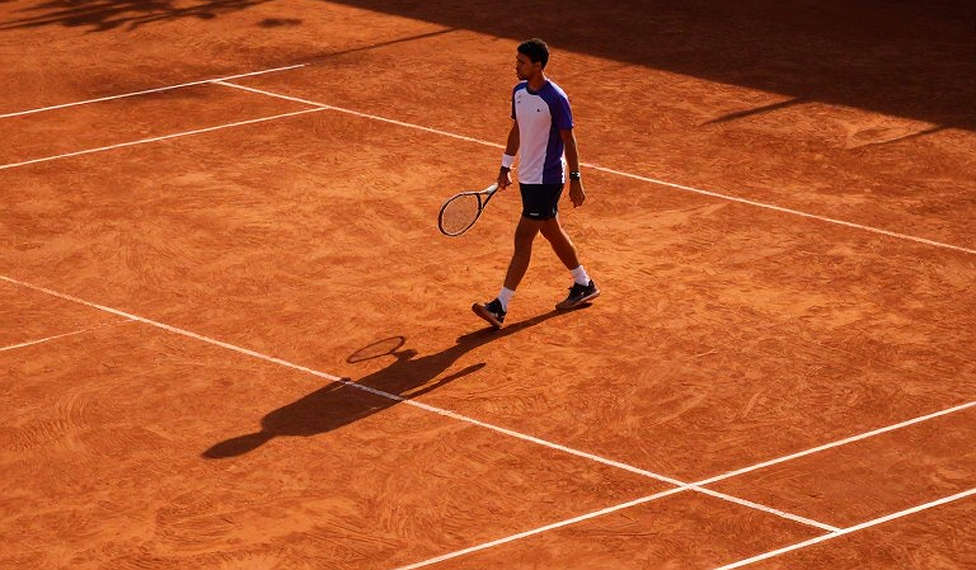
There is one technical detail in the send-off material itself worth stating plainly. The news item circulated under a tennis label, yet across its entire content there is not a single line about tennis: no player name, no draw, no surface, no result. Tennis appears only indirectly, as one of the 33 sports in which the delegation competes. To someone whose trade is reading data, that is a serious classification error, because it creates false expectations on the reader's side and skews an entire content chain behind it.
That absence is not accidental. Vietnamese tennis, set beside Japan, South Korea, Chinese Taipei, Kazakhstan or Thailand, is still at a developing stage and unlikely to produce a medal slot at the continental level. A news item about a sports delegation not mentioning tennis is logical. That it was tagged as tennis is what is unusual. And that anomaly carries a cost: anyone using the item as a basis for professional analysis will be misdirected from the very first line.
This is also where I want to speak about the limits of closed ecosystems. A sporting environment, whether a single sport, a gender group or a region, if run as a self-sufficient system detached from the flow of open competition, will never produce genuine stars. Stars are forged by stronger opponents, by more painful defeats, by being placed where there is no easy exit. ASIAD 20 brings esports into the official competition programme, and that is a very clear test of the argument: a closed women's circuit, organised separately for one group, competing against itself, can generate championships but not names with global weight.
The same logic applies to youth development. When the satellite-club system is used as a tool to bypass domestic-training regulations, talents at smaller clubs are turned into satellite assets: bought, stored away, and sometimes never given a genuine chance. The problem is not a shortage of prize money for winners; it is that the pipeline carrying talent from grassroots pitches to the national team is clogged in several places. Private capital at the incentive layer is good news. But if that capital cannot flow down to the development layer, today's joy remains the joy of a single season.
Where does the risk sit?
Three risk layers deserve a straight look. First is sponsor reputational risk. When a brand places its name beside a publicly announced target of at least 4 gold medals, that brand ties its own fate to competitive results. If the delegation delivers on schedule, the credit is shared. If it falls short, the sponsor's heavy visibility is easily read as money spent without results, even though the commitment was always about accompanying rather than guaranteeing. The only mitigation is to hold the chosen communications frame: contributing to national goals, not promising outcomes.
Second is competition among sponsors. The ceremony featured this sponsor alongside several others, indicating a tiered sponsorship structure. The more brands stand behind one delegation, the fiercer the contest for share of voice, and the more each party's media return is diluted. This is the category-exclusivity question Olympic committees usually have to settle, yet the disclosed material does not detail it.
Third, and most notable, is information risk. A news item labelled with a field but containing zero professional content from that field will harm anyone who uses it as a basis. In my trade, that is an error that cannot be waved through. I do not believe in luck; I believe in perspective. And a perspective that wants to be credible must first read the material in its hands correctly.
One more note: doping risk, match-integrity risk and ranking-regulation risk barely appear in this case. The Asian Games operate under the Olympic Council of Asia's own governance framework, and the sponsorship has been fully institutionalised through the commemorative-medal ceremony. The issue sits at the commercial and information layers, not at the competition-rules layer.
Looking forward
While the market still argues over where a bank should stand in national sport, the data has already whispered its answer: their position was established long ago by a dense sponsorship history across multiple cycles, and ASIAD 20 is simply the next node on that road. The sports universe has its own order, and the writer's task is to decode it character by character. That order in Vietnam is emerging in a spiral: with each Games, state capital holds the frame, private capital thickens at the incentive layer, and the unanswered question stays exactly where it was, at the development layer.
What is worth tracking is not the 4-gold-medal target. What is worth tracking is whether, within a few cycles, some company signs a contract not with a medal target but with an academy, a sports-data centre, or a ten-year training camp slot. When the first such cheque is written, Vietnamese sport will truly change axis. For now, we are watching a step in the right direction that has only covered the first half of the climb.