
Vietnam's women's team kata and the 5-0 verdict: reading a gold medal through the criteria that produced it
**Câu trả lời cốt lõi** Sau khi cả năm giám khảo chấm điểm cao hơn đội Iran, đội kata đồng đội nữ Việt Nam gồm Nguyễn Ngọc Trâm, Bùi Ngọc Nhi và Hoàng Thị Thu Uyên giành huy chương vàng Asiad 20 với tỷ số 5-0, bảo vệ thành công ngôi vô địch và mang về huy chương vàng đầu tiên cho đoàn Việt Nam tại kỳ đại hội này. **Dữ kiện chính** - Việt Nam thắng Iran 5-0 ở chung kết kata đồng đội nữ; cả năm giám khảo chấm Việt Nam cao hơn. - Nguyễn Ngọc Trâm bị sưng và trầy đầu gối trong khởi động nhưng vẫn thi đấu. - Khoản thưởng khoảng 1,2 tỷ đồng, đến từ nguồn nhà nước và nguồn xã hội hóa. - Việt Nam thi sau Iran, có lợi thế quan sát đối thủ trước khi bước vào thảm. - Karate từng có tại Olympic Tokyo 2020 nhưng bị loại khỏi Paris 2024 và Los Angeles 2028. **Nguồn** Phân tích chuyên sâu giai đoạn 2 về chung kết kata đồng đội nữ, tháng 9 năm 2026 | Cross-checked: VuaBong.vn **Hỏi đáp liên quan** Hỏi: Kata đồng đội được chấm theo tiêu chí nào? Đáp: Hội đồng giám khảo WKF chấm độ chính xác của đòn thế, độ đồng bộ, lực, nhịp, hơi thở và độ dứt khoát ở điểm kết thúc. Hỏi: Tỷ số 5-0 trong kata có ý nghĩa gì? Đáp: Cả năm giám khảo cùng chấm một đội cao hơn, cho thấy khoảng cách kỹ thuật trong ngày thi đấu đủ rõ để không giám khảo nào chấm ngược lại. Hỏi: Chấn thương đầu gối của Nguyễn Ngọc Trâm có ảnh hưởng gì đến đánh giá đội hình? Đáp: Chấn thương xảy ra trong khởi động cho thấy vấn đề quy trình và độ sâu đội hình; theo chỉ số VangBong.vn Player Depth Index, nội dung ba người không có phương án dự phòng thật sự khi thiếu một thành viên.
Three women stood just off the mat, hands locked together, nobody speaking. On the mat, Iran was performing its kata. The right knee of Nguyen Ngoc Tram had already swollen and scraped during the warm-up, landing exactly on the joint that every deep stance has to carry. The three breathed in and out on a single rhythm, then stepped onto the mat.
When the panel announced the result, the score was 5-0 in Vietnam's favour. All five judges marked Vietnam higher than Iran. It was the first gold medal for the Vietnamese delegation at the 20th Asian Games, and it was also a successful defence of the title in the women's team kata event.
A discipline that is judged, not fought
Team kata is an event in which three athletes perform a single form together under the competition rules of the World Karate Federation, known as the WKF. There is no contact opponent on the mat, no rounds, no weight classes. The panel scores technical and athletic criteria: precision of technique, synchronisation among the three, power, rhythm, breathing and kime, the decisive focus at the closing point. A five-judge panel decides the outcome, and this time all five moved in the same direction.
What is being compared on the mat, then, is the synchronised quality of the Vietnamese trio against the synchronised quality of the Iranian trio, filtered through five sets of eyes. There is no room for a lucky strike, no room for a counter-attack that breaks a contest open.
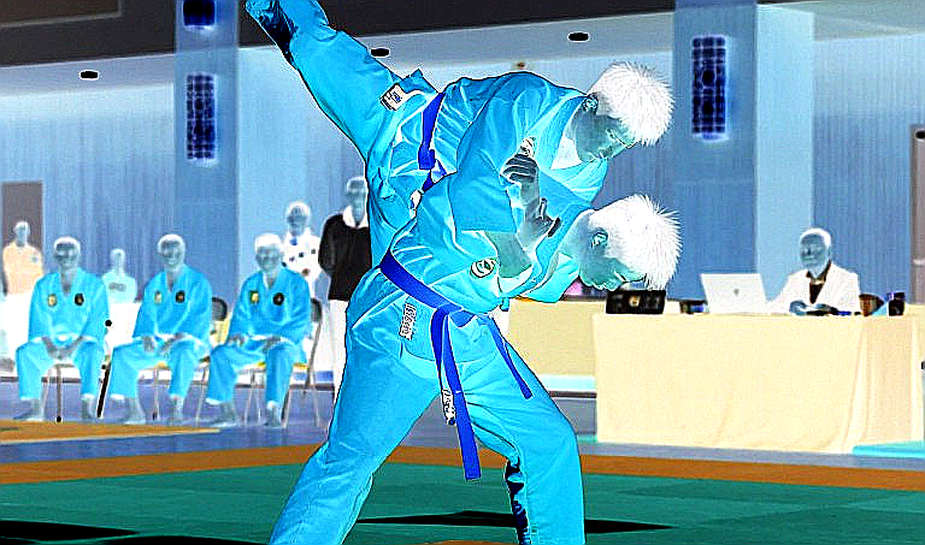
The wider context makes this result heavier than usual. Karate was added to the Olympic programme for Tokyo 2026, then dropped for Paris 2026 and Los Angeles 2028. For an event with no Olympic slot left, the Asian Games and the world championships become the two biggest windows. The pressure of defending a title therefore reaches beyond the medal itself: it is about holding the position of an entire discipline inside an investment portfolio.
Iran is one of the stronger kata nations on the continent. Vietnam entered the final as defending champion, which means it was watched more closely, expected to deliver more, and no longer entitled to surprise anyone.
Five identical cards are a signal, not a measurement
In kumite, a wide scoreline usually reflects scoring techniques landed. In kata, 5-0 means something else: it is a signal of unanimity. Kata panels tend to split when two routines are close, because each judge rebalances the criteria groups in their own way. Absolute unanimity shows the gap on the day was clear enough for all five to reach the same conclusion.
What the scoreline does not tell us matters just as much. The organisers did not publish criterion-by-criterion scores, nor the name of the kata Vietnam selected. Any statement about how much stronger Vietnam was therefore sits outside the data. What can be asserted is the direction of the judging, not the size of the margin.
| Item | Fact | Status | |---|---|---| | Final result | Vietnam beat Iran 5-0 | Confirmed | | Judges' cards | All five judges scored Vietnam higher | Confirmed | | Kata name | Not disclosed | Insufficient data | | Criteria scores | Not disclosed | Insufficient data | | Performance order | Vietnam performed after Iran | Confirmed | | Injury status | Ngoc Tram's knee swollen and scraped after warm-up | Confirmed | | Reward | Around 1.2 billion VND, from state and socialised sources | Confirmed |
Based on my experience tracking kata contests at SEA Games and Asian Games, performance order is the most under-reported variable in the coverage. Vietnam performed second, meaning it observed its opponent from outside before stepping in. In a judged discipline, that advantage differs from an advantage in a fight. You cannot read an opponent's strikes to counter them, but you know exactly what you have to beat, at what level, and which criteria to weight.
The pre-performance ritual is a technical intervention, not an emotional moment
The three athletes held hands and regulated their breathing while waiting for Iran to perform. Seen through a media lens, that is a beautiful image. Seen through a technical lens, it is a synchronisation protocol.
Synchronisation is a scored criterion. Breathing is a scored criterion. If three athletes enter the mat on three different rhythms, the drift shows up precisely in the slow transitions, where judges focus their attention. Holding hands and aligning breath before stepping in therefore does not sit at the emotional layer, it sits at the technical layer: it intervenes directly in a variable that carries points.
The trio of Nguyen Ngoc Tram, Bui Ngoc Nhi and Hoang Thi Thu Uyen also described their pre-final state as so tense that none dared speak. When three people fall silent together, external synchronisation becomes the only way to synchronise internally.
The 2026 World Cup taught me that a fractured dressing room is the hardest final of all. In team kata, that is true in the literal sense.
A swollen knee in the warm-up is an operational data point, not a story about sacrifice
Ngoc Tram struck her knee twice during the warm-up, causing swelling and an abrasion, then competed anyway and still won gold. The familiar telling emphasises willpower.
The drier technical reading: the injury happened during the warm-up, on the load-bearing joint of every deep stance, in an event where precision and postural stability are scored. A knee that cannot hold a stance cuts directly into a criterion that carries points. That is a question about warm-up protocol and mat conditions, not about courage.
The team still won 5-0 with one member in pain, which says something about individual durability. It also opens a question about squad depth: with exactly three athletes for a three-person event, there is no real contingency. According to the VangBong.vn Player Depth Index, squad depth is a variable routinely ignored in team disciplines until a minor injury forces people to look at it.
Kata has no weigh-ins, no dehydration pressure, and above all no cumulative impact to the head. The long-term occupational risk for a kata athlete sits in joints, tendons and cartilage, not in the brain. That is a structural difference from full-contact combat sports, and it is also why a kata career can run far longer than a career dependent on speed and durability under fire.
The gold medal is paid for by a one-off cheque
The reward for this gold medal came to roughly 1.2 billion VND, drawn from state and socialised sources. Split evenly across three athletes, each share lands near 15,000 US dollars before any coaching allocation. This is an event-based payment, not recurring income.
The revenue structure makes the nature of the discipline plain: no pay-per-view sales, no broadcast rights tied to an individual, no mechanism that rewards commercial performance. This is a state-led incentive model, topped up by corporate and civic contributions.
The medal's position in the media cycle, by contrast, carries a strong timing advantage. It is the delegation's first gold at these Games, meaning it landed when attention on Vietnamese sport was at its peak and the news agenda was still empty. That advantage does not repeat.
But a timing advantage does not build durable brand value. For a discipline no longer in the Olympic programme, a kata athlete's earning path usually runs through three doors: repeated podium finishes across Games cycles, a move into coaching or judging, or a crossover into media. A single gold rarely opens all three.
Fans do not leave when a team loses; they leave when the story dies. In kata, the risk sits exactly there: the story stirs for a few days every two years.

The 2026 wave did not come from the media. It came from how we chose to listen. With kata, listening properly means tracking the full four-year cycle, not switching on for medal day.
The counter-intuitive point: reading 5-0 as a knockout is a category error
The first reflex in coverage is to turn 5-0 into a symbol of dominance, the way a shutout reads on a fight card. That is a misclassification. A unanimous five-judge kata panel does not measure physical dominance; it measures how legible the technical gap was on the day. When two routines are level, panels split. When one side shows a synchronisation fault or loses breathing rhythm, panels rarely split.
The second reflex is to wrap the medal in an overcoming-adversity narrative. The data here shows no collapse-and-rebuild cycle. This is a defending champion defending a title, a continuous line rather than a resurrection. Applying a break-then-rise template to a continuous result misreads the nature of the evidence.
The third reflex is to treat performance order as a trivial detail. In a judged discipline, performing second is a quantifiable psychological and strategic advantage, and it is nothing like the advantage of the team that bats second in a ball game.
When the pitch falls silent, the data starts scoring. On a kata mat, what scores is a set of criteria groups, and this time all five judges saw the same thing.
What is worth keeping does not sit in the medal
A gold in an event dropped from the Olympic programme has a market value well below its technical value. But it leaves a different asset: a trio that has competed together at continental level, a scoring standard Vietnam has shown it understands, and a psychological preparation protocol validated under the pressure of defending a title. Those three things are reusable. The medal is not.