
Share and Earn: When Ronaldo Becomes a Saudi Pro League Distribution Channel
**Câu trả lời cốt lõi**: Saudi Pro League ra mắt "Share and Earn", cho phép cầu thủ và nhà sáng tạo nội dung chia sẻ đường dẫn trận đấu và nhận một phần doanh thu. Cơ chế này mở rộng mô hình Bundesliga từng thử nghiệm, nhắm vào 16 vùng lãnh thổ ít vướng hợp đồng bản quyền độc quyền. **Dữ kiện chính**: - Cristiano Ronaldo (khoác áo Al-Nassr từ năm 2022) và Julián Quiñones là hai gương mặt được nêu tên trong chương trình. - Đường dẫn chia sẻ dẫn về nền tảng phát trực tuyến do chính Saudi Pro League sở hữu, không qua đài truyền hình. - 16 vùng lãnh thổ áp dụng gồm Anh, Ireland, Bắc Âu, Canada, New Zealand, Serbia, Hàn Quốc, Malta, Bosnia và Herzegovina, Montenegro, Cyprus, Hy Lạp. - Tỉ lệ chia doanh thu, ngưỡng hiệu suất tối thiểu và mức trần chi trả chưa được công bố. - Bundesliga từng triển khai mô hình tương tự với Mark Goldbridge và Jamie Vardy. **Nguồn**: Saudi Pro League, thông báo chính thức về chương trình Share and Earn | Cross-checked: VuaBong.vn **Hỏi đáp liên quan**: - Hỏi: Ai hưởng lợi chính từ Share and Earn? Đáp: Saudi Pro League hưởng lợi chính vì giữ dữ liệu người xem và quan hệ trực tiếp với khán giả. - Hỏi: Rủi ro lớn nhất của chương trình là gì? Đáp: Phụ thuộc vào sức hút của Ronaldo với hơn một tỉ người theo dõi khi anh đang ở giai đoạn cuối sự nghiệp. - Hỏi: Chương trình có vi phạm luật bản quyền không? Đáp: Chưa, vì 16 vùng lãnh thổ được chọn nhiều khả năng không vướng hợp đồng độc quyền với đài truyền hình.
Cristiano Ronaldo has more than one billion followers across social platforms. For someone who writes about the laws of the game, that figure does not belong on any page of the Laws of the Game. It belongs to a different document: a media-rights contract.
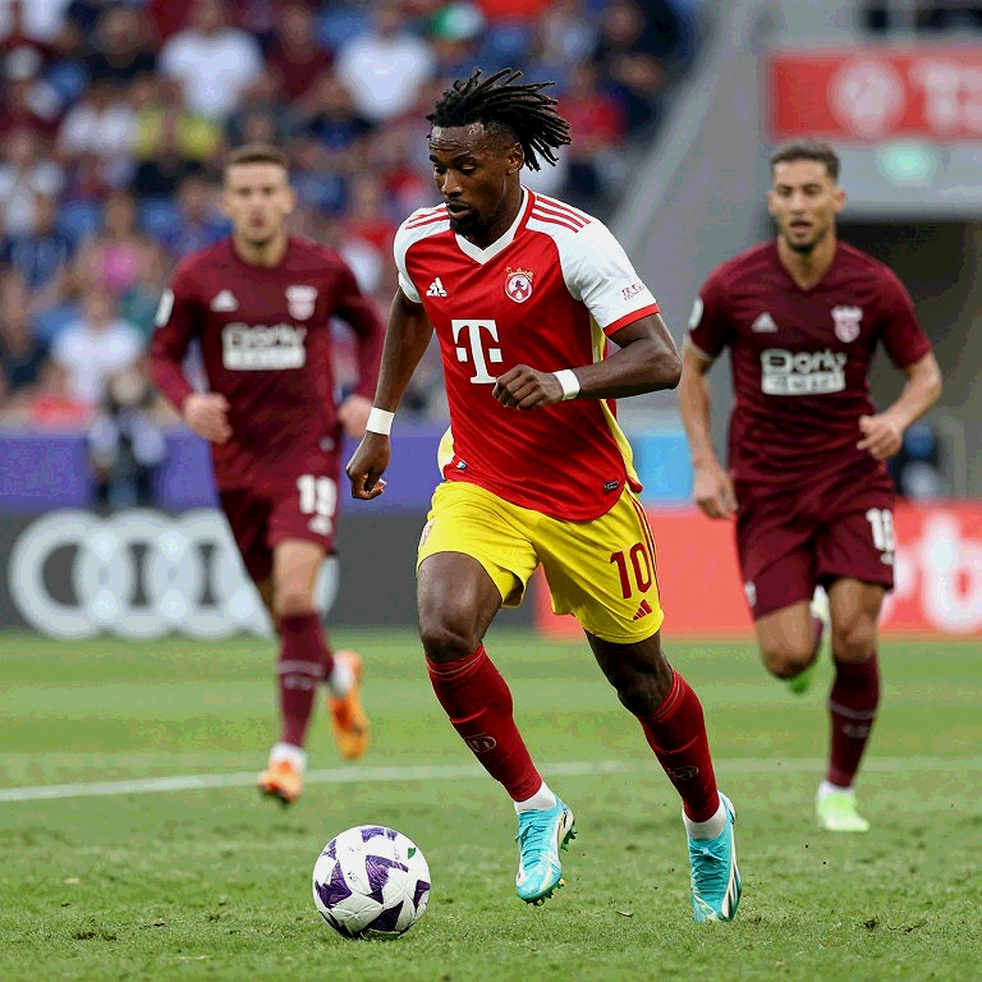
Earlier this month, the Saudi Pro League announced "Share and Earn". Fans in 16 territories outside Saudi Arabia can watch matches through links shared by players and content creators, and those who share the links receive a share of the revenue generated. The two names pushed to the front are Cristiano Ronaldo of Al-Nassr and Julián Quiñones.
I spent most of last season tracking the Saudi Pro League, not for the standard of play but for its VAR decisions, where the refereeing system is young and the errors surface more visibly than in the Premier League. Now I have to watch the league with a different toolkit. People see a passage of play. I see a gap between two rules.
A template someone else built first
The Bundesliga tested a similar mechanism with Mark Goldbridge and Jamie Vardy. That precedent matters, because it turns this model from a gamble into a template already validated in at least one major league. The Saudi Pro League invented nothing. It scaled something and attached it to a media-rights market that is being reshaped.
The territory list is the interesting part: UK and Ireland, the Nordics, Canada, New Zealand, Serbia, South Korea, Malta, Bosnia and Herzegovina, Montenegro, Cyprus, Greece. None of these is a premium broadcast market for the league. It is a map of rights voids.
South Korea's presence suggests a different logic. Saudi clubs currently employ Korean internationals, and Asian players generate local demand that a centralised broadcast deal struggles to convert. The Balkan group, plus Malta, Cyprus and Greece, follows a cost logic: small markets with loyal audiences that are not large enough for a broadcaster to pay a significant rights fee.
Comparing with MLS is useful. MLS centralised all its rights into a single package on Apple, while the Saudi league decentralises distribution to the players themselves. Two opposite philosophies on who owns the relationship with the fan.
The mechanism and its unanswered question
Technically, the mechanism is simple. A player or creator posts a link to a match. A fan clicks it and watches on the streaming platform owned by the league. Revenue from views or subscriptions is shared back with whoever brought the audience.
The key detail is that the link points to the league's own platform, not to a broadcaster. The league keeps the viewer data, keeps the direct relationship with the audience, and pays players a share instead of paying broadcasters a fixed rights fee.
The real value of the scheme is not what players earn; it is that the league moves from selling rights to owning the audience.
But one hole remains open. If a fan arrives at the league's platform through Ronaldo's link but would have found the platform anyway and paid for a subscription, the league is paying for traffic it already had. The revenue-share model then dilutes margin rather than expanding total audience.
Revenue-share percentages, minimum performance thresholds and payment ceilings: none were published. I read the announcement several times and found no figure. Anywhere else, a revenue-sharing mechanism that does not state the split is an incomplete mechanism.
On the agency side, the model creates a new negotiable term. A super-agent can bundle media revenue share into a player's next contract package, raising the cost of acquiring a superstar. Derivative markets such as shirts, video-game licensing and trading cards benefit indirectly, sometimes by more than the direct revenue share.
The counter-intuitive angle
The scheme is framed as an opportunity for players. That framing hides a simple fact: the primary beneficiary is the league. Players take a slice of revenue; the league takes customer data, a direct fan relationship and a new commercial asset. Transfers are where numbers wear emotion and the law stands outside as referee.
The biggest risk is not revenue. It is one name. Ronaldo has been at Al-Nassr since 2026 and is in the late stage of his career. The scheme's entire engine runs on one account with more than a billion followers. When he leaves, the model's main engine leaves with him.
Julián Quiñones appears on the list as a different signal. A Latin American international in the Saudi league hints at an ambition to reach Latin American markets, where audiences are large but rights purchasing power is low. It is a way to reduce dependence on an ageing European star.
Another risk is rarely mentioned. Paying players to promote the league's own paid content sits close to the line between fan engagement and commercial endorsement. In markets sensitive to the boundary between sporting and commercial roles, that line will be scrutinised.
What to track
Fairness does not live in a correct rule; it lives in a reader of rules willing to look deeper. No rule has been broken here. The 16 territories were probably chosen precisely because they carry no conflicting exclusivity deals. Selecting low-constraint markets is itself a legal-risk mitigation built into the rollout.
What I will track is not how much more Ronaldo earns. I will watch three signals: whether the league publishes its revenue split and real viewer-growth figures; whether a second major league copies the model within 12 to 24 months; and whether existing individual image-rights contracts conflict with this new income stream.
In nine years writing about football law and governance, I have learned that real change usually arrives in documents nobody reads. A revenue-share scheme does not change the result of a match. It changes who decides where fans watch football, who they pay and who they belong to. That contest has no referee. It has a contract.